

Pete Mason, East London Socialist Party
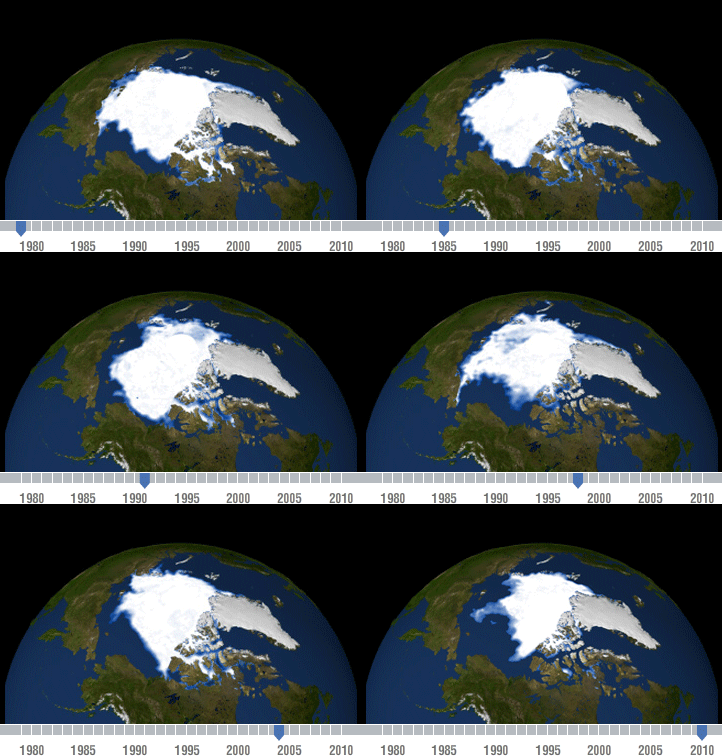
Arctic Sea Ice loss animation demonstrates drastic climate change through global warming, photo NASA
When is an agreement not an agreement? When it’s an agreement to reach an agreement in the future.
Far from being a “huge step forward” as Energy and Climate Change Secretary Chris Huhne insists, claims of success at the climate conference in Durban, South Africa are fraudulent.
The 194-party conference agreed to start negotiations on a legally binding new accord to replace the 1997 Kyoto protocol (which had no effect on global warming whatsoever), to take effect by 2020.
Canada has just announced it has withdrawn from Kyoto. But Kyoto expires next year anyway – the Canadian government’s last-minute rebuff demonstrates that the likelihood of a 2020 binding agreement resulting from the Durban conference is almost non-existent.
The capitalist government representatives gathered in South Africa ultimately protect a failed system which is the cause of – but cannot provide a solution for – global warming.
Durban was nothing but a deferment, while the world’s global temperatures are rising faster than ever. 2020 is simply too late, locking the world into a dangerous future.
A promise of tens of billions of dollars a year for poor countries to fight global warming is worthless, with no means of raising the cash agreed.
Those signing up included China, as required by the United States before it would come to the table. The US government fears competition from China. Witness China’s huge scale of production of solar panels, which has accelerated a seven-fold fall in prices since 1985.
Instead of leading to the worldwide replacement of fossil fuels with cheap solar panels (alongside other renewables) in networks of locally produced electricity, the price collapse has sent US solar panel companies out of business.
Clearly, this self-destructive free-market madness must be ended and replaced by democratic planning of a publicly owned energy industry worldwide. This would allow the rapid transformation of the planet impossible under capitalism.
Action is urgent. The powerful workers’ struggle against the neoliberal governments which are implementing savage austerity measures around the world is a struggle against the very same governments which failed once again to protect the planet. Such struggles show the only way forward.
