

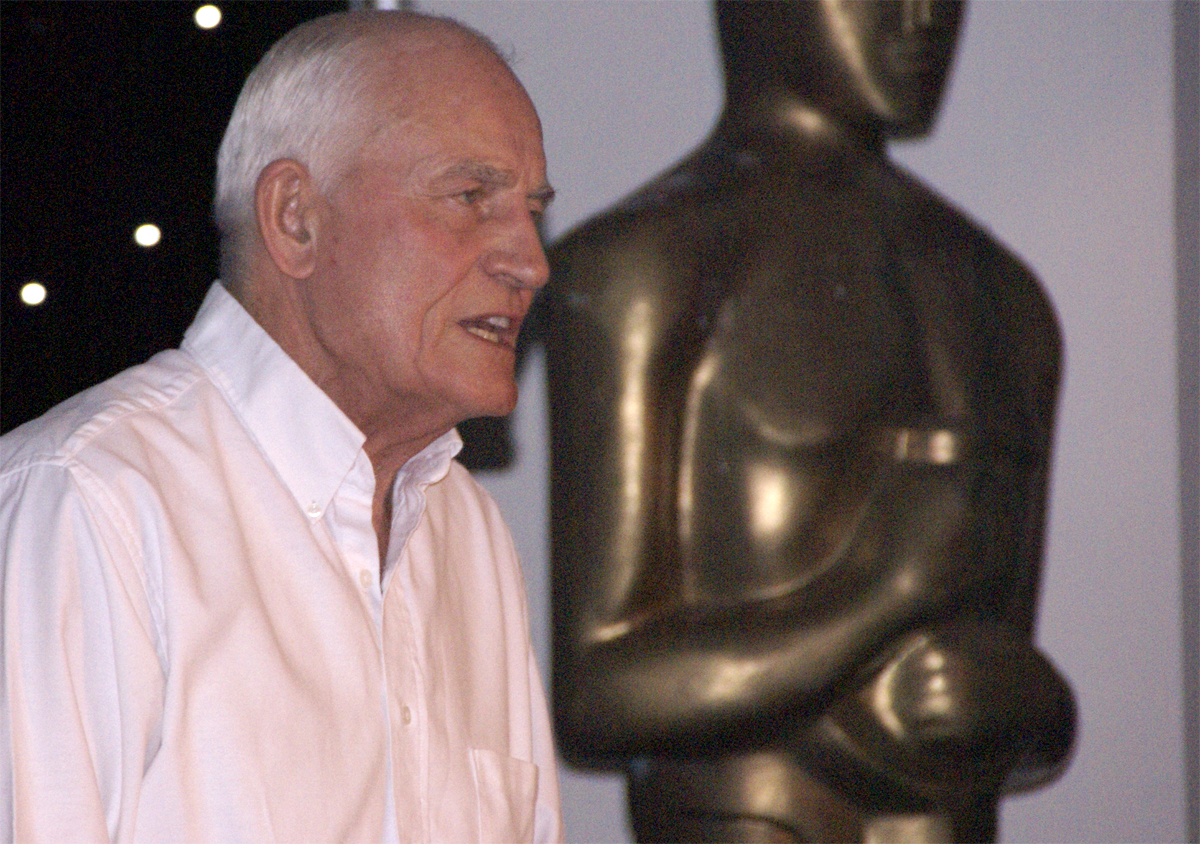
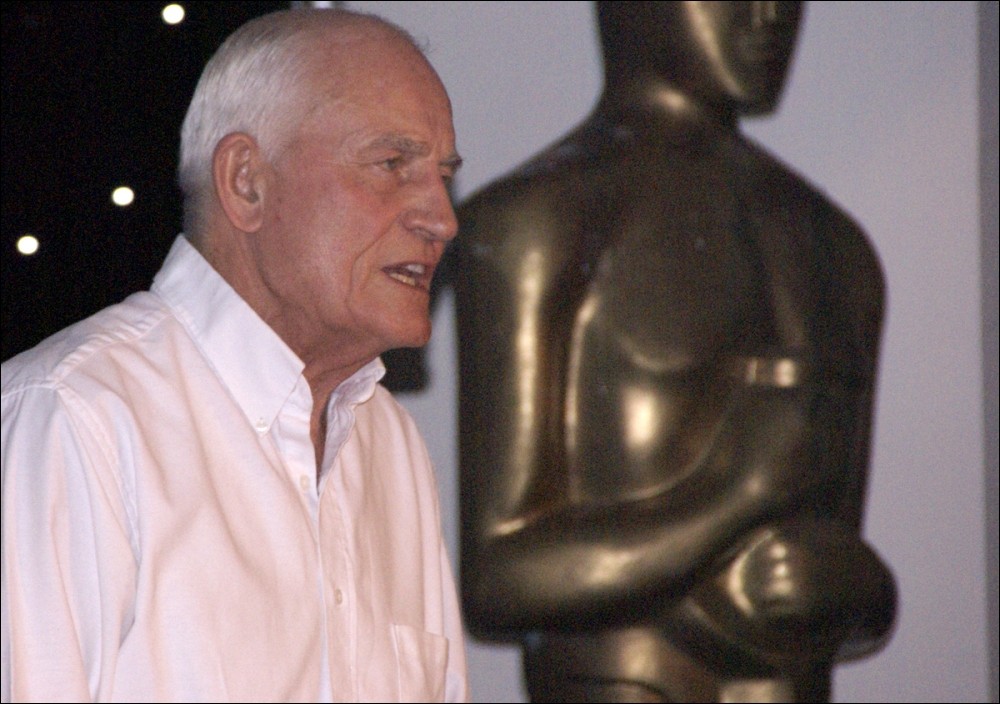
Tony Mulhearn, photo Harry Smith (Click to enlarge: opens in new window)
BBC Radio 4’s The Moral Maze programme recently dealt with the monarchy against a background of the circus surrounding the wedding of Wills and Kate. The question posed was: Is the monarchy compatible with a truly meritocratic society?
The panel included former Tory minister Michael Portillo and right-wing columnist Clifford Longley. Socialist Party member Tony Mulhearn, one of the Liverpool 47 councillors who fought Thatcher’s cuts in the 1980s and former president of the Liverpool district Labour Party, appeared as a ‘witness’. Here is Tony’s account of the debate:
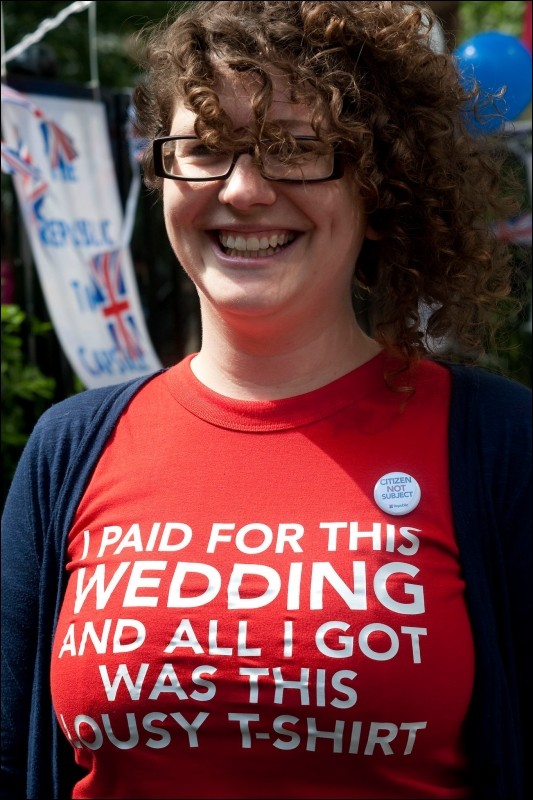
Anti-Monarchy Protesters against the Royal Wedding, photo Paul Mattsson (Click to enlarge: opens in new window)
The main thrust was that the monarchy was a force for good. Portillo maintained that the monarchy brought ‘colour and interest’ to people’s lives. Longley argued that my ’roundhead’ values would provide for a colourless, miserable existence for the masses, as well as maintaining that the monarchy was above class, and above the squalid manoeuvring of politics.
I said that to describe the monarchy as ‘above class’ was frankly ludicrous; explaining that the queen herself possesses enormous wealth and is the biggest landowner on the planet.
I added that there is no place in a democratic society for an unelected institution which possesses inherited powers.
The UK does not have a written constitution which sets out the rights and duties of the Sovereign, they are established by conventions. These are non-statutory rules which can be just as binding as formal constitutional rules. As a constitutional monarch, theoretically the Sovereign must remain politically neutral.
However, the Sovereign retains an important political role as head of state, formally appointing prime ministers, and approving certain legislation. She has other official roles to play, such as head of the armed forces and head of the police, and can be seen as having two roles: Head of State, and ‘Head of the Nation’.
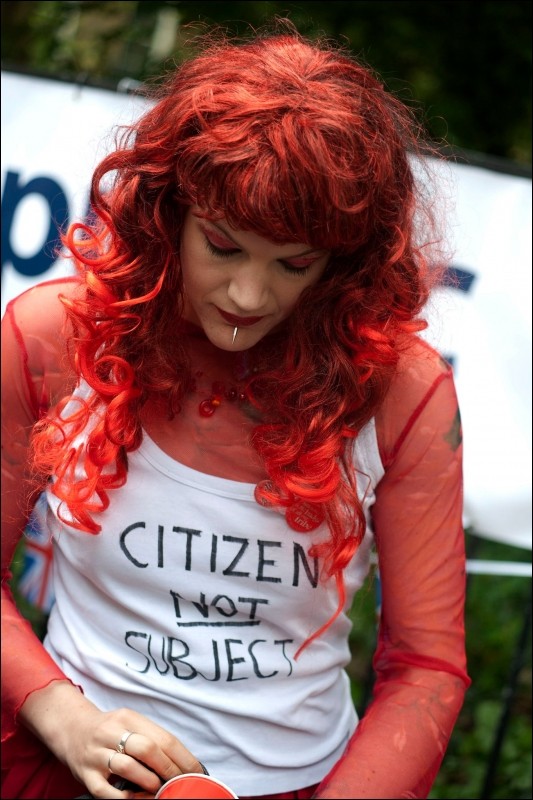
Anti-Monarchy Protesters against the Royal Wedding, photo Paul Mattsson (Click to enlarge: opens in new window)
In circumstances of a fundamental conflict of interests between capital and labour it is not inconceivable that, under pressure from capitalism, the monarch could refuse to sign an Act which, for instance, nationalised the commanding heights of the economy under workers’ control and management.
In November 1975 the Queen’s representative Governor-General of Australia, Sir John Kerr, dismissed Labour’s Gough Whitlam as prime minister and appointed right-wing Malcolm Fraser as a caretaker prime minister. Thus an unelected vice-regal representative had removed from office a government which commanded a majority in the House of Representatives.
It would be impossible to believe that this action was taken without the approval of the British monarchy. Portillo dismissed this example of Royal political action by first saying it was a civil servant’s mistake, then later in the programme saying he didn’t believe it. He maintained that societies were fairer in countries where monarchies existed.
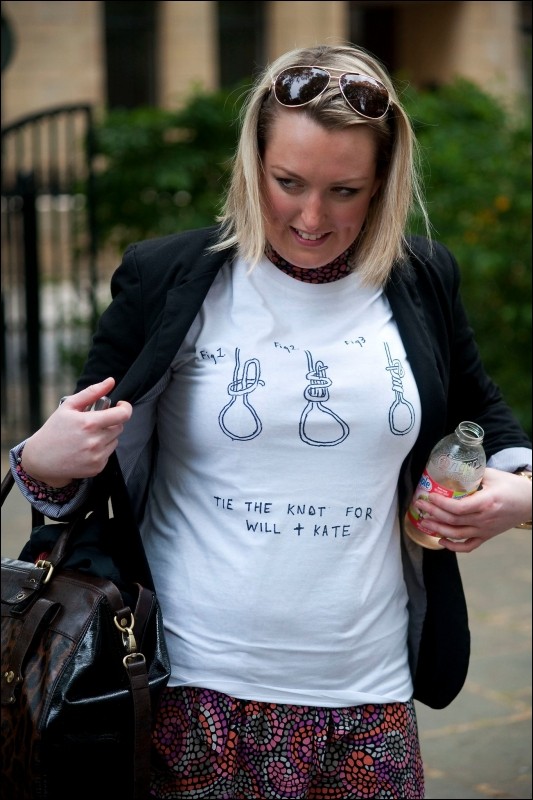
Anti-Monarchy Protesters against the Royal Wedding, photo Paul Mattsson (Click to enlarge: opens in new window)
If time allowed I could have given many other examples of the reactionary role of monarchies.
The Moral Maze did provide a limited platform to explain the class nature of the monarchy, but against the universal sycophancy of the media and the unrivalled ability of the British state to stage an extravagant event at considerable expense to the long-suffering tax payer, it was a peashooter opposing a hostile tank formation.
Great play was made of poll after poll indicating mass support among the population for the continuation of the monarchy. If the wording on such a poll was: ‘Do you support an unelected institution having the power to frustrate the will of a democratically elected government’ I think we would see a different outcome.
