

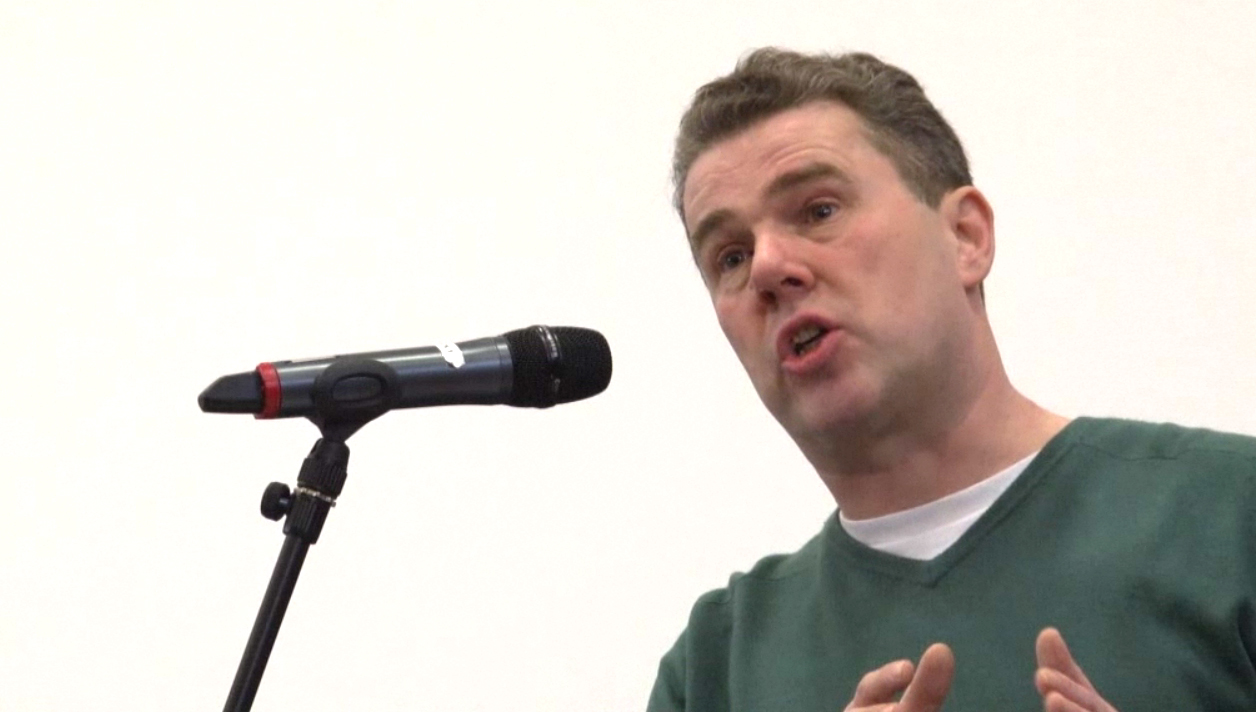
Rob Williams, the Socialist Party’s industrial organiser, interviewed PCS general secretary Mark Serwotka in the run-up to the PCS Left Unity meeting on 7 January.
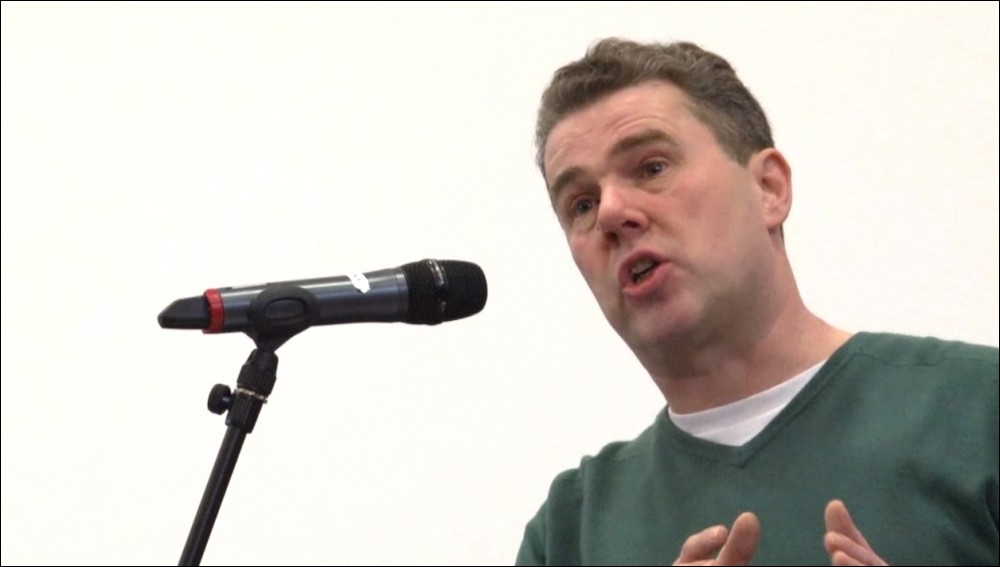
Mark Serwotka, PCS General Secretary, speaking at the PCS Left Unity open meeting on 7 January 2012, photo Socialist Party (Click to enlarge: opens in new window)
In the light of some trade union leaders pushing to sign the government’s heads of agreement on pensions, a lot of activists will be asking: “Can the battle still be won?”
The battle can still be won but we are at a pivotal moment. Before Christmas a number of the public sector union leaders indicated they wished to sign up to the heads of agreement. That does raise the potential of many people being withdrawn from the fight. The task is to ensure that doesn’t happen.
PCS’s message is quite simple. Millions went on strike because we didn’t want to work longer, pay more and get less. Everybody who went on strike is still faced with exactly that.
The best chance of winning is if we keep everybody together to fight the government and to call as soon as possible for further coordinated strike action.
In the private sector, Unilever workers are fighting for their pensions. There have been reports that Ford and BMW want to shut their schemes so clearly there’s potential to bring the private sector into the battle.
All along we’ve been arguing for the slogan “fair pensions for all”, and that we should fight for decent pensions for public and private sector workers.
The developments in Unilever are very exciting. It makes it all the more incredible that after such a brilliant strike on 30 November, followed by the great strike in Unilever, that a number of union leaders seem to want to withdraw from the fight, even though we’ve got no concessions from the government.
What are the heads of agreement? Does it represent a breakthrough like some have claimed?
They represent a concession to the government on all the issues we’ve been fighting on. They enshrine an increase in the pension age for some people of eight years. They enshrine a move from RPI to CPI indexation which for many people will be a 20% cut in their pension. The heads of agreement, if accepted, represent a complete defeat.
We must do everything possible to ensure that as many unions as possible reject signing up to the heads of agreement and join us in striking to defend our pensions.
What do you say about the role that PCS has played over this long struggle?
I’m proud that we have a union whose leadership is prepared to say it as it is. We have a government who wants to make workers pay. They’re determined to squeeze down salary levels, cut jobs, attack welfare and attack pensions.
The four unions that struck in June: PCS, UCU, ATL and NUT, also played a pivotal role in transforming the situation. It’s been clear to me for a while that the strategy of government, and some within our movement, has been to try to isolate us and avoid taking action. The turnout on 30 June and the debate that it caused, and the confidence it gave activists in other unions, transformed everything.
30 November was truly inspiring. It makes it all the more unbelievable that people would withdraw from the fight when we have had such an incredible opening salvo.
In my opinion it’s because there’s a deep-seated fatalism that has infected the leadership of much of the labour movement.
That was best illustrated by the quote from one of the public sector union leaders that the battle was about “damage limitation”. That simple sentence highlights the poverty of ambition of some and contrasts that with the willingness of members to fight.
Do you agree that the chancellor’s Autumn statement the day before N30 meant it was a strike not just for pensions?
Yes. In PCS our ballot was about pay, pensions and jobs. I’ve thought for a long while that pensions is an important issue but it critically gives the trade union movement the ability to have coordinated action.
If we can keep the momentum going we can force the government back. It’s not a strong government; they have no mandate for any of this and the more people that stand up to them the better our chances.
The PCS has been accused of walking away from the talks. What do you say about that?
That is the latest in a series of lies that the Tories have told parliament. Actually we have been thrown out of the talks with the government as punishment for not signing their heads of agreement. That reason alone should cause other unions to stop and think because it exposes what the government is doing.
How can we build the coalition against the government’s plans?
In PCS we’ve been really pleased to support everything from the Occupy movement, Youth Fight for Jobs, to the anti-racist campaigns. We genuinely believe that the best way of supporting any one group is to make sure you’re supporting everyone else. That remains our strategy.
The government’s attempts to isolate us have been assisted by very senior people in the trade union movement.
That includes openly attacking me at the negotiations with government minsters. We must gain the maximum support at executive and activist level to reject the heads of agreement. If that’s not successful we want unions to put it to their members.
The best possible outcome would be for the unions to reject the heads of agreement and call another coordinated strike. That would be what the government is least expecting. If we can’t get that then we do have to consider the situation in each union.
What do you feel about what happened in 2011 and beyond to 2012?
There’s an alternative to austerity and cuts. But no mainstream political party is prepared to put that argument and it’s fallen to the unions to do so.
Unaccountable financial institutions are essentially picking governments and prime ministers and determining social policy. It all stems back to the fact that all the mainstream parties accept the way that the capitalist system works. They accept that in a crisis like this you have to have austerity.
But it falls to us to say that there’s a different way of running society. In the short term we should say that people should be making decisions not bankers and markets.
2011 was the year that people all over the world decided that they’re not going to take what’s coming our way and they were prepared to fight against it. Look at Greece and the 15 general strikes they’ve had. It really goes to show that people are prepared to resist. But what assists that greatly is if there’s clear leadership and leaders that stand with the people that are resisting.
2012 has massive potential. But what happens in the first few weeks could really shape what will happen over the next few months.
