

Cartoon by Alan Hardman
End privatisation – build a fully funded, publicly owned and democratically run health service
TRADE UNIONISTS, health activists and local communities have been protesting in recent weeks at plans to close critical care and maternity services in general hospitals. The National Health Service (NHS) is under severe strain due to a mountain of ‘debt’ acquired by health trusts and hospitals due to the running of an ‘internal market’ by successive Tory and Labour governments.
JON DALE explains how privatisation and other big business policies are devouring the NHS, and the policies needed to stop these private ‘vultures’.
WHEN A maggot burrows in an apple little changes at first on the outside, but in time the apple rots away. Like parasitic grubs, private health companies are now eating into the core of the National Health Service. The NHS still looks much the same on the outside, but more and more clinical services are being hived out to private contractors – who employ their own staff – and aim to make a profit.
NHS privatisation began in the 1980s under the Tories, hitting services like cleaning, laundry and catering. Cleaning cuts contributed to the growth of hospital infections like MRSA and C.Diff.
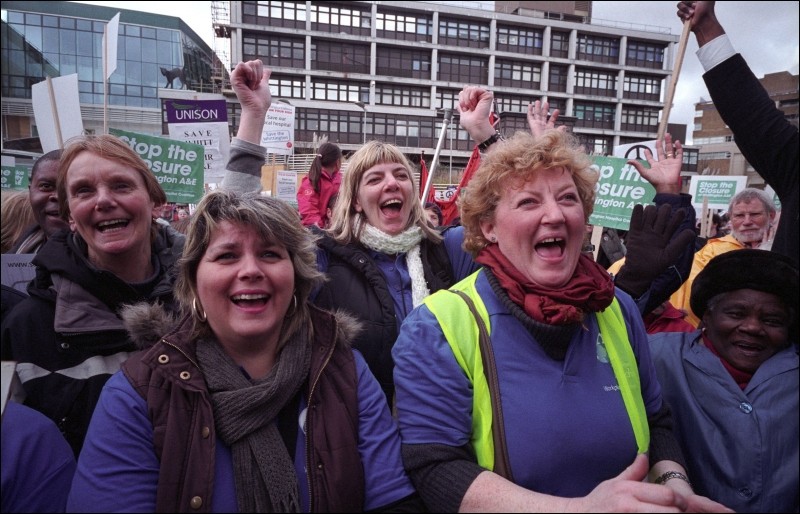
Defend Whittington Hospital Campaign demonstration, photo Paul Mattsson (Click to enlarge: opens in new window)
Under Labour, privatisation has changed up several gears. Local health services became semi-independent with the formation of Foundation Trusts. These can act like commercial companies, selling property and services, and borrowing money.
New hospitals are only built under the Private Finance Initiative (PFI). PFI schemes are like buying a house on a high interest charge credit card rather than a lower rate mortgage.
The GMB union has identified 641 current PFIs, with more than 100 new projects in the pipeline (across all public services). The total cost will be £250 billion over 25-30 years, four times the value of the assets built (£64 billion). British PFI debt is equivalent to £8,400 per taxpayer. It’s £12,000 per taxpayer in Scotland.
This debt mountain will grow as private contractors demand above-inflation returns.
With the credit crunch, the government was forced to accept that “it is unlikely that private sector lending will be sufficient to deliver the scheduled pipeline of [PFI] projects.” It agreed to take on the debt where the banks were refusing to lend. So much for private sector funding being ‘the only way’ to get new hospitals and other facilities built! But still, “the Treasury’s loans will be sold to the private sector in due course” once times get easier for the bank sharks.
New health centres are now built by Local Improvement Finance Trusts (LIFT) – a 49% public, 51% privately-owned company. The shareholders of the 51% (‘partners’ as the government calls them) are five banks, two property companies, the Prudential and Serco – a huge service-management corporation.
These new hospitals and health centres belong to the giant corporations involved in PFI and LIFT. The NHS pays a great deal to use the buildings.
Nevertheless, until recently nearly all the nurses, physiotherapists, doctors and other front-line health workers were NHS employees, providing health care as decided by local NHS trusts.
GPs have always been independent contractors to the NHS, but were not employed by private companies whose main aim was to make a profit. All this is now changing.
Mental health and privatisation
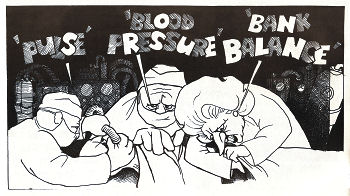
The National Health Service under Thatcher:
REVENUES OF private sector mental health hospitals in the UK rose to a record £1 billion in 2008. 85% of this money comes from the NHS. There were just over 9,000 private sector beds by mid-2009 – 25% of all mental health hospital beds. The remaining 75% are owned and operated by NHS Trusts (some 26,900 short stay and secure mental health hospital beds, excluding long stay beds for dementia).
An even higher percentage of care homes for learning disabled and mentally ill adults are run by the private sector. 78% of all care places are private – worth £2.86 billion in 2009 to the companies providing them.
Health care market analyst, William Laing, says: “The underlying reason why the NHS pays for the independent sector to provide such a high proportion of mental health hospital services, rather than providing them in-house, is because independent hospitals are better placed to serve groups of patients with specialised needs. Demand for these patient groups is typically regional or even national and it makes sense to pass the risk of running hospitals of an economic scale – which need to attract ‘out of area’ patients – to the independent sector” (11/12/09).
Instead of local Trusts co-operating to provide services where they are needed, it makes ‘free market’ economic ‘sense’ to shunt seriously ill patients around the country, far from family and friends.
Laing also says that the global credit crisis has meant investors are finding it hard to raise capital for new developments. So replacement of worn-out buildings and improvement of services grind to a halt because banks lost billions speculating on sub-prime mortgages.
ISTCs and ’employee -owned’ companies
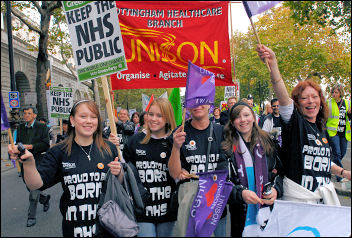
Keep the NHS public! On the ‘Save the NHS’ march, 3 November 2007 , photo Paul Mattsson
INDEPENDENT SECTOR Treatment Centres were major breaches through the walls of an NHS under siege by big business. Invading armies of private health companies are pouring through these holes, providing core clinical services, paid for by the NHS. Surgery, pain management, diagnostics like scans and laboratory tests, mammography and rehabilitation are just a few of the services increasingly provided by profit-making companies.
The government claims that Independent Sector Treatment Centres (ISTCs) have helped bring down NHS waiting lists. They won’t admit that it has cost much more than ploughing the money directly into the NHS.
Analysis of one Scottish ISTC by Professor Allyson Pollock’s team found it “treated only 32% of annual contract referrals in the first 13 months of operation at 18% of the annual contract value. If the same patterns apply in England, up to £927 million of the £1.5 billion [paid to ISTCs, may have been] for patients who did not receive treatment under the wave one ISTC contracts” (British Medical Journal 30/4/09).
ISTCs are affecting the training of surgeons, who are less likely to see routine cases in NHS hospitals, so won’t gain experience before tackling more complex procedures.
ISTCs ‘cherry-pick’ the easiest patients, leaving NHS Trusts to treat those more likely to suffer complications because they have other illnesses or need more complex surgery.
ISTCs exposed
British Medical Association News recently reported that a Yorkshire GP tried to get a hernia repair for a patient at a private hospital, using the ‘Choose and Book’ system (NHS patients choosing from a list of NHS and private hospitals, including ISTCs). Hernia repairs are common and usually straightforward. However, the GP received a message that this hospital would not take a patient “receiving psychiatric treatment”.
The hospital was owned by Spire Healthcare, which was formed in 2007 when BUPA’s 27 private hospitals were taken over by Cinven. Former Labour Health Secretary, Patricia Hewitt, became a special adviser to Cinven in 2008, paid over £55,000 a year for a few hours a week.
In 2007 a tragic death in West Yorkshire exposed the way ISTCs are failing to provide the standard of care expected in an NHS hospital.
A patient having a routine gall bladder operation at Eccleshill ISTC near Bradford had a haemorrhage on the operating table. The ISTC, although it carried out dozens of operations a week, did not have enough swabs to stem the bleeding.
Incredibly, it didn’t even hold any emergency blood stocks to replace the blood lost. The surgeon wanted to ring the local NHS hospital, but there wasn’t a phone in the operating theatre. Someone had to go outside to find his mobile.
A porter had to drive his own car to fetch blood, which took almost two hours to arrive in sufficient quantity. There was no warmer to bring it to body temperature, so bowls of warm water were used instead. But by then it was too late.
Eccleshill ISTC was opened in 2005 as a “modern, purpose-built facility.” It is operated by Nations Healthcare, now a subsidiary of Circle. Circle claims to be the first UK health care company owned by its employees – ‘John Lewis-style’.
In fact, employees, mostly doctors, own 49.9% of shares. 50.1% are owned by Circle International. 50.1% may not seem a big majority, but it is clear who has real business power in Circle – not a widely scattered group of doctors but a handful of huge hedge funds and private equity companies. Circle’s ‘Managing Partner’ is a former Goldman Sachs director.
Circle International’s finance comes from Health Investment Holdings Group, with investments from hedge funds and private equity companies. These include BlackRock – one of the world’s largest fund managers, and Lansdowne Partners, a major hedge fund.
Lansdowne’s chairman, Paul Ruddock, has donated over £400,000 to the Conservative Party, while Tony Blair is pocketing over £200,000 this year to deliver four speeches to its executives and staff.
At Circle’s Partnership conference in January, Gordon Brown said in a message of support that ‘Circle’s provision of healthcare from the private sector is crucial to a 21st century health service.’
Tory Shadow Health Secretary, Andrew Lansley, told the confererence: “I went up to [the Circle-run ISTC in] Nottingham… and learned about the hospital’s 20% productivity improvement. We need that – and we need more of that.”
Not wishing to be left out of this chorus, Norman Lamb, Liberal Democrat health spokesperson, chimed in saying that Circle’s model of employee ownership “could be transformational if you transfer it to the NHS.”
Lessons from the Eccleshill fatal operation were not on the conference agenda, despite a Healthcare Commission report being made public two months earlier.
‘Health co-op’ or big business
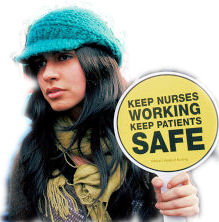
Health workers demonstrate in Hackney, photo Paul Mattsson
TORY LEADER, David Cameron, says health workers should be allowed to form themselves into ‘co-operatives’ and sell their services back to the NHS. Labour plans a very similar policy -‘mutualism’. Fluffy words like empowerment, motivation and flexibility disguise further steps towards the ’empowerment’ of big business to take money out of health care. Employee-owned companies will be like flies trapped in webs until devoured by hungry spiders.
An example from Australia shows the inevitable outcome of these Tory, Labour and Liberal plans. In less than a decade, what began as a company owned and run by doctors, passed through several corporations (and countries), ending up being suspended from an NHS contract following patient deaths.
In 2000 a large group of Australian radiologists set up Medical Imaging Australasia (MIA). It sold X-ray and scan services. After floating on the stock market, the radiologists retained a 60% majority holding. They expanded, winning contracts in Europe and in Britain, under the name of Lodestone Patient Care – the first private radiology company to enter into a Public-Private Partnership with the NHS.
In 2004 MIA was bought by DCA Group Ltd for A$700 million. DCA was one of Australia’s top 100 companies, which started as a metal manufacturing, hotels and property company and then moved into residential care for the elderly. Lodestone became part of DCA’s I-MED network. DCA planned to double revenue from the UK within three years.
It found it could win more contracts if it offered wider services, so formed a 50:50 joint venture with Carillion, a large construction company. It then bid to build and operate surgical clinics, using the name Clinicentre (later Clinicenta). The Australian Financial Review commented: “The NHS is expected to offer as much as £70 billion a year in health contracts, with a sizable amount up for grabs for radiology and diagnostic companies” (24/11/05).
In 2006 DCA was itself taken over by CVC Asia Pacific and CVC Capital Partners, private equity funds spun out of the US Citigroup Bank. Citigroup has been linked in the press to a number of massive frauds and finance scandals in the US, including an alleged $4 billion fraud involving Health South. The ink had barely dried on the new company letterheads when its Lodestone subsidiary was on the move again.
It was sold to Alliance Medical, a company which had also changed ownership. Private equity fund, Bridgepoint, bought it for £111 million in 2001, selling it for £600 million six years later to Dubai International Capital (owned by the Dubai royal family). Alliance is chaired by former Tory foreign secretary, Sir Malcolm Rifkind. It now provides X-ray and scan services to 400 UK hospitals (NHS and private), as well as in Europe.
NHS London Strategic Health Authority awarded Clinicenta a 5-year contract worth £144 million to deliver routine day-care services across 20 North London boroughs for over 50,000 patient contacts. London GPs complained that millions of pounds were chopped from their commissioning budgets while a similar amount was given to Clinicenta.
The first ‘out-of-hospital’ service opened in July 2009, providing care at home or in the community for patients who needed chest or heart rehabilitation, acute home care, end-of-life care or early discharge from hospital after a stroke. Four months later, after two “potentially avoidable deaths and several serious incidents”, and a Care Quality Commission inspection rating a Clinicenta out-of-hospital nurse agency service as ‘poor’, NHS London suspended the contract. It has not yet been restarted.
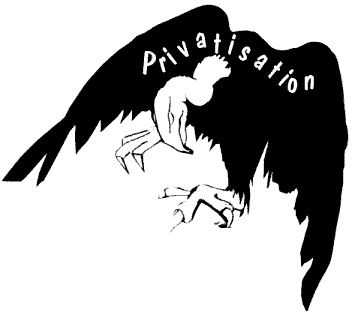
Fight the private vultures
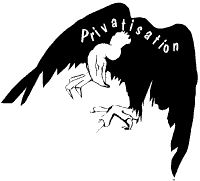
Privatisation vulture, photo Alan Hardman
“WE ARE entering into a period of incredible opportunity for the private sector, there’s just no question about it,” says Circle’s Chief Executive.
His excitement is shared by executives around the world. Whoever wins the coming general election, and whatever cuts hit the NHS budget, business’s scope to expand seems limitless. Four years ago, the Australian Financial Review said £70 billion was “up for grabs”. That figure could now be even higher.
Does it matter who provides the service if it remains free at the point of use? Politicians say that it doesn’t. But when companies are run for profit, what will they do if profits don’t meet shareholders’ demands? Less staff, worse pay, poorer training – leading to exhausted workers, higher staff turnover, poorer qualifications and cut-price treatments.
From time to time ‘tragic errors’ will occur. And if profits are still too low, contract-holders may start to demand ‘top-up’ payments from patients. Some local authorities are now introducing the budget airline model. The same could appear in the NHS. How much further down that road is a US-style pay-as-you-go service, with expensive insurance for those who can afford it?
Health trade unions should be shouting this from the rooftops. A campaign should be built among health workers and local communities to explain this threat. Public meetings and mass demonstrations would help build health workers’ confidence to take industrial action to stop the privateers.
But industrial action in the NHS is never easy for workers who can see the possible effect on their patients. The whole trade union movement has a responsibility to take action. Trade union leaders should be building support for striking if necessary to save the NHS.
But they would also have to explain that Labour is as wedded to privatisation as the Tories, and that the NHS needs a government committed to defending public services. That means building a mass workers’ party with union backing and socialist policies.
- End all privatisation. Return privatised services to NHS control.
- Take back from big business PFI hospitals, LIFT health centres, Independent Sector Treatment Centres and private hospitals. Publicly fund and integrate them with the rest of the NHS.
- End Foundation Trusts. For democratic control of local health services by elected health workers and community representatives as well as elected representatives from local and national government.
- Nationalise the big construction companies, service companies, medical supply and pharmaceutical industries that are taking billions of pounds out of the NHS.