


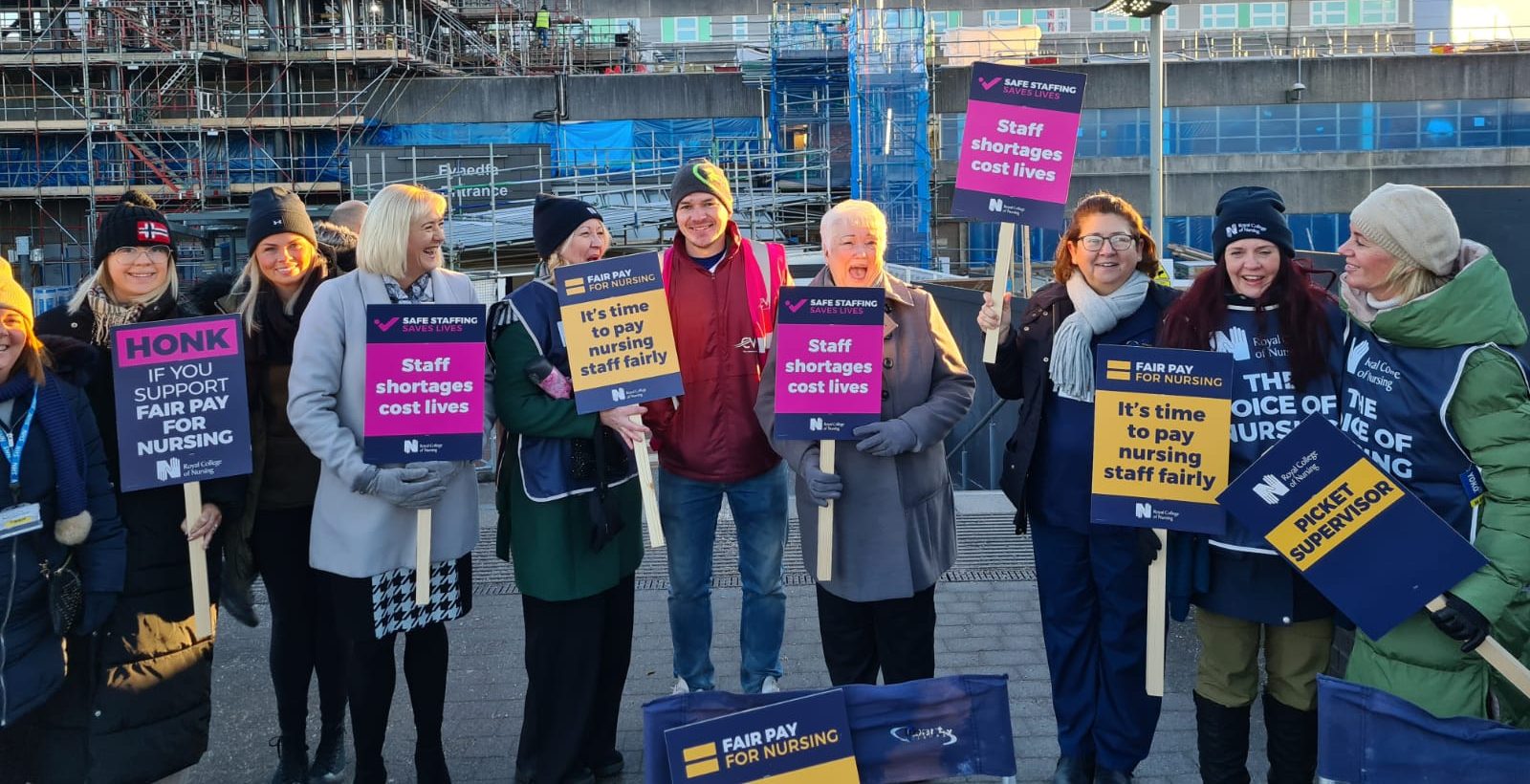
The week of 6-10 February saw the biggest NHS strike so far on the Monday, and NHS workers striking in different unions all week: the Royal College of Nursing (RCN), ambulance workers in Unite, GMB and Unison, and the CSP physiotherapists.
Alistair Tice reports from Sheffield
Like with the teachers on 1 February, the NHS strikers are overwhelmingly young, women and on strike for the first time ever. And they are turning out on picket lines in big numbers, their placards and songs reflecting their energy and enthusiasm for making a stand. Not just for more pay but more for the future of the NHS and their patients.
A feature of the strikes has been the homemade placards and made-up songs on the picket lines. At Sheffield hospitals, RCN nurses displayed signs like: “Rishi Sunak – tighter than a TED stocking”, “Nurses not hearses” and “Put your money where your claps were”.
And physiotherapists held up boards saying: “Our NHS needs rehab”, “My patients cough up more than the Tories” and “Together we can fix a fractured NHS”.
There’s a growing realisation that NHS staff professionals are not going to be treated as a special case by this Tory government, so they need to strike together with other public sector workers to force the government to cough up or get out.
NHS in Wales – reject the ‘offer’!
Beth Webster, Cardiff RCN member
Most NHS unions in Wales suspended the 6 and 7 February strike action following a paltry pay offer from the Labour-led Senedd (Welsh government). The decision of the leaders of the Royal College of Nursing (RCN), Royal College of Midwives (RCM), physios’ union CSP, and GMB ambulance workers to call off strike action on 6 and 7 February was met with anger by rank-and-file members once the details of the deal were made public. Only Unite ambulance workers continued to strike.
The offer is a consolidated increase of 1.5%, and a 1.5% unconsolidated one-off payment. This means that for a staff nurse on the highest-possible pay point, they will receive, together with last year’s deal, a total of a 6% pay rise and a £494 one-off payment. This is far below the RCN’s demand of inflation plus 5%. It is not enough to retain or recruit staff to a collapsing health service.
The non-pay elements of the deal do not include any concrete commitments. Vague promises to consider improving pay progression, a 36-hour working week without loss of pay, and to reduce agency nurse spending, are not good enough. The NHS needs urgent, concrete solutions to the worsening staffing crisis.
Such was members’ anger at the strikes being called off, that RCN Cardiff members held a meeting with the Associate Director of RCN Wales within hours of the deal being made public. We were told that it will put more pressure on the Tories, now that the Scotland and Wales governments have made offers, as Westminster is where funding really needs to come from for a proper pay deal.
Members pointed out that going ahead with the coordinated strike action would have put far more pressure on than a meagre pay deal, and that union leaders being willing to settle for crumbs from devolved governments will actually take pressure off the Tories to offer a decent deal.
This deal is further evidence of the Labour-led Senedd refusing to take responsibility for the NHS crisis in Wales, aided by union leaders under the guise of ‘social partnership’. Ordinary NHS workers are not willing to let the Senedd off the hook. They could fund the pay rise the unions demand in the immediate term, and stand up to the Tories to fight for the funding necessary from the government in Westminster.
NHS workers are voting on the deal and, judging by their anger so far, it will likely be rejected. Our next strike action should be coordinated, not just with other health unions, but all workers fighting on pay. We need a 24-hour general strike.
