


Clare Hudson, CWI Canada
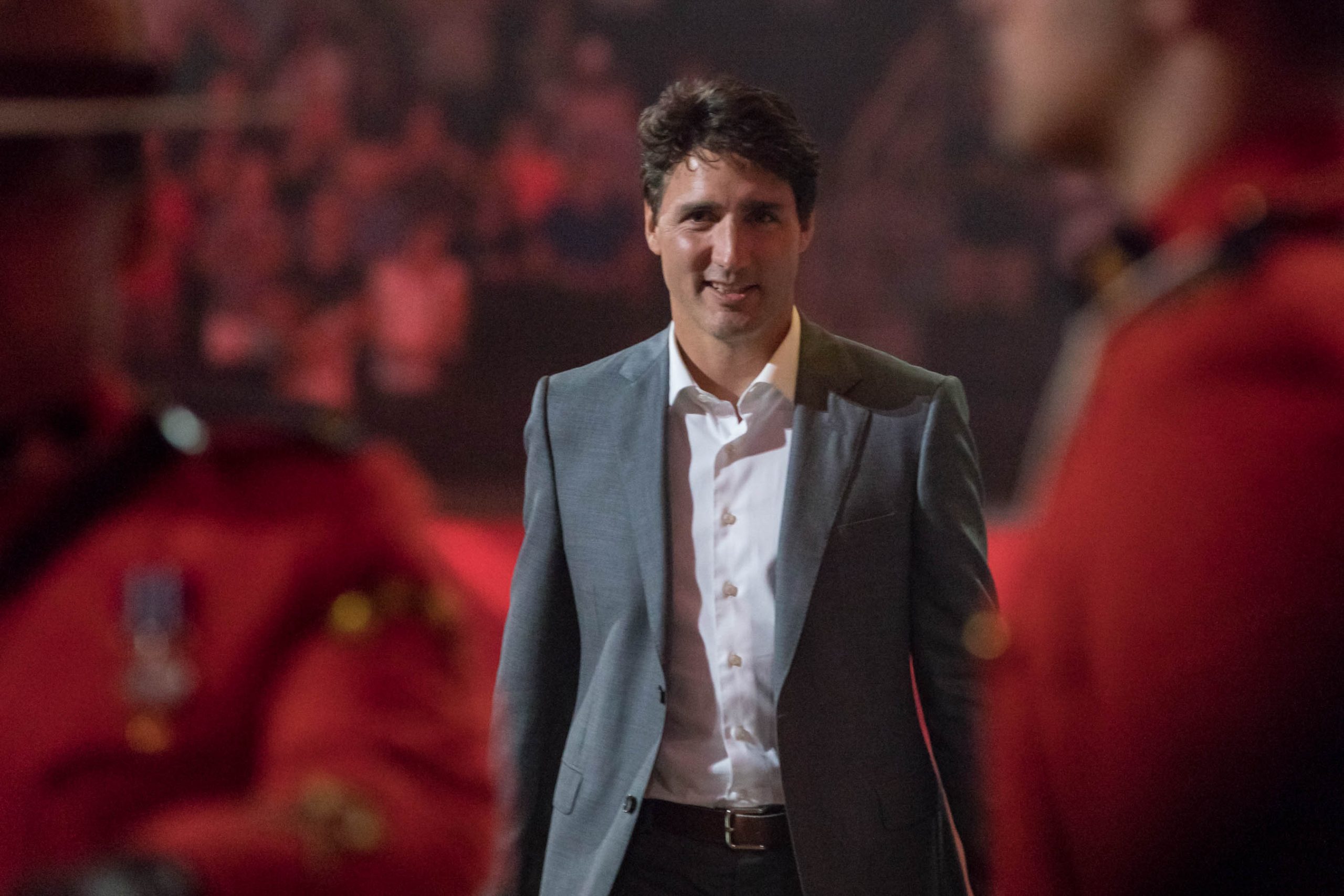
Within the first days of 2025, the Canadian Liberal Party prime minister Justin Trudeau announced his resignation. In response, US president-elect Donald Trump reiterated his threats of a 25% tariff on Canadian and Mexican exports and continued to call for Canada to join the US as the ‘51st state.’
These events reflect the chaos and instability of capitalism internationally. At a time of stagnation and crisis, the question of how to ideologically shore-up and force the continuation of the capitalist system is being ‘fought out’ among the billionaires and their politician friends. Those in the camp of holding onto the status quo, such as Trudeau, are losing support from large sections of workers and youth who are desperate for an alternative to poverty and are struggling to survive in the face of the cost-of-living crisis.
Election
A Canadian federal election will be called this year and, due to Trudeau’s resignation, it is predicted to take place in the first half, once a new Liberal leader is chosen. Trudeau was elected in 2015 with a majority Liberal parliament after ten years of a Conservative parliament. The last federal election in 2022 resulted in a minority Liberal parliament, forcing them to rely upon the support of the New Democratic Party (NDP) and Bloc Quebecois (BQ) to pass motions and bills.
The NDP, which is considered ‘centre-left’, withdrew support from the Liberals in parliamentary votes in September 2024, in preparation for a 2025 federal election and the need to be seen as politically separate from one another. Being in cahoots with each other, the NDP with BQ have been able to use their position as leverage to push through policies such as free dental care for seniors (old age pensioners) and those on low income. Given that a third of Canadians do not have dental insurance, this policy, despite limitations, was understandably welcomed by many working-class Canadians. However, despite the NDP calling-out the billionaires and pointing to the disparity between rich and poor, its lack of a clear alternative to the system that causes these inequalities is a missed opportunity to build a real workers’ alternative.
Trudeau’s announcement to resign on 6 January came as no surprise given months of internal pressure for his resignation among Liberal Party caucuses, in addition to growing anger among many Canadians who have seen their quality of life deteriorate during the cost-of-living crisis. In spring 2024, nearly half (45%) of Canadians reported that rising prices were greatly affecting their ability to meet day-to-day expenses. Young people, people with disabilities, First Nation, Inuit and Metis communities and seniors are disproportionally represented in these numbers. According to Food Bank Canada, food bank usage across Canada in 2024 increased 90% compared to 2019, with a third of monthly clients being children.
Canada is also in the midst of an opioid crisis, whereby 49,105 deaths since 2016 have been attributed to opioid toxicity. This epidemic is taking the lives of predominantly young people and is a symptom of a sick system that causes mental illness, unemployment and underemployment, and homelessness. In addition, global climate change has taken its toll on many Canadian communities that have faced devastating consequences from fire, drought and floods. Meanwhile, the gap between the rich and poor continues to widen. Due to these conditions, anger and discontent at this system is rising among workers and youth, many of whom want to see an end to inequality, discrimination, and exploitation.
However, in response to many of the societal ills caused by capitalism, the anger that exists among a section of workers and youth is being reflected in misguided illusions, and a corresponding growth in support for right-wing ideologies and right-populist ideas. Centred with their anger specifically at Trudeau and the Covid-19 restrictions and mandates, the ‘Canada Convoy protest’ and blockade of downtown Ottawa in 2022 illustrated the growing influence of right-wing populism in Canada.
The momentum against Trudeau has been somewhat channelled by the right-wing populist, Pierre Poilievre, who is leading the Conservative Party of Canada. Poilievre is being openly endorsed by billionaire Elon Musk, and Trump saying that Poilievre “aligns with his views”. Poilievre’s platform is vague and often lacks specifics but has garnered attention and support with generalised soundbite slogans, such as that he is the “champion of a free market” and a “fighter for people taking ownership of and responsibility for their own futures.” The ‘axe the tax’ election campaign, which refers to the carbon tax, has gathered support among workers struggling to afford fuel amidst the cost-of-living crisis. However, Poilievre is no friend of workers and youth in Canada. He has voted against women’s reproductive rights five times. In addition, the Conservatives have attempted to block bills pertaining to workers’ rights.
The coming federal election will take place during an unprecedented time. In addition to issues such as employment, housing, health and cost-of-living at home, the continued support from Trudeau’s government in relation to the genocide in Palestine is causing anger and disillusion among many. The Canadian economy, which is an important factor related to Trump’s tariff threats, relies heavily on natural resources, such as oil, lumber, natural gas, and hydroelectricity, in addition to vehicle production, agriculture, dairy etc. Many of these resources are exported to the USA, including over Canadian $309.3 billion in the first three quarters of 2024 alone. Trump was quoted as saying: “We [USA] don’t need anything they have”. However, the facts are that the US relies on Canada for many exports that cannot be supplied from within the US.
The events that are unfolding should be understood in the context of the complexities of the population, geography, and the history of Canada. The country is divided into ten provinces and three territories, spanning six time zones, and has two official languages: French and English. The history of colonialism in Canada is complex and inevitably leaves many unresolved issues of racism and discrimination that stem from it and which are unsolvable under capitalism. The genocide of Indigenous peoples throughout Canada is the foundation upon which the country was built. In addition, the national question regarding the rights of self-determination for the people of Quebec is one which is unresolved.
There is a rich history of trade union activism, workers’ solidarity and social movements in Canada which, despite the weakening of the trade union movement in recent history, is accredited for the fact that over 30% of the population remain members of trade unions and there have been developments seeing previously un-unionised workers forming unions. Recent strikes by Canada Post workers and dock workers in Vancouver and Montreal show the potential strength of workers when fighting for better pay and conditions.
Workers’ party
The need for a mass workers’ party is an urgent task. The trade unions, many of whom have significant resources at their disposal, have a duty to the working class in helping to fight against divisive right-wing ideas and to develop an alternative to the pro-capitalist governments both provincially and federally. Unions with ties to these parties should cut those affiliations so that that workers and youth can be free to be part of building and organising a party to call their own. The ramping-up of the alliance between the super-rich and politicians, which is nothing new, has taken on a new and sharper appearance with the open and public collaboration of figures such as Trump and Musk.
These developments are a warning to workers and youth internationally of how, if given the opportunity, this system will leave us with nothing that represents a decent quality of life. Under capitalism, the full potential of humankind and solidarity will never be met. Therefore, we need to organise and fight for a genuine democratic socialist world built by and for workers and youth internationally.
