


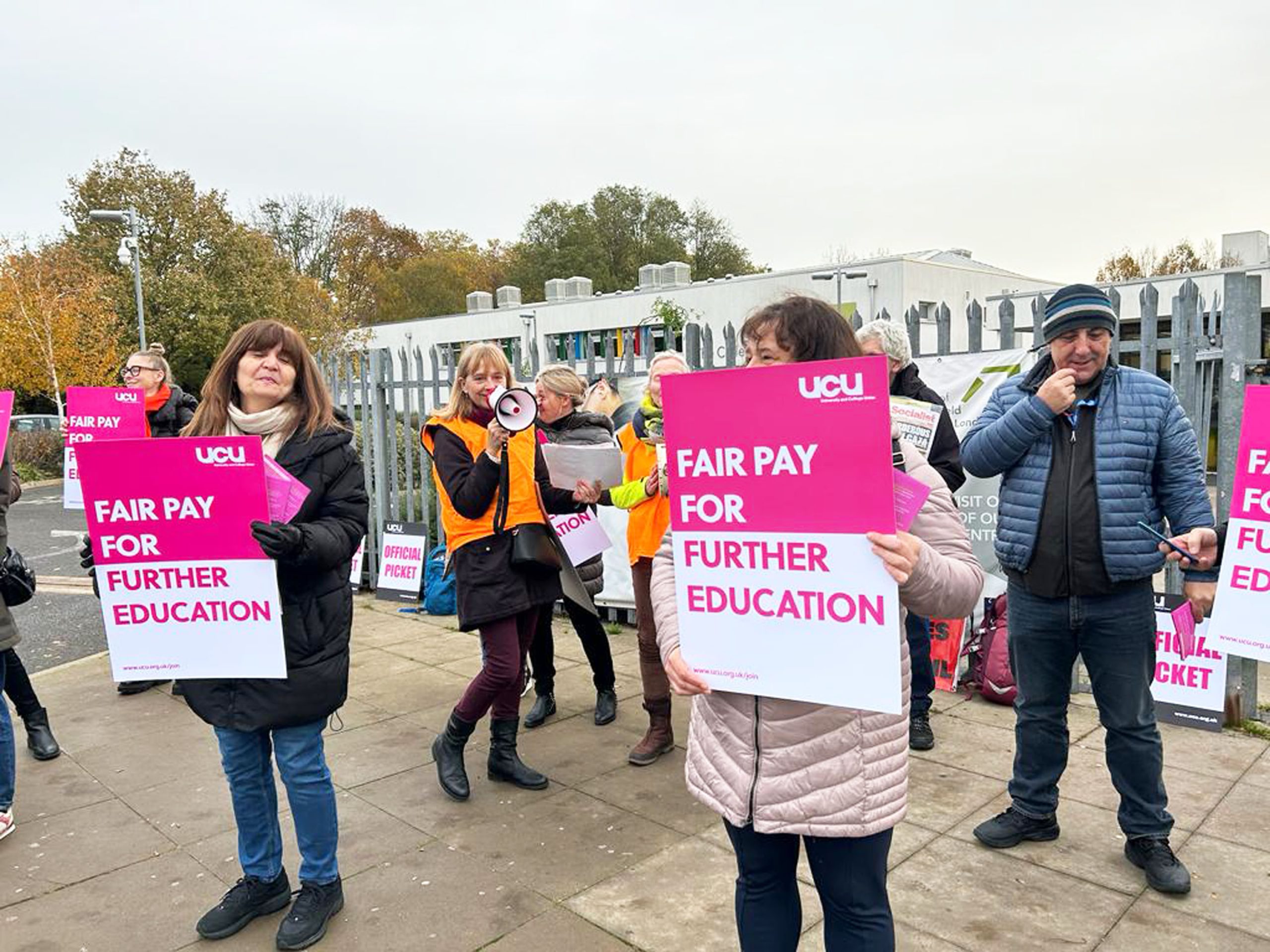
Left must organise to fight for members
Bea Gardner, UCU member
Socialist Party member Marco Tesei has been elected by further education (FE) members across the UK to the National Executive Committee (NEC) of the University and College Union (UCU), joining Duncan Moore who was elected last year.
However, the two groupings most supportive of the general secretary, Jo Grady, won the most NEC seats and all the officer positions. Because NEC terms are two years, and last year left candidates won a large majority, the NEC is now split, with a one-seat majority in favour of those supportive of the general secretary.
Grady supporters now hold a majority of seats on the Further Education and Higher Education Committees (FEC and HEC).
These are important bodies responsible for determining strategy and action. The Grady supporters who now dominate them strongly endorse local action rather than national.
But it would be a mistake to conclude that this was a confidence vote for Grady or that it reflects a lack of willingness to fight.
UCU members in both higher and further education fought hard during the strike wave, but under Grady’s leadership the action was paused and delayed. Many members felt more could have been won. There is also frustration among activists at the constant attempts by Grady and those around her to undermine the elected committees of the union and undo decisions.
This was expressed in the NEC and general secretary elections last year. Grady’s vote halved and she only held on by a whisker; meanwhile the NEC was won for the left.
However, a year on, the left on the NEC have not been able to successfully use that position to give a clear lead to members, and in both FE and HE attempts to put forward a fighting strategy have been overturned by the Grady officialdom.
Clear lead needed
Reflecting the ongoing lack of a clear lead, there was a much lower turnout in this year’s elections, with 7,726 fewer votes in the vice president election for example. It was clear from the election addresses that the pro-Grady factions were working together to mobilise their vote.
But for a layer of members, the fighting programme of the Socialist Party was able to cut through.
There were also candidates from the UCU Left, which is dominated by the SWP (Socialist Workers Party), and a growing number of non-aligned lefts.
For the two FE seats up for election this year, Marco called for a vote for sitting UCU Left NEC member Sean Vernell, and approached all left candidates to discuss how we could work together to maximise the left vote for the remaining contested seat. Unfortunately, no agreement was reached.
Grady and her supporters may be intent on holding back struggle, but they are not immune to the pressure from UCU members, that will only increase as the scale of the post-16 education funding crisis is more deeply felt. It is essential that the left NEC members now organise to help maximise that counter-pressure.
There is a clear need for a genuine, democratic broad left across all levels of the union, with a fighting programme.
Fighting ideas got a response
Marco Tesei, Newly elected to UCU NEC (personal capacity)
That now makes two Socialist Party members on UCU’s executive body – this time last year we had not even one!
These are alarming times for post-16 educators. With deeper and deeper crisis and the Labour government intensifying austerity, we anticipate more attacks on our livelihoods, working conditions and quality of life generally.
A determined political as well as industrial fightback against the bosses is now more urgent than ever.
With all its unfulfilled promises for workers and bamboozling talk of ‘partnership’ between government, employers and trade unions, Labour is frankly taking UCU members for a ride. And UCU’s leadership is covering for that. With underfunding and cuts raining down, while the government backs the business elites to the hilt, there is no conceivable ‘partnership’ between workers and the bosses and government. It is them against us. Simple!
I was an outsider of the six candidates contesting two UK-elected seats, unknown in the wider union. But the pro-working class, anti-bosses programme I stood on was clearly popular with UCU members.
Like other left candidates, we in the Socialist Party emphasised the need to build for national strike action to win the union’s ‘New Deal For FE’, which includes the demand for a binding national bargaining framework for our sector.
But our programme also called for FE colleges to be brought back under public democratic ownership, and for the fat-cat CEOs and unelected corporate directors to be booted out.
It also linked the fight against the far right and racism to the fight, led by the trade unions, against the austerity fuelling them – in other words, to the demand for jobs, homes and public services for all.
Our programme called for UCU’s leadership to approach the MPs in parliament who might champion our interests, including Jeremy Corbyn, the Independent Alliance, and suspended Labour MPs – instead of just hoping for a crumb or two more from Starmer and Reeves. That approach, along with action, are the best ways to put pressure on these two austerity-mongers and start to build a new pro-worker political voice!
In my canvassing outside colleges, including my own West London College, all of these ideas got a response. Lecturers who were either not yet UCU members or only inactive members said our campaign seemed to suddenly ‘give a meaning’ to their union.
I’d like to thank everyone who supported and campaigned with me. This was a magnificent team effort.
As I wrote in my election address, we are serious about working with others for a fighting union – to strive to win a left majority on the NEC in order to become the truly combative union Starmer’s Labour fears.
