
Kris O’Sullivan, Delegate to Aslef AAD, personal capacity
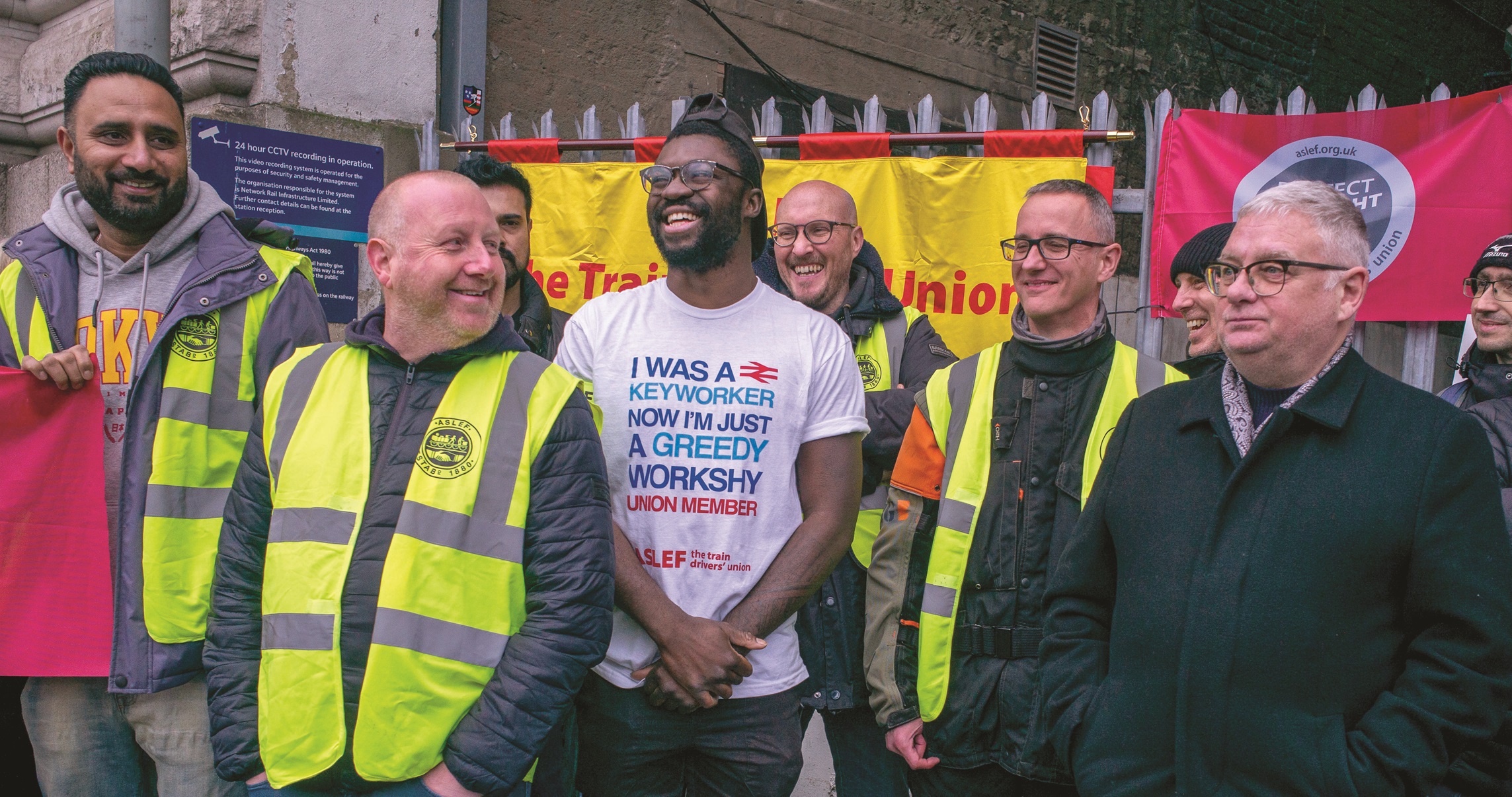
I had the opportunity and privilege to be sent as a delegate from my local Birmingham branch to train drivers’ union Aslef AAD (Annual Assembly of Delegates) 19-22 May in Durham.
Delegates represented members from across the UK, including train drivers on passenger services (Train Operating Companies – TOCs), freight services (Freight Operating Companies – FOCs) and recently nationalised operators. There were workplace reps, committee officers, and rank-and-file activists.
With just under 100 motions submitted, covering a whole range of industrial, political and social issues, from start to finish the conference floor was engaged in intense debate, addressing the issues affecting the lives of train drivers, and what role our union can play in the wider labour movement.
As a second time delegate, AAD this year was just as eye-opening and thought-provoking as previously. But this time we were meeting under Starmer’s Labour government.
Industrial items revolved heavily around health and safety and terms and conditions. Workplace conditions are often not suitable for the 21st century, especially in the freight sector, with lack of access to amenities and hygiene facilities. These issues spur on our crucial ‘dignity for drivers’ campaign.
Public ownership
Delegates rightly made the point that technical issues such as cab ergonomics, traction manufacture, railway infrastructure and implementation of new technology, should be done with direct input from the service workers themselves as the practical ‘industry experts’. That reflected a strong desire to fight for more workers’ control of the nation’s railway.
These arguments leaned naturally into political topics, and the ownership of freight and the rolling stock companies. As more of the passenger network is brought into public ownership as ‘Great British Railways’, the sentiment was expressed ‘You can’t control what you don’t own’. Aslef has welcomed the government’s steps but says there is “scope to go further”. It is the aspiration of Aslef for full nationalisation – we must demand that of Starmer’s Labour.
Whilst there was no disaffiliation motion this year, the limits of Labour’s nationalisation was just one issue which explains the mood of anger and frustration towards the Labour Party that exists among a significant layer of Aslef members.
Funds to Labour
This was reflected in calls from delegates that funds handed over to Labour candidates should be in the form of targeted support for candidates who support policies in line with Aslef policy.
References were made to attacks on striking workers, especially the Birmingham bin dispute; Starmer’s stance on immigration in reaction to Reform UK; the continuation of austerity policies; the attitude to minority rights, including trans people. If any ‘honeymoon period’ did exist among Aslef delegates, that was no longer present for many.
The bulk of Tory anti-union laws are still in place nearly a year after Labour’s election – including the undemocratic 50% ballot threshold for industrial action. I moved a motion that our union should call on the TUC (Trades Union Congress) to organise a special conference to review the Employment Rights Bill and demand its strengthening, and to demand Labour implements fast track legislation to repeal the Tory 2016 Trade Union Act. On the advice of the Executive Committee, this motion was ‘noted’ by conference.
It was inspiring to see there was an atmosphere of working-class militancy from the membership. Solidarity was expressed for fellow workers in dispute, there was a preparedness to fight for improvements, and positive reception to socialist ideas for the direction of our union!