


For mass action from below to end oppression and the cycle of wars
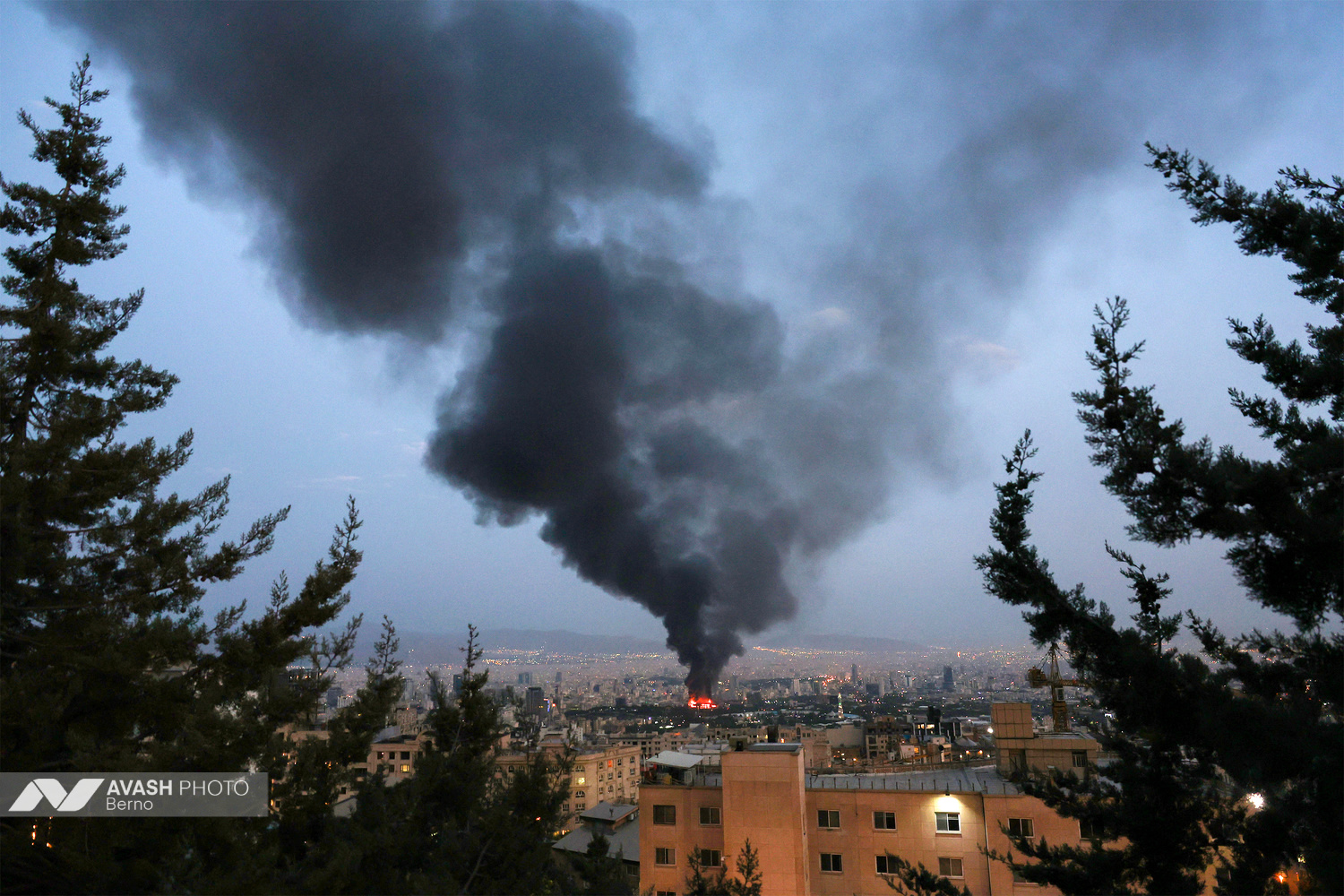
As the Socialist goes to press a fragile ceasefire holds between Iran, Israel and the US. In retaliation to US bombing of Iranian nuclear facilities in the days previous, Iran struck a US air base in Qatar on 23 June.
We carry an article by Robert Bechert, Committee for a Workers’ International, published before Iran’s retaliation and the subsequent ceasefire.
Trump’s decision to join in the Israeli state’s bombing war on Iran clearly marks a new turning point in the already bloodthirsty warfare that has gripped increasing areas of the Middle East. It is widely seen as a gamble both internationally and also for the Trump administration in the US. Its effects can be widespread, not just in the Middle East. It is likely that the Iranian regime is debating what to do, whether to retaliate and, if so, how and when. In a sign of what could develop, a Houthi leader in Yemen has said that a response from this force to the US attack on Iran was “only a matter of time”, despite the ceasefire agreed with the US at the beginning of May.
Exploiting the understandable Israeli shock and anger after the 7 October Hamas attack, the Israeli state began its systematic destruction of Gaza and imposed brutal siege conditions on its population. Simultaneously, state and settler oppression of Palestinians living in east Jerusalem and the West Bank dramatically increased. Soon fighting spread to Lebanon and then the Israeli state seized the opportunity given by dictator Assad’s overthrow in Damascus to seize significant areas of Syria. The Israeli leadership has drawn the conclusion that, at the very least, significant numbers of Palestinians need to be removed from Gaza in order, they hope, to kill off the idea of building a Palestinian state. Now the open entry of the US onto the battlefield and its extension to Iran has created a new situation.
Despite Trump’s bombastic claims, it is by no means certain that the 21-22 June bombing has “completely and totally obliterated” Iran’s nuclear facilities. Within hours, the US military leadership was talking of “severe damage”, as reports emerged of a flow of trucks in and out of these facilities in the days before the US attack. This poses the question of how the Iranian leadership will respond to the attacks, especially if the damage has been limited or repaired.
The propaganda machines have gone into top gear. The sheer size of the weapons the US used is an illustration of the ‘weapons of mass destruction’ that the imperialists possess, and which they continue to develop, but this is not commented upon in the official and pro-capitalist media.
The Western countries continually say that Iran cannot have nuclear weapons, but are continually silent both about Israel’s nuclear weapons and the Israeli state’s brutal record of oppression and land seizures. On 22 June, the British prime minister, Keir Starmer, effectively justified Trump’s bombing campaign by ignoring commenting on it, while describing Iran’s nuclear programme as “a grave threat to international security”. Starmer’s refusal to call on the Israeli government to stop its own bombing campaign mirrors his attitude to the IDF’s assault on Gaza – indeed right at the beginning in October 2023, Starmer argued that “Israel has the right” to withhold electricity and water from Palestinian civilians.
Since then, the numbers killed, overwhelmingly by Israeli forces in Gaza, are, in reality, unknown but 60,000 is certainly a minimum. That is 2.6% of Gaza’s population before the IDF onslaught, a horrendous death toll. In US terms, this would be the equivalent of at least nine million dead. Given this brutal record, it is noteworthy that the main Western governments do not question Israel having its own weapons of mass destruction.
Of course, the reason for this is that, for them, the Israeli capitalist state is a useful ally in an unstable, yet key, resource-rich and strategically important region. Thus, the new German Chancellor, Merz, has told the ZDF German state TV station that he was grateful for the Israeli bombing campaign and described it as “the dirty work Israel is doing for all of us”.
The approach of Trump and his grouping is more transactional. While they argue that it is necessary to defend the Israeli state, in regard to Ukraine, it is more important, at this stage, for them to secure some kind of deal with Putin.
Internationally there will be tremendous repercussions to the US attack on Iran. In the US, the fact that Trump ignored the 1973 War Powers Act to start this war, without congressional approval, will only fuel resistance to the policies he is pursuing. It is another example of how Trump is attempting to consolidate power in the presidency’s hands, and downgrade the so-called ‘checks and balances’ in the US Constitution.
Already opposition is building to Trump, as seen in the 14 June ‘No Kings’ demonstrations across the US. It is likely that the Democrats will attempt to focus opposition on the non-use of the 1973 Act rather than the US’s support and arming of the Israeli government (which characterised the Biden administration).
In the US, the opposition to successive US governments’ support of the Israeli state’s oppression of Palestinians needs to be independent of both Democrats and Republicans. If, as seems possible, the 21-22 June bombing did not achieve its objectives and/or the US military is drawn into direct clashes with Iran or other forces, the already brewing tensions within the broad MAGA movement could deepen. This could provide an opportunity for a worker-based opposition to both Democrats and Republicans, to build support amongst some of those who supported Trump.
In Israel, the US joining in the bombing of Iran may give a temporary further boost to the Netanyahu government’s support, given how Iran has been presented to Israelis as the major threat behind Hamas, Hezbollah, and Assad in Syria etc.
Rise in anger
In the rest of the Middle East and in countries with significant Muslim populations, there will be a further rise both in anger and frustration that nothing is being significantly done to aid the Palestinians.
Of course there will be angry official statements. On 22 June, a Saudi foreign ministry statement “affirmed its condemnation and denunciation of violating the sovereignty of the Islamic Republic of Iran”, but then tamely went on to express “the need to exert all efforts to exercise restraint, de-escalate, and avoid escalation.”
Turkish president Erdogan had been denouncing the post-13 June Israeli bombing campaign as “banditry”. Yet a Turkish foreign ministry statement on 22 June had a different tone: “Turkey is deeply concerned about the possible consequences of the US attack on the Islamic Republic of Iran’s nuclear facilities… Ongoing developments could escalate the regional conflict to a global level. We do not want this catastrophic scenario to become reality.”
It is clear that no capitalist government will act unless it is forced by pressure and movements from below. And even then, such governments will aim to act in a way to benefit their own ruling class.
Significantly Trump, who earned $1.3 million from the sales of Bibles in 2024, evoked the Christian god when he made his announcement of the US bombing raid. He said that he wanted to “thank… in particular, God, I want to just say we love you, God, and we love our great military, protect them”. Describing the US bombing raid against Iran, US Defense Secretary Hegseth offered a religious proclamation: “We give glory to God.”
Religion will continue to be used in this conflict. Nearly all Zionists claim that the Jewish god gave this particular piece of land to “his people”. This can fuel not simply the bitterness of the conflict in the Middle East but also religious conflict, particularly against Jews elsewhere.
This makes it even more important that socialists argue for, and strive to build, a genuine class-based alternative to this cycle of oppression and wars.
The day before the US started bombing, a key Iranian trade union issued an important statement. The Syndicate of Workers of Tehran and Suburbs Bus Company is a semi-legal trade union which has resisted state repression over the years. It has led important struggles in the Iranian capital. The union’s statement showed an attempt to give a direction to “the widespread public anxiety, and the deep fear of destruction and the killing of innocent people”.
The statement went on: “The justice-seeking struggles of us workers in Iran have always faced systematic hostility and repression from the exploitative, authoritarian, and anti-worker state and ruling establishment. This confrontation – now spanning more than four decades – has come at great cost to workers and their families: imprisonment, dismissal, flogging, threats, assaults, and severe economic hardship. This class struggle, which will undoubtedly continue, has never been and will never be waged so that we become cannon fodder for Israel, the United States, or their allies. The backbone of this struggle is the independent, collective, and organised power of workers, justice-seeking people, and the global working class. It not only rejects all imperial powers, but has also suffered serious harm from their interventions, which have undermined and damaged our social foundations and class solidarity.
“Once again, we call on all peace-seeking forces across Iran and the world – especially labour organisations, political organisations and parties, environmental movements, women’s organisations, student and civil groups, human rights defenders, and anti-war movements – to resolutely demand an immediate ceasefire and an end to the war, and to work toward a just and lasting peace. A peace that saves lives from the impending catastrophe, and enables us – workers and the oppressed – to shape our own destiny through our independent organisations.”
While it is possible that popular anger against the Israeli and US attacks will give the Iranian regime breathing space, this will not last forever. Events, whether a movement from below or a crisis within the regime, or maybe a combination of the two, will pose the questions of removing the old regime and what should replace it.
At such a time, the question of how to meet the challenge of building a force – a revolutionary party and wider workers’ organisations – that can achieve the aims of the Tehran bus workers’ statement, will become key. Socialists would argue that to achieve these objectives means replacing the existing government with one based on a movement of working people; a government of representatives of workers and the poor, with policies for the needs of the working masses and their families.
Such a government could break with oppression, capitalism and imperialism, and begin to offer a new future to all the peoples in the Middle East, in a voluntary and equal socialist confederation, and give an example for the world to follow.
