


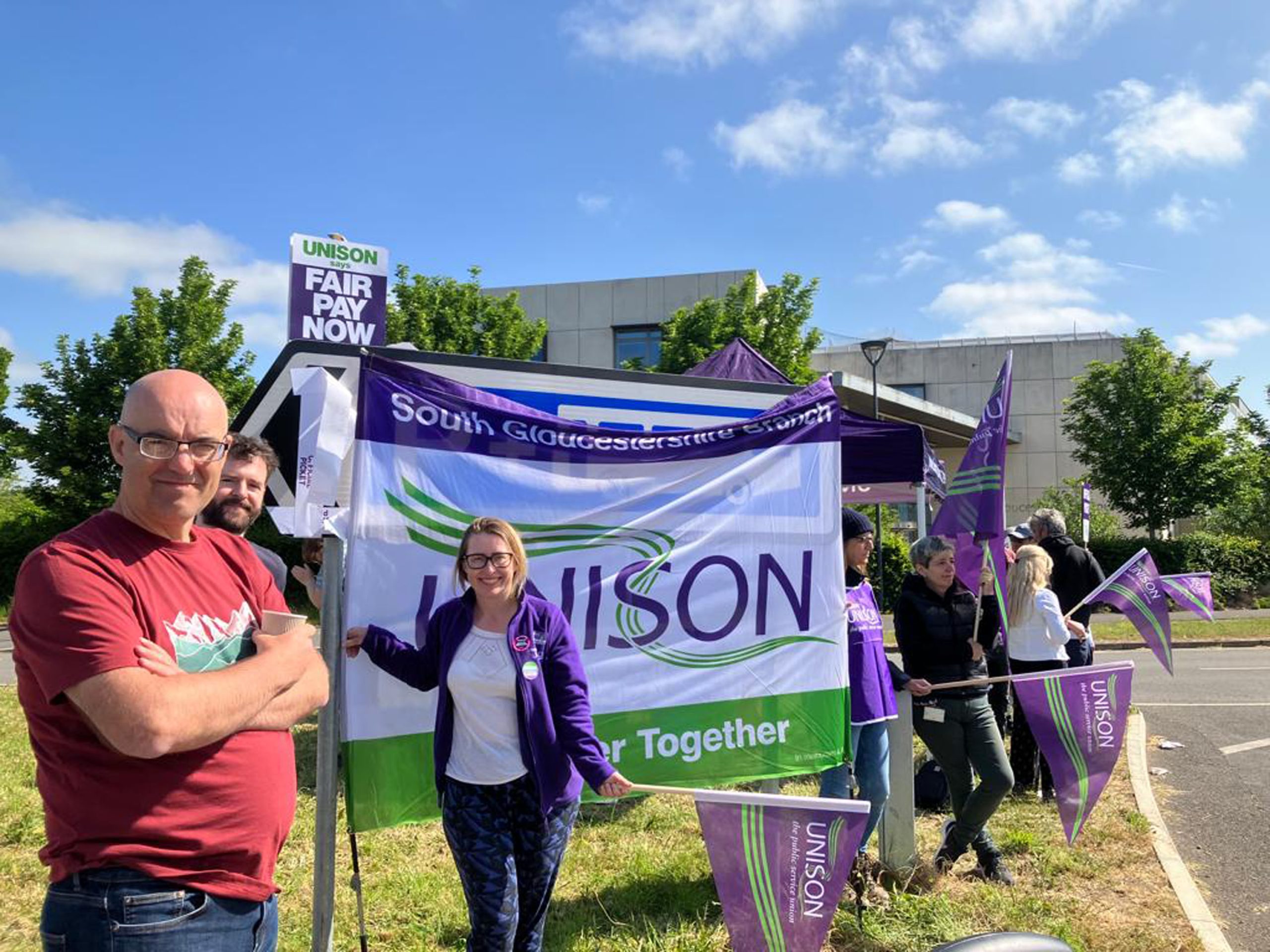
Socialist Party members in Unison
Public sector union Unison members remain angry over the failure of their pay to keep up with the cost of living.
In a consultation exercise, nearly 80% rejected the 3.2% offer from the employers and agreed to take strike action. In one large branch with a 55% turnout, the vote was as high as 97%!
This year’s pay claim for local government workers in England and Wales was for a flat-rate increase of £3,000, aimed at starting to address 15 years of pay stagnation. The estimated loss in real pay of over 20% hasn’t stopped the loss of a million jobs over the same period.
Unison, the main union in the sector, has failed to organise a serious campaign since the wage freeze of 2009. Members normally only notice the campaign after the pay-rise implementation date. Since the anti-democratic Tory strike ballot threshold was introduced, the union has held disaggregated ballots of individual branches, but struggled to get more than three large branches to achieve a 50% turnout. This time the consultation turnout was just under 30% across England, Wales and Northern Ireland.
There is frustration, particularly among a layer of the activists, with the poor strategy adopted by the negotiating committee, the NJC committee, and the lack of priority the officials give to it. There is an urgent need for regions to elect fighters onto that body to transform negotiations on pay and other conditions of service.
However, with resident doctors (previously known as junior doctors) ready to take strike action, it could be possible to open up two fronts against Labour’s pay restraint.
Starmer has been forced back on winter fuel allowances and disability benefit cuts; a million local government workers on strike could force significant concessions.
At the time of writing, members do not know the decision of the union’s negotiating committee (NJC committee) almost two weeks after it met to consider the next steps. The general secretary, Christina McAnea, has reported to the new right-wing dominated NEC that there will not be a ballot. This demonstrates the leadership’s rush to partnership with a Labour government, despite the anger of an increasing layer of members preparing to fight Labour in power.
The NJC committee should be meeting with the other local government unions to reject the 3.2% offer and discuss plans for a coordinated national disaggregated strike ballot, supported by a serious campaign for a ‘Yes to strike’ vote and showing a real determination to fight.
