


James Ivens, Socialist Party national committee
Facing multiple crises, caught between the bosses’ demands for more austerity and simmering working-class anger, the weak and hated Starmer government’s attempts to buy time include fresh attacks on the right to protest.
Alongside the draconian ban on protest group Palestine Action, arrests of anti-war activists are intended to have a chilling effect on working-class opposition. Meanwhile, Labour has still not partially repealed anti-union laws, as promised – on the contrary, court injunctions and army planners have been used to undermine the Birmingham bin strike.
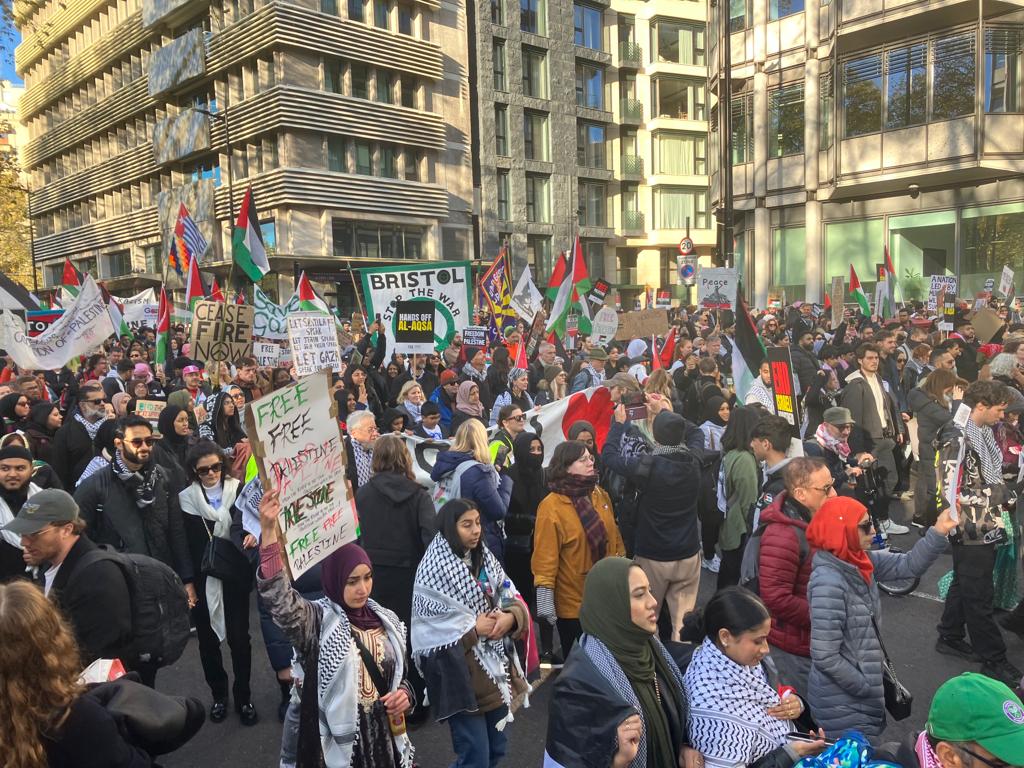
Armed police arrested a woman in Canterbury on 14 July for holding placards saying “Free Gaza” and “Israel is committing genocide”. The spurious grounds were support for a proscribed organisation.
Such scandalous attacks are not new. Arrests were made under the beleaguered Tory government at an earlier stage of the movement, linked then to alleged support for Hamas.
Before the proscription of Palestine Action, over 70 protesters – including a former national executive member of the National Education Union and leading members of anti-war campaign groups – were arrested in January at an anti-war demonstration. The grounds then were breaching a police order not to march.
The Socialist Party utterly opposes these attacks on the democratic right to protest, and the capitalists’ programme of war, occupation and austerity they seek to defend. We demand the immediate dropping of these charges and democratic restrictions.
Mass action can win
One crucial lesson is that mass movements can defend against these attacks while smaller, more isolated protests can be more vulnerable. When Tory home secretary Suella Braverman called on the Met Police to suppress Palestine protests in 2023, calling them “hate marches”, outrage at her comments made the 11 November march on the US embassy the largest of the movement to date, around 800,000 strong. This humiliating undermining of authority led to her sacking.
The trial of anti-war marchers arrested in January was initially set for 7 July. This has now been postponed to February 2026. As with the other examples, the government and courts are trying to intimidate protesters while also fearing a backlash.
So what is needed to push back all these attacks? Two open letters have circulated opposing attacks on the right to protest, signed by trade union leaders, alongside celebrities such as Charlotte Church. More than public statements, trade union leaders need to organise the widespread opposition into a fightback.
This means organising to get big trade union contingents on anti-war demonstrations, not just making statements. It means gathering reps in affected sectors to discuss how to resist the diktats of management and government – and showing members their union will defend them against attacks.
It also means leading the fight against Labour austerity, including through national strike action to win improved pay and conditions from the bosses and their weak Labour government. It would shift the balance of confidence and power across workplaces and wider society in workers’ favour. The Trades Union Congress should call a national weekend demonstration against Labour’s attacks as a step in this direction.
And most of all, a mass working-class alternative to all the capitalist politicians is needed. A party based on the huge potential power and collective democracy of the unions, armed with a socialist programme to take the wealth and power off the capitalists and win resources and rights for all, would inspire huge confidence. The announcements of a potential new party by Zarah Sultana and Jeremy Corbyn are an opening for this – the unions need to fight to build it as such a vehicle for working-class politics.
