

Issue 1333 of the Socialist reported on meetings in five trade unions, following on from a 1,000-strong ‘Trade unionists for a new party’ meeting hosted by former Labour MP Dave Nellist on 21 July.
We carry here extracts from reports of meetings in two more unions. The full reports of these and the other meetings can be read here: ‘Trade unionists discuss how their unions can fight for political representation’. Meet with activists in your union to discuss: linktr.ee/TU4NewParty
Usdaw
20 members of the retail and distribution workers’ union Usdaw joined a Zoom meeting on 31 August.
Usdaw is affiliated to the Labour Party. Iain Dalton, Usdaw Broad Left secretary, speaking in a personal capacity, introduced the discussion outlining the anger of Usdaw members at the policies of the Labour government, such as cutting pensioners’ Winter Fuel Allowance. This was demonstrated with the near unanimous condemnation of this at Usdaw’s Annual Delegate Meeting (ADM). Additionally, the government has attacked disability benefits, failed to repeal the two-child benefit cap, and betrayed the WASPI women over their pensions, going against union policy. Also at ADM, the question of the accountability of the Usdaw group of MPs to union members and the policies we agree was raised.
Keir Starmer’s leadership has suspended Labour MPs who have voted for Usdaw policies, such as scrapping the two-child benefit cap. Former Usdaw equalities officer Ruth George was blocked from standing again for her seat as a Labour candidate. Usdaw members will be rightly asking why are we giving support to Labour MPs who have not backed us on these issues, and not to elected representatives from the workers’ movement, including Usdaw members, who have supported our policies?
It is therefore hardly surprising that Jeremy Corbyn and Zarah Sultana’s announcement of their intention to bring a new party into existence has sparked enormous enthusiasm – over 700,000 people signing up to stay informed.
The meeting discussed Rule 34 of the Usdaw rulebook, ‘Connections with Other Organisations’, where there does not seem to be any clause which would prevent Usdaw nationally from continuing to support MPs or councillors who back Usdaw policies regardless of their status with the Labour Party or not.
What is restricted is branches’ ability to spend political funds, limited to only what is ‘compatible with support for the Labour Party’ (in Rule 34, 2b). A special delegate meeting is scheduled for 2026 where branches could propose amendments to this and any other rules and it was agreed that members would draft motions to go to that meeting taking up this issue.
Much of the union’s rules around political representation, including affiliation and the official support of candidates, are in the hands of ADM decisions, and ultimately implemented by Usdaw’s National Executive Committee (NEC). Frustration at the outgoing Usdaw leadership and current NEC was expressed by many in the meeting, including former Usdaw president Amy Murphy.
With the next round of the election process for Usdaw president and NEC due to start in autumn 2026, supporters of a new workers’ party should consider standing for such positions, with these issues being part of the fighting programme needed for Usdaw, as well as lobby all candidates as to their position.
We will be organising a follow-up meeting and will be preparing potential motions for the 2026 ADM, and we encourage all Usdaw members enthused by Corbyn and Sultana’s initiative to join in the discussion about how we can fight for a real political voice for Usdaw members.
GMB
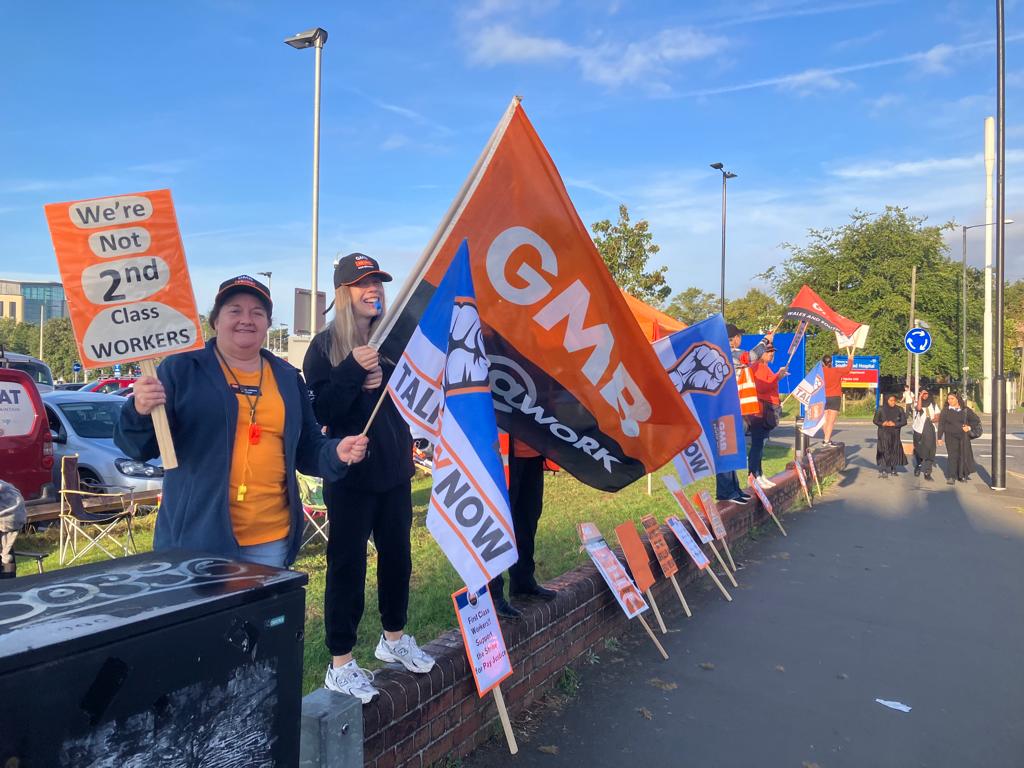
On 20 August, 21 members of general union GMB met online to discuss how we build support across our union – one of the biggest backers of Labour – for a new party of the working-class, with a socialist programme, rooted in the trade unions.
This meeting was a follow-up to the national trade union meeting on 21 July, chaired by Dave Nellist under the banner of Trade Unionists for a New Party, and addressed by Jeremy Corbyn and Zarah Sultana. Almost 50 GMB members signed up for that meeting.
At the ‘GMB for a new party’ meeting in August, there was agreement that Labour no longer acts in the interests of GMB members, and enthusiasm for a new, socialist party. Although our numbers at this first meeting were modest, attendees represented a wide range of regions and sectors, from 17 GMB branches, and most were activists with positions as branch reps or officers, including some regional council members.
This indicates the potential to develop a successful GMB campaign for a new workers’ party.
The meeting was chaired by Gareth Bromhall from the Socialist Party. Gareth is a delegate on the Swansea and Wales Trade Union Councils (WTUC – speaking in a personal capacity) and was also Swansea West parliamentary candidate for the Trade Unionist and Socialist Coalition (TUSC) in the 2024 General Election.
We started with a short video message from Jeremy Corbyn, and then Gareth introduced the proposed model motion. He emphasised that many Labour MPs in the GMB Parliamentary Group are not voting for GMB policies, and that a new party must “unequivocally” be based in the trade unions. GMB has over 500,000 members, and together all unions in Britain have just under 6.5 million members, making us a formidable force in society.
A good debate ensued, with contributions from a majority of those present. The main points included:
- The motion is a ‘model’ motion and can therefore be adapted – whilst keeping to the spirit of the motion – to include specific industrial or political issues relevant to an activist or branch.
- The GMB leadership’s support for Labour conflicts with the fact that GMB members continue to suffer government austerity, attacks on the working class, and Labour council cuts. This disconnect was highlighted at Congress 2025 with many delegates both condemning Labour government policies whilst, later in the week, also giving a standing ovation to the Chancellor. Our campaign for a new party has the potential to channel this massive grassroots anger into a more formal and coherent political voice.
- GMB’s next rule amendment Congress is not until 2027, hence the importance of point 4 in the model motion, arguing for a special policy and rule amendment conference in 2026 to discuss and draw political and organisational conclusions.
- These conclusions do not have to focus on disaffiliation from Labour – instead, the initial aim at least could be on amending our rules to allow GMB to also back candidates from other political parties who are prepared to fight to implement GMB policies.
- The contradiction involved in GMB being affiliated to both the Palestine Solidarity Campaign and the Labour Party, when the latter is proscribing Palestine Action as a terrorist organisation, and by implication seeking to de-legitimise all Palestine supporters.
- The lack of democracy at Congress, e.g. the stage-managed regional questions addressed to the Chancellor.
- The important role that retired GMB members can play in building the campaign.
- One attendee made the point that some GMB activists seek union positions in order to climb up the political ladder, through GMB’s Labour Party liaison structures, which results in a culture of not holding our leadership to account for its’ continued Labour backing. In contrast, when Dave Nellist was a Labour MP in the 1980s, he stood on a ‘worker’s wage’ which rejects the financial benefits of a parliamentary career.
- We need to make sure that GMB members are involved in any new party – through our union’s collective, democratic structures (rather than ‘One Member One Vote’, which is being mooted by some, but would not allow the unions’ collective voice).
- How can we start to meet up and coordinate interventions? Plans were made to meet up and organise at TUC Congress in September. The national Trades Council conference earlier this year carried an emergency motion moved by Gareth and others calling for the TUC to organise a national, anti-austerity demonstration. This motion will now be debated at TUC Congress in September.
- There is an urgency in Wales for building a new, socialist party due to the threat of Reform gaining a significant number of seats in the 2026 Senedd elections – a conference in Wales to debate political representation, called by trades councils, is taking place in October.
At the end of the meeting, an informal vote was taken and the model motion unanimously passed.
Next steps:
- All attendees were encouraged to take the motion back to their branches and get it carried.
- If any regional members meetings are arranged (point 2), please let Gareth and Dave Nellist know.
- The second meeting will be in October, with report-backs on the progress of the motion and next tasks planned.
GMB model motion for branches
This GMB branch notes the brutal anti-worker attacks carried through by this Labour government since taking office in July 2024. A year since its election, Labour has failed to fulfil its pledge (and GMB policy) to repeal the Trade Union Act 2016, or lift the ban on secondary action, voted on at GMB Congress 2025. New austerity measures continue the long, painful driving down of British workers’ living standards. Vicious job and budget cuts in Labour-controlled councils also continue, as do attacks on the trans community and migrant workers, and ongoing complicity in the genocide in Gaza.
This branch welcomes the announcement by Jeremy Corbyn and Zarah Sultana calling for a new political party “rooted in our communities, trade unions and social movements”, with over 750 ,000 people so far signing up to be kept informed. This includes many GMB members and other trade unionists, and shows the potential for a new workers’ party accountable to, and under the democratic control of, the trade union movement.
With motions passed at Unite policy conference and UCU conference opening up discussions in those unions about their political strategy, and many other unions meeting to debate these issues, it is vital that GMB members are not left behind in the discussions now taking place across our movement.
Therefore, this GMB branch calls on the GMB Central Executive Council (CEC) to:
- Launch a discussion at all levels of GMB about our relationship with Labour and the need for a political strategy that supports our members taking action on the basis of agreed GMB policies.
- Encourage regional councils/committees to organise members’ meetings at which members of the GMB Parliamentary Group, as well as the Independent Alliance MPs, are invited to speak. This should include reviewing to what extent an MP’s voting record has been in line with GMB policy.
- Launch a union-wide consultation about the best use of the union’s political fund, including the question of funding candidates outside the Labour Party who will fight to implement GMB policies.
- Convene a special policy and rule amendment conference in 2026 to discuss and draw political and organisational conclusions. This would potentially include the building of a new workers party, standing and supporting workers candidates, and calling for a conference across unions to build a political alternative for workers based on a pro-worker, socialist programme.
Napo
Members of probation union Napo met on 1 September to discuss the role their union can play in building a new party. A report of those discussions will follow.
Wales Trade Union Conference on the crisis of political representation
Saturday 18 October 11am-3pm at Holiday Inn Cardiff City Centre, CF10 1XD. Supported by: Cardiff Trades Union Council; Swansea Trades Union Council; Newport Trades Union Council; Caerphilly Trades Union Council; Bakers, Food and Allied Workers Union; Cardiff Council Unite branch; Cardiff Rail RMT branch; GMB Wales Ambulance Service branch; Cardiff General Unite branch; Cardiff and Area Community Unite branch