

Steve Score, Socialist Party National Committee
“The richest 1% of Britons hold more wealth than 70% of Britons, while the four richest Britons have more wealth than 20 million Britons. How can we grow our economy when no one has any money to buy goods and services? How do we reduce wealth inequality?”
“We tax the rich. How do we tax the rich? We convince politicians.”
These quotes from a post by Gary Stevenson sum up the message of his 1.4 million subscriber YouTube channel ‘Gary’s economics’. He also has a best-selling book “The Trading Game”.
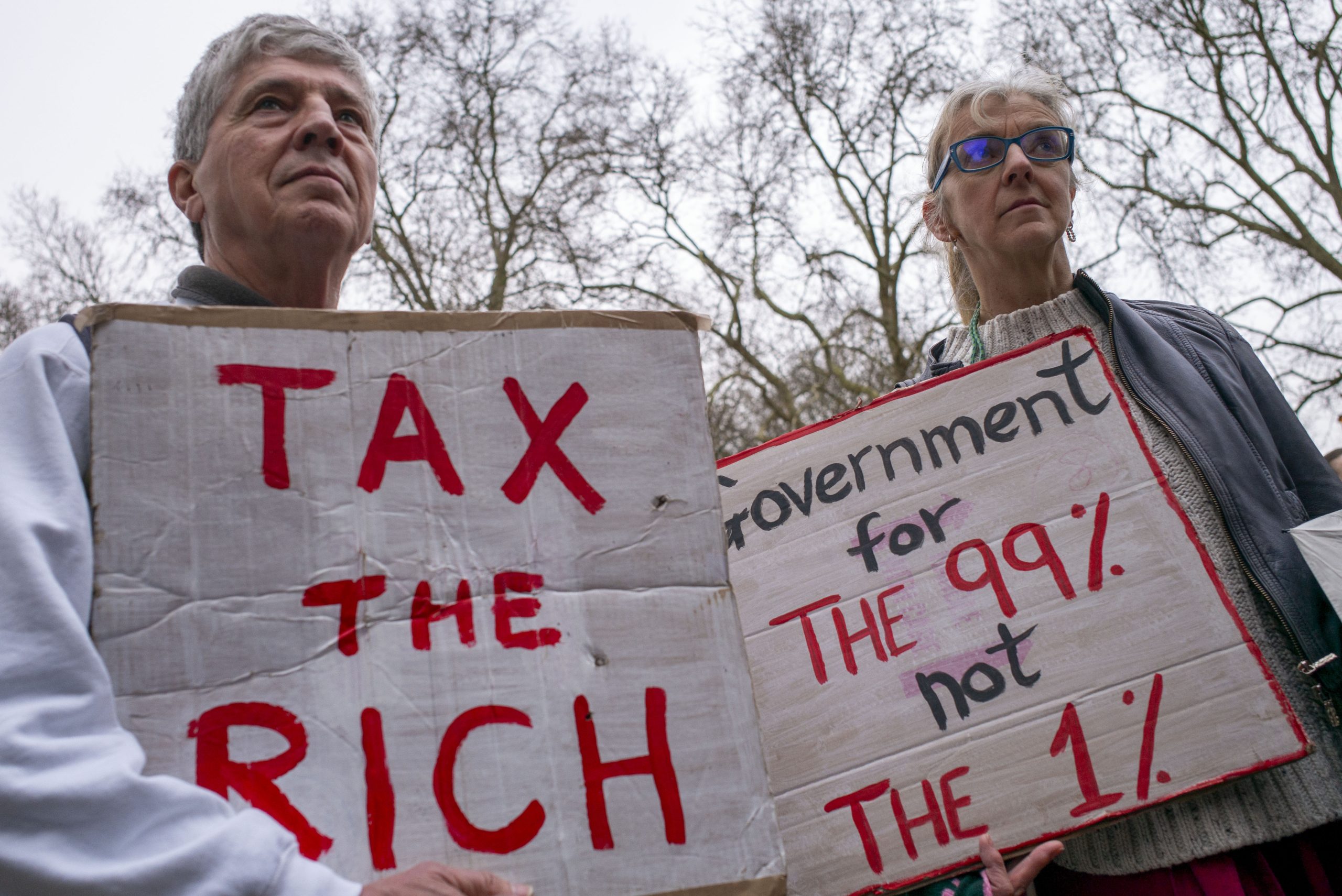
He is good at what he does, explaining his view of economics in a straightforward way to large numbers of people. He is very focused on the need for a wealth tax, not increasing tax on the working class or middle class but on the super-rich. As he puts it: “Tax wealth, not work”, for example assets over £10 million.
The Socialist Party fully supports the idea of taxing the rich, which is popular among many, and no doubt will be discussed as part of the process of developing a new party. We would go further though and argue that we need to nationalise the big companies and financial institutions that dominate the economy, and for a socialist programme to end capitalism itself.
Gary engagingly and honestly explains how, as someone from a working-class background who ended up as market trader working for a big investment bank, he came to these conclusions. He made millions by betting against the economists’ prediction of a big bounce back in the economy after the 2008 banking crash and that inequality meant most people did not have the money to spend, but that the price of assets bought up by the rich would increase. He is part of a group of millionaires who call for higher taxes on the rich.
Won’t they just leave?
He dismisses the argument that you can’t tax the rich because they would ‘just leave the country’ by explaining that the super-rich earn, not by working for wages, but by owning assets and gaining “passive income” from them such as interest and rent (and presumably profits via share ownership). He says they should be taxed, wherever they claimed to live, on those assets that cannot necessarily be moved out of the country. Obviously, things like supermarkets, warehouses, housing etc cannot be moved out of the country. On the other hand, factories can be closed and new ones reopened elsewhere in the world, a process we have seen repeatedly. In cases such as this, nationalisation is necessary to save jobs, not a point made by Gary.
Of course, there is a huge financial and legal industry in existence to assist the super-rich to avoid tax in myriad ways, and they would not accept the level of taxation needed, for example to restore public services, without a massive fight. The only guarantee against them avoiding paying tax would be to take their companies into public ownership.
Capitalist exploitation
But where does wealth come from in the first place? New wealth is created from the labour of the working class, by hand or by brain. But the big employers – the capitalist class – do not pay workers the full value of the wealth they create. They cream off a chunk of it, split between profits for the owners of big business, the rent paid to owners of premises, and the interest paid to bankers and financiers. So, exploitation is built into the foundations of capitalism. All this was explained by Karl Marx a long time ago but is absent from Gary’s argument.
While the Socialist Party fully supports the fight for every step forward in living standards, including squeezing every bit of tax we can from the super-rich, without ending capitalism all the same problems would reoccur.
Gary correctly points to the capitalist contradiction that when inequality is high and wages are low people don’t have the money to spend on consuming. Which means the super-rich don’t see the point in investing in new long-term production and the economy stagnates.
But how do we fight to improve the lives of working-class people? Gary criticises “those on the left” who lobby politicians without building the power that comes from going directly to people to explain the concept clearly. In contrast, he says his first priority was to communicate to a large number of people. Since his YouTube videos regularly get hundreds of thousands of views, he is doing a great job on that.
He argues this can be done best through social media and cites the success of the alt right especially in the US.
But then what? His strategy, explained in one video ‘How to take over your country on YouTube’, is to: build popular support for the idea of a wealth tax and then use that leverage to influence people at the top. He wants “enough connections within” political parties and from “inside posh boy’s elite institutions like thinktanks as unfortunately we can’t get it otherwise”.
Concessions can be won
Under pressure, and the threat of mass action from below, it is possible to wring concessions out of the ruling capitalist class. A small increase in tax on the wealthy is possible even from the under-pressure Starmer Labour government, but not one that would be adequate to solve the problems we face. And all the concessions we force out of the bosses can be taken away. Look at the past 15 years of austerity, the systematic dismantling of the public sector and gains that workers in the past fought tooth and nail for.
The power of popular opinion is not enough, it must be organised. Workers have power to fight the bosses when we act together, in our workplaces and communities. Who really keeps society going was driven home during the Covid-19 pandemic. Working-class people in factories, supermarkets, driving buses etc. or the bosses who sit back and get rich off their backs?
The rich will not give up their wealth easily and would use all methods at their disposal to defend it, including manufacturing economic crisis against a left government and increasing repression from the state. The response of the bondholders, the financiers who own government debt, and currency speculators to the Liz Truss budget would be nothing compared to the crisis they would initiate if a left government came to power and threatened their wealth.
It would therefore be necessary to go further and take control of the financial organisations and the commanding heights of the economy. Workers taking action collectively can bring the country to a halt. To do that we need to be organised. To deliver the real change we need, the decisions on what gets produced, what are acceptable living standards and services can’t be left in the hands of the bosses and the establishment parties, from Starmer’s Labour to the Tories, that represent and defend their interests.
Join the socialists
To do that we need to be organised. The Socialist Party fights for working-class interests, for the action to win whatever we can get from the bosses, through industrial action, community campaigns and more. But we also see the need to change the way society is organised on a fundamental basis, for revolutionary socialist change that would put working-class people in charge. With the commanding heights of the economy in our hands, not the bosses and the bankers, we could democratically decide what we want and need, not what makes a tiny few get very rich.
