


Pete Dickenson, Tower Hamlets Socialist Party
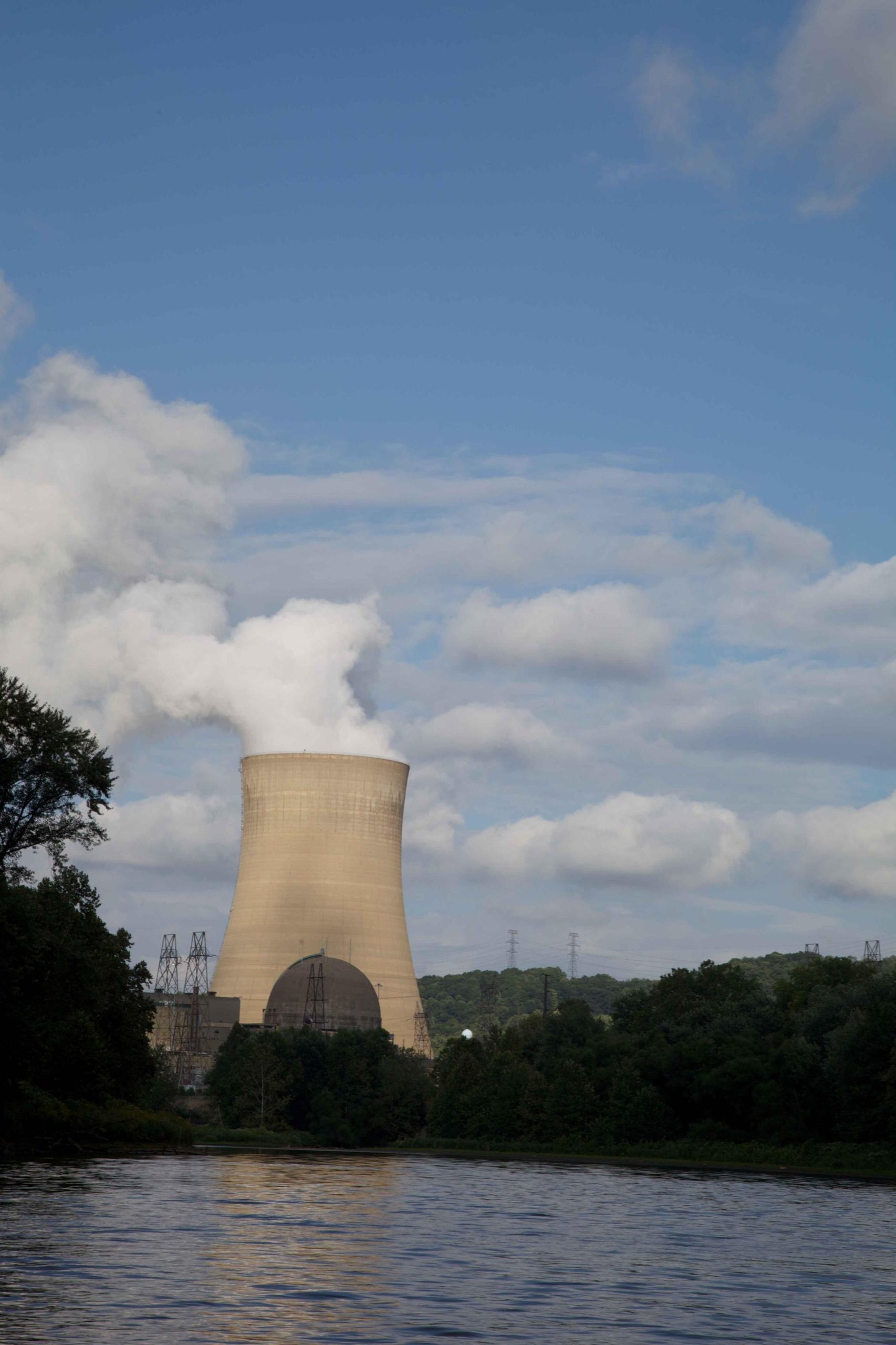
As the major capitalist powers’ refusal to seriously invest to tackle climate change becomes ever clearer, some are looking again to nuclear energy as an alternative because it does not emit carbon dioxide, the main driver of global warming.
Rising costs and public opposition after a series of disasters has meant that the total energy produced by nuclear has largely flatlined globally since the turn of the millennium. Now several states, including Britain, are turning again to nuclear fission – harnessing the energy released by splitting the atom, the basis of all presently operational reactors.
In desperation at the pressing need to phase out fossil fuel production, prominent environment writer George Monbiot, changed his position on nuclear power fifteen years ago, thinking that capitalist governments would be more willing to adopt nuclear than wind, solar or other renewables. He can now point to Britain’s pro-nuclear change in policy, and that of other governments, to support his case. China for instance, has significantly stepped up its nuclear programme.
Direct action groups such as Extinction Rebellion and Just Stop Oil, do not take a position on the nuclear question, they have members who are both for and against. Also, support for nuclear appears to be spreading to some extent among activists on the socialist left, in particular among younger activists.
It is claimed that, because global warming is correctly seen as the major threat facing the planet, risks associated with nuclear power can be justified, since they are significantly less than those linked to climate inaction – and it is a tried and tested technology.
Risks from nuclear power and climate inaction cannot be balanced in abstract against each other without considering in absolute terms just how dangerous nuclear is. Prolonged climate inaction for a significant period could be truly catastrophic. Nuclear risks, although relatively smaller, nevertheless still pose a major threat.
Nuclear safety
Nuclear power generation has two major sources of risk: from future accidents and from storing spent radioactive material, a by-product of the nuclear reaction, for the indefinite future.
The 1986 Chernobyl disaster in Ukraine, although the worst, was just one of a series of nuclear accidents going back to the 1950s. The first was at Sellafield in Britain, then called Windscale, where there was a large leak of radioactivity, then in 1979 at Three Mile Island in the USA, where a meltdown of the reactor core, with potentially disastrous consequences, was only very narrowly avoided. This was followed by Chernobyl in 1986 where a series of explosions in the reactor building sent a massive radioactive cloud around the world and forced the long-term evacuation of land for hundreds of square miles around the site. The most recent disaster was at Fukushima in Japan in 2011 when, following an earthquake and tsunami, the cooling system failed, leading to a meltdown of the reactor core followed by explosions that contaminated surrounding land and sea.
Fukushima and Chernobyl, the worst disasters to date, both had particular design flaws that were instrumental. At Fukushima, the multiple back-up systems should not have had common causes of failure. The earthquake brought down the power lines, cutting off electricity to the cooling system, and the tsunami triggered by the earthquake put the back-up power systems out of action. The power failure could have been avoided by having higher perimeter walls or having the back-up generators on higher ground.
There were multiple design flaws at Chernobyl, the most serious was the absence of a containment vessel around the reactor core. At Fukushima there was a containment vessel but it was poorly designed and could not completely prevent leakage of radiation in the event of an accident. However, the area where spent fuel was stored did not have any containment structure. This was where the fire began and radiation was emitted. However, because there was no protection at all around the reactor at Chernobyl, a much larger amount of radiation was given off compared to Fukushima.
Risk analysis done by designers before nuclear construction always claims vanishingly small chances of a disaster. Their calculations could not foresee the circumstances causing the accidents described, a combination of human error, technical failure, poor design and natural disaster. It is claimed now that at modern nuclear power stations there will be similarly tiny chances of accidents happening.
However, consider the current situation at the nuclear power station at Zaporizhzhia, the largest in Europe. Since 2014, it has been on the front line of the Ukraine war with fighting all around and shells and missiles exploding nearby. Large quantities of radioactive materials are stored on site, some in unprotected ponds. It is just luck that a disaster has not occurred. Or consider future possible flash points, for instance if China attacked Taiwan. Nuclear reactors would be on the front line on the coast of mainland China if there was a counter-attack. Or a major war over Kashmir between India and Pakistan, both with nuclear power stations and nuclear weapons, could create a similarly dangerous situation.
These factors are not and cannot be foreseen and built into a risk model. It could be argued that similar events are unlikely to happen in Britain, but Chernobyl, where radioactive material was quickly blown around the world, proved that nuclear disasters are not contained by borders.
There is controversy over the extent of danger caused by the release of radioactivity. It is agreed that exposure to ‘high level’ and ‘medium level’ nuclear waste is deadly. However, the majority of the waste is ‘low level’, posing a lower risk. How low is disputed. Monbiot makes the point that at the nuclear accidents mentioned here, relatively few casualties occurred, linking this to a small risk attached to low-level radioactive spent material.
At Chernobyl, the worst disaster, he points to the UN figure of a death toll of ‘only’ 4,000. This figure is disputed, with some estimates of 25,000 deaths by 2065, and others far higher even than this. This uncertainty is partly linked to research into the long-term radiation effects not beginning until many years after the accident. Also, because of the long timescales cancer can take to develop after exposure to radiation, and the chaos the Soviet Union descended into in subsequent years, the true figure will never be known.
Many people who were affected dispersed over the former Soviet republics, a huge area, and then around the world after the Soviet Union collapsed, and will never be traced. This also applies to the ‘liquidators’, conscripts who were in the front line of the initial response and were exposed to very high levels of radiation.
Recent research has detected genetic damage in children whose fathers were exposed to radiation after the disaster. Leaving other factors aside, the uncertainty surrounding the danger of low-level radiation calls for a precautionary approach before endorsing a further expansion of nuclear power, as Monbiot has done. Also, on the day of the accident, had the wind blown the radioactive cloud over the nearby city of Kyiv, with its millions of inhabitants, there could have been a far larger loss of life.
An even bigger long-term danger than a nuclear accident is safely storing spent radioactive nuclear material for the indefinite future, at least 100,000 years while it remains dangerously radioactive. No safe method has yet been devised to do this. If the radioactive waste is stored deep underground or at the bottom of the ocean, it could be vulnerable to earthquakes, undersea volcanic activity, major meteorite strikes or changes in geological conditions over such a long time scale, possibly caused by climate change. The materials used to store waste could deteriorate over 100,000 years. All these factors could cause leakage of radioactivity.
In Britain, existing very radioactive ‘high-level’ waste is stored in the nuclear plants themselves and less dangerous ‘low-level’ waste at Sellafield in Cumbria. The quantities involved are large. The Sizewell C nuclear station in Suffolk, recently given the go-ahead by climate secretary Ed Milliband, will generate an estimated 26,880 tonnes of radioactive waste over its 60-year lifecycle. Also, the plutonium used in making nuclear bombs creates further toxic waste.
In 2023, 88,000 tonnes of spent nuclear fuel was stored in the USA alone. Considering the nearly 600 plants around the world operational, under construction and planned, some already accumulating waste for up to 60 years, the size of the problem is clear. A solution will have to be found, it would be irresponsible to add to it further.
Does nuclear expansion meet the urgency for climate action?
In its latest report, the IPCC, the UN body that advises on climate change correctly stresses the need for rapid action if the worst effects of global warming are to be avoided. If nothing meaningful is done in the next 20 years, current extreme weather will get far worse and tipping points, where there is an uncontrollable rise in temperature, will become more likely. However, if a massive expansion of nuclear is contemplated to address the situation, experience has shown that very little would be operational within 20 years. For example, planning began in 2007 on the Hinkley Point C reactor in Somerset, construction started in 2016 and it is expected to be operational in 2031, although some observers put it at 2033. It is true there have been particular problems with Hinkley but, even without construction delays, it would still have taken nearly 20 years from inception to completion.
At present, ‘base load’, i.e. electricity continuously supplied to the national grid, generated by nuclear, is up to 20% of the total. Most of the remainder is provided by renewables and natural gas, which is a greenhouse gas emitter. When the main renewables are not available, e.g. no sun or wind, demand is met mostly by gas and nuclear.
This raises the question of whether demand can be met without fossil fuels and nuclear. One possibility is to use nuclear fusion reactors, where electricity is generated by harnessing the energy released by fusing together atomic particles rather than splitting them. As well as not emitting greenhouse gases, this technology has the advantages compared to fission reactors of not producing radioactive nuclear waste and having a built-in fail-safe mechanism if there is a power failure. However, despite recent breakthroughs and stepping up of development work, particularly in China, it will probably still take decades, at least 20 years, before working reactors are available at the scale needed.
The need to cut the fossil fuel emissions causing global warming is urgent. Other approaches using renewable energy are needed to fill the gap before fusion power could become available. If conventional nuclear fission reactors are removed, extra green capacity will have to be added to meet the approximately 20% of lost capacity.
Investing to improve energy efficiency could be part of addressing the issue, for example by improving home insulation. In 2013 around half a million homes a year were benefiting from government insulation programmes, by 2022, under the impact of austerity cuts, that had reduced to just 60,000. Since, the ‘Great British Insulation Scheme’ promises to assist 400,000 homes by 2026. Larger investment could do more, quicker.
Also, extra power generation capacity will have to be added for the few occasions when wind and solar are not available. Green hydrogen can do the job. It can be manufactured using renewables, wind and solar, when surplus power is available, and existing turbines in power stations converted from burning natural gas to green hydrogen. The technology exists now to do this, it just has to be implemented on the scale needed. Converting power stations to burn hydrogen would of course have a cost, but it can be implemented far faster than nuclear and almost certainly more cheaply, considering the £40 billion-plus cost of the Hinkley Point C project alone.
With the energy industry nationalised under democratic workers’ control and management, investment could be directed towards these developments. Nationalised, democratically controlled banks could finance the huge investment necessary. Workers employed in the industry, including those who would be employed constructing and running nuclear projects, could have their jobs, pay and conditions guaranteed, with the oversight of their trade unions.
Not just because of the unacceptable danger but also due to the long delay before it can be operational on the scale needed, the use of fission-based nuclear power to tackle climate change should be opposed. Viable alternatives are available. None of the capitalist powers can be trusted to put the need to tackle global warming at the top of their agendas, since, for them, profit and increasingly ‘national energy security’ in the era of trade wars and growing international tensions comes first. Through democratic planning internationally, possible only on the basis of socialist change, with the energy industry, big business and the banks brought into public ownership, investment into a ‘green transition’ can bring an end to deepening climate disaster.
- Come to Socialism 2025, 15-16 November in London, a weekend of discussion and debate. Come and discuss: ‘The fight against climate change: world capitalist disorder or socialist planning?’ One of over 30 discussions at Socialism 2025
- Planning for the Planet by Pete Dickenson, buy now for £11.99 at leftbooks.org.uk
