


Suzanne Muna, Unite EC member, personal capacity
The Unite Executive Council (EC) has taken the decision not to nominate or endorse any candidate in the Labour Party’s deputy leader election at a special meeting on 22 September.
Two candidates remained in the running after the Parliamentary Labour Party completed its nominations ballot – Bridget Phillipson, MP for Houghton and Sunderland South, and Lucy Powell, former shadow education secretary and the MP for Manchester Central. A third contender, the Socialist Campaign Group MP, Bell Riberio-Addy, a Unite-sponsored MP, did not get enough MP nominations to reach the next stage.
Philipson is widely considered to be the government’s favoured candidate, whereas Powell, recently sacked as Leader of the House of Commons, is usually described as ‘soft left’ and has received the support of three trade unions, Aslef, the CWU and the Fire Brigades Union.
As a Labour Party-affiliated trade union, Unite was able to nominate one of the PLP-approved candidates, and encourage union members to cast a vote in their favour during the final ballot. It fell to the Executive Council to decide whether to back a candidate, or back neither, and a special EC meeting was called to meet the tight deadline.
It was quickly clear that Philipson was never in the running for Unite’s support, without a single vote cast in her favour. Instead, the EC was divided between supporting Powell and the ‘no endorsement’ option, with supporters of the misnamed United Left group in the union arguing in favour of nominating Powell.
The main argument for endorsement was that, in exchange for the union’s support, we would have greater leverage at a high level within the party, another example of the line of the United Left towards ‘partnership’ with Labour, no matter what the government throws at workers. However, this was rejected by 26 votes to 22, with the general secretary Sharon Graham outlining members’ concerns with both candidates.
Powell not on side of workers
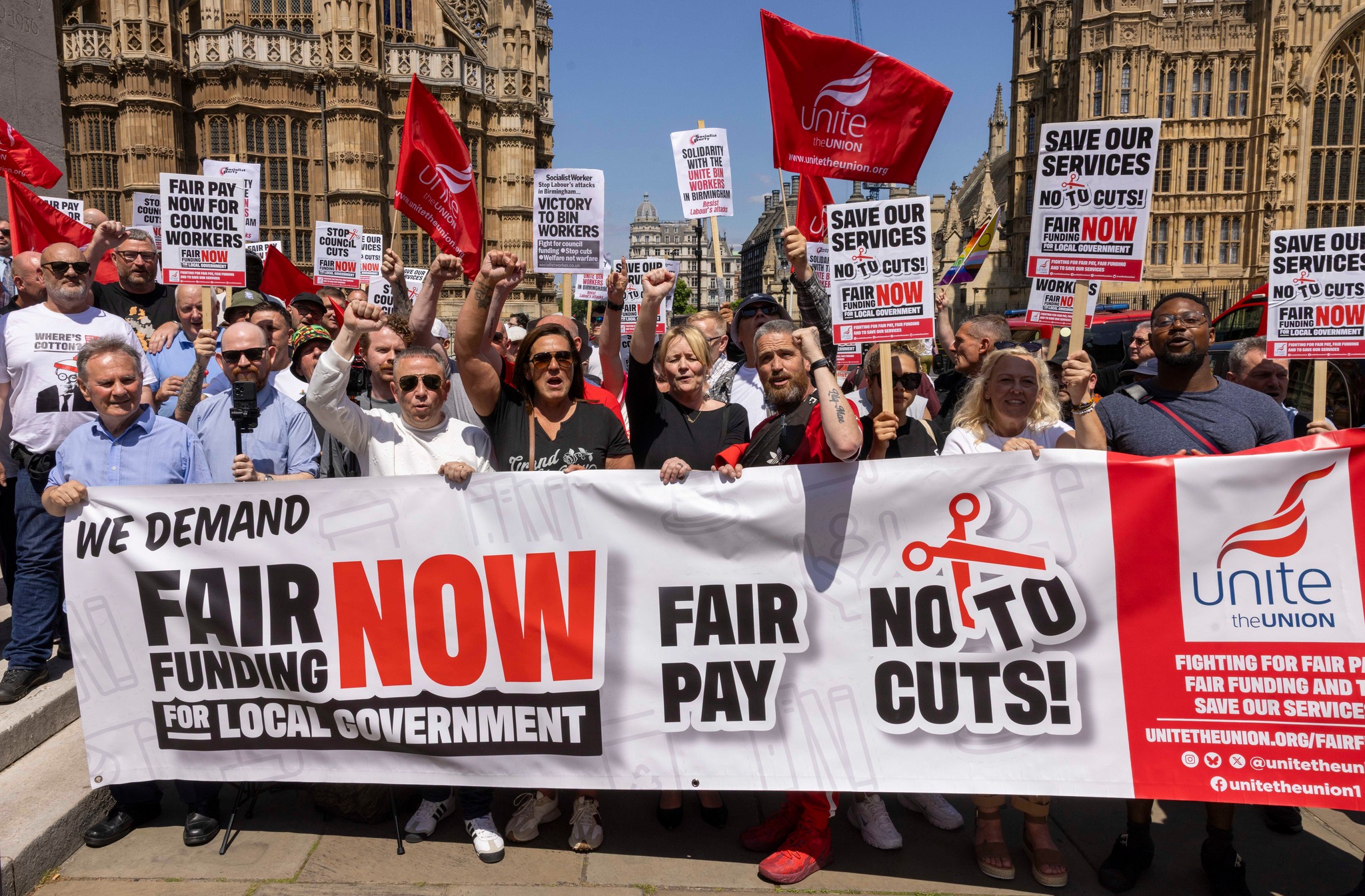
It is not long since Powell criticised the Birmingham bin workers in their current dispute. Mainly organised by Unite, they have been on strike since January. But Powell betrayed the workers, describing the pay offer made by the council as “a reasonable agreement on the table”, and consequently ignoring the one-third reduction in salaries that would have resulted for some, up to £8,000.
Powell is also unpopular within Unite for supporting cuts to the Winter Fuel Allowance, later defending this by saying that failing to make the cut could have led to a run on the pound.
Those who opposed Powell’s endorsement argued that her actions show that her sympathies do not lie with workers. Endorsement would have had the effect of saying that our support is not conditional on representing working-class interests – and unconditional support does not generate influence.
It is important now for Unite to convey not just the decision but the reasons for rejecting Powell’s appeal for our support. And that the decision by this year’s policy conference to “discuss our relationship with Labour” is followed up by the convening of special policy and rules conferences as soon as possible, to draw all the political and organisational conclusions from the situation we find ourselves in.