


Tony Bligh, Socialist Party and Equity union member
In the latest assault on the livelihoods of working performers, some in the film industry are celebrating the launch of ‘Tilly Norwood’, an artificial intelligence capable of producing ‘convincing’ on-screen performances. While the technology is being sold as revolutionary, its impact would be deeply destructive for less well-known actors who already face precarious work and low pay.
The BBC has reported on studios’ growing interest in securing rights to actors’ digital doubles, sometimes indefinitely, for reuse across projects. With the arrival of tools like Tilly Norwood, bosses can sidestep negotiations entirely. Why pay an actor day-rates, pension contributions, or royalties when a machine can generate dialogue, expressions, and movement on command?
This is not progress for the many, it is profit for the few. Established stars, with agents and legal teams, may be able to protect their image. But for supporting actors, extras, and the thousands of working performers who bring authenticity to screen and stage, AI threatens to wipe out vital opportunities. They may be replaced by synthetic ‘talent’ without compensation.
Slop-ification
Worse still, the craft itself is undermined. Human performance is rooted in lived experience, vulnerability, and creativity. An algorithm like Tilly Norwood may mimic gestures, but it cannot feel. To replace actors with code is to strip art of its humanity, further reducing real stories into another commodity churned out by capital.
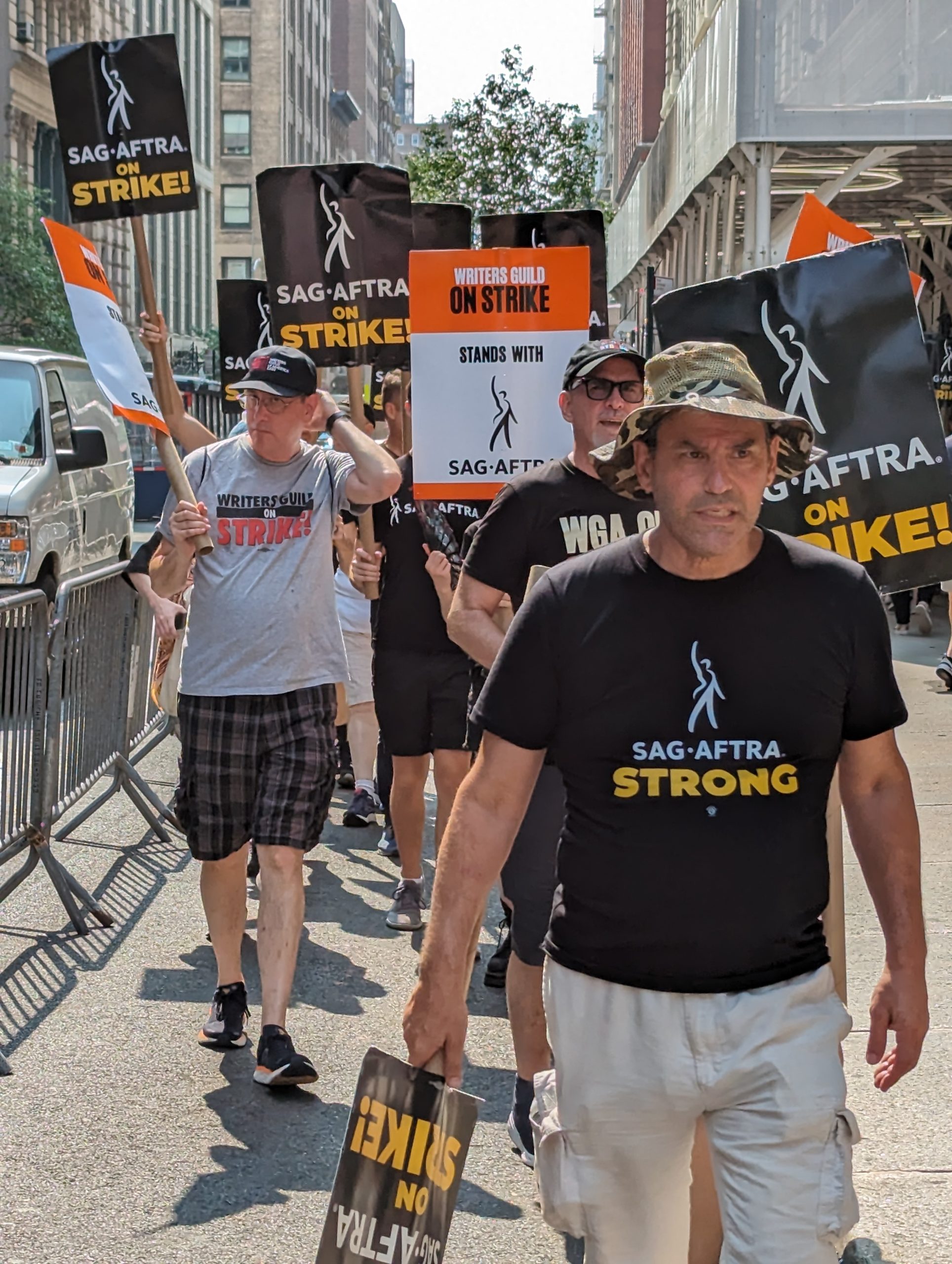
There have been successful pushbacks by US actors’ union SAG-AFTRA and the Writers’ Guild of America. Their strike action in 2023 won protections for both writers and actors against being replaced by AI. This shows the immense power of collective action and what is needed to protect the livelihood of creatives.
Here, the performers’ union Equity should take inspiration and fight to make sure AI is not used as another weapon in the bosses’ arsenal against workers. Stronger union protections, legal limits on AI use, and collective resistance are needed to safeguard both livelihoods and the soul of acting. The struggle is not against technology itself, but against its use to exploit, devalue, and erase workers in the name of profit. And while big bosses dominate the creative industries, as they do across the economy, workers don’t have a real say in how new technologies are implemented. Taking them out of the bosses’ hands and putting them under the democratic control of workers and wider society would stop this race to the bottom.
The future of storytelling must remain in human hands. Otherwise, we risk a future where stories are told by algorithms – and lived by none of us.