


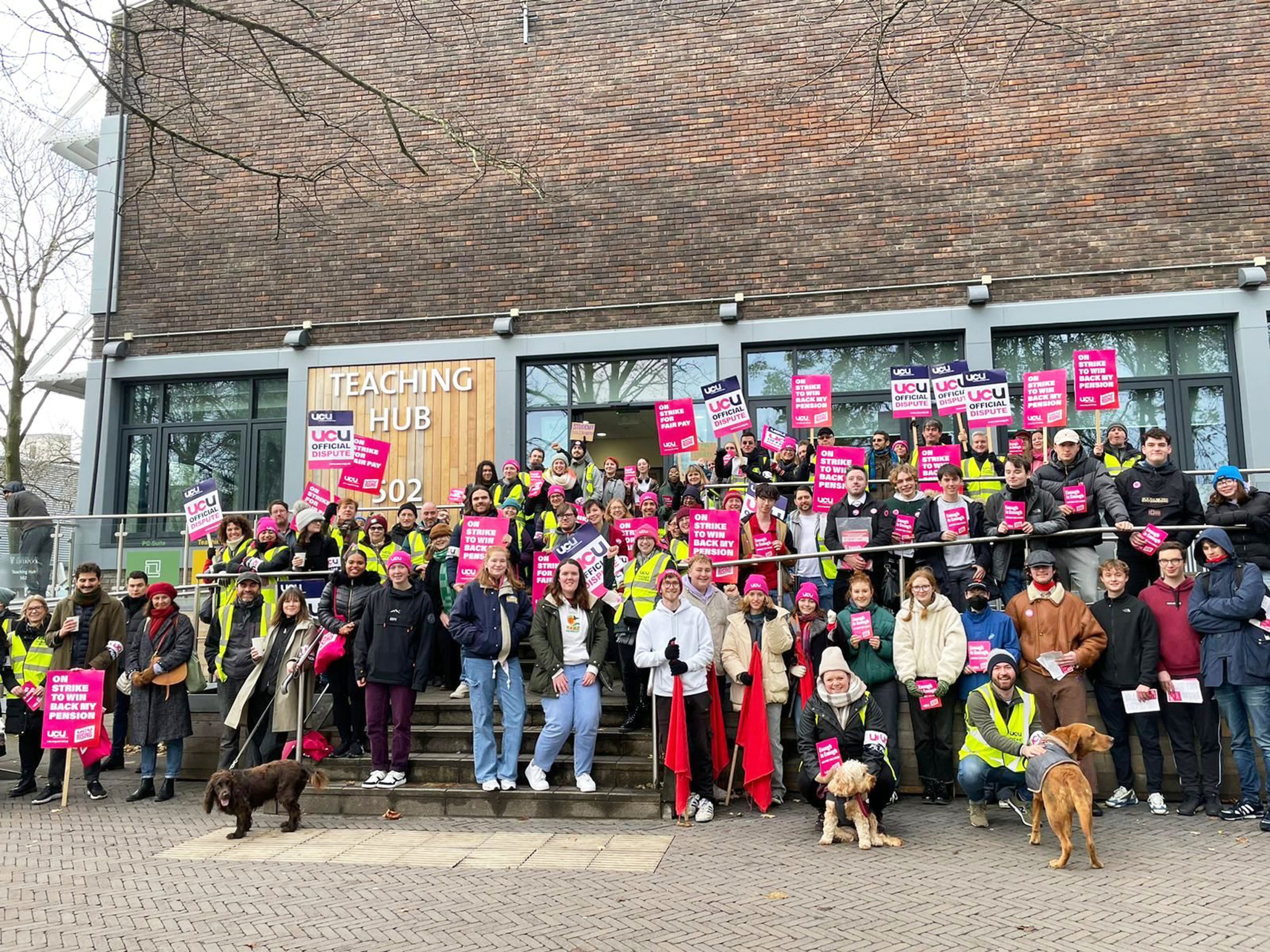
Bea Gardner, UCU member
In the debates taking place about the democratic structures of ‘Your Party’, the Socialist Party has consistently argued for the trade unions to have a collective democratic voice. There are some however, including some trade unionists, who are as yet unconvinced.
One argument is that the unions themselves often don’t act democratically. In the UCU, for example, current general secretary Jo Grady has consistently acted to try to undermine members’ disputes through undemocratic delays and retreats. In doing so, she and those around her have faced fierce opposition from sections of the elected lay leadership of the union – the National Executive Committee, and at the union’s annual Congress (the delegate body which, according to the union’s rules and constitution, sets policy and strategy).
The idea of e-votes and one member one vote is being counterposed to collective representative democracy within the debates about the structure of ‘Your Party’. Yet it is precisely those measures which have been spearheaded by Jo Grady. In her 2024 manifesto, Jo Grady pledged to commission a formal review of the union’s democratic structures to ‘modernise’ the union, and she has pushed for greater use of member surveys and e-consultations, for example.
Undermining collective decision-making
In fact, these measures have already been used as tools to undermine the collective decision-making of the union’s delegate bodies, such as during the 2023 Higher Education disputes.
In March 2023, Grady announced a ‘pause’ of planned strike action without consulting the elected negotiators or the union’s Higher Education Committee. In an attempt to justify her actions, she launched an ‘informal member e-ballot’ which asked three questions in one: “Do you support UCU members voting on the proposals that have been negotiated in both disputes, and pausing strike action while this vote takes place?”.
It’s anyone’s guess as to whether the 67% who voted ‘yes’ were voting to being consulted, to pausing action, or both. But in a Branch Delegate Meeting, where the questions were separate, and where there was discussion, delegates voted to put the proposals to members but to keep the action on.
After this unnecessary delay, members ultimately rejected the proposals and delivered a strong mandate for renewed strike action. In May, Higher Education sector delegates voted in favour of a summer-long re-ballot. In August, a branch delegate meeting voted 98% in favour of an immediate re-ballot. Yet no summer re-ballot took place, leaving members participating in action short of strike with no legal mandate to continue their action.
What could be used to justify the blatant disregard of decisions made at multiple UCU decision-making bodies on so many occasions?
The accusation is that branch reps, and elected delegates, do not ‘represent’ the views of their members’ because they are most active. One claim is they have ‘vested political interests’, for example.
Results of e-consultations are used as ‘evidence’ by the general secretary. Though precisely what information is reported to members is also under the control of the general secretary and her staff. For example, in September 2023, an e-ballot of members was launched to decide whether to end action short of strike action early. 27% of eligible members voted, and of these 60% voted to end early. What wasn’t reported, however, was that 62.7% of members who were actually participating in the action voted to keep it on!
The dispute effectively ended in November 2023 when 68.32% voted to continue with industrial action in a statutory postal ballot, but turnout fell short of the required 50% turnout.
There is no doubt that the failure to meet the ballot threshold was a reflection of a lack of confidence in the union’s leadership, and confusion caused by the mishandling of the dispute. Yet despite all that, members still showed their determination and voted overwhelmingly to continue the dispute. (Read more from 2023: ‘UCU university strikes: We need a serious strategy to win’ at socialistparty.org.uk)
There are important lessons from this experience for ‘Your Party’. If democracy is reduced to all-member votes, power is not in the hands of members but of those who set the questions, who send out official communications and control the flow of information.
Rather than deciding how to vote after discussion with other members engaged in the process of fighting to build the party, an ‘e-consultation’ model means decisions are made in isolation to others, not as a conclusion to a discussion.
Fight for democratic unions
Socialist Party members fight every day within our unions for them to be democratic, fighting organisations. And for the maximum possible involvement of members in the democratic structures. For example, we support local and national strike committees and regular national branch delegate meetings during disputes. Members should decide the course of action – not through passive votes while isolated at home, but in meetings where the arguments can be raised and a collective decision arrived at.
It remains the case that greatest participation in our union structures comes when branches mobilise and organise. Take, for example, the upcoming UCU strike ballots. A centralised campaign via social media and email is not enough. It takes discussions in the workplaces, direct contact with members, to achieve a decisive ‘yes’ vote.
National coordination and leadership is vital for building confidence and having a greater impact. But effective strike action has to be organised locally, and to do that, members need to be organised. And it is this that will develop the pressure on and accountability of the leadership.
Socialist Party members are fighting vigorously for a ‘yes’ vote in the ballot and have every confidence that we can build a successful campaign. Learning these lessons will help us do that.
And it is that kind of trade union organisation that we are arguing should have representation at all levels of Your Party too.