


Socialists fight for serious strategy
Fiona Brittle, PCS NEC member, personal capacity
It’s been nearly five months since PCS conference in May, where members instructed the National Executive Committee (NEC) to build a campaign on the widest possible basis to fight for better pay and pensions, job security, and working conditions. If insufficient progress was made, the NEC was instructed to move to a ballot for industrial action in mid-September.
At the emergency NEC meeting on 23 October, general secretary Fran Heathcote tabled a paper which recommended that the NEC agrees PCS “will not be moving to action at this stage.” Instead, the general secretary recommended that we “continue to engage in talks” and will “keep the position under review in light of any progress in negotiations and changes to our organisational position.”
Her reasoning was to allege members have “limited appetite for action”.
This view was based on three ‘structure tests’: a hastily arranged activist forum and ‘ballot-ready’ schools in late August, and meetings on pay which branches were asked to call from mid-August to mid-September. This was far too late to ballot members in September, and was during a peak holiday period. This eleventh-hour gesture towards organising, following three months of complete silence, cannot be considered a reliable gauge of members’ desire and need for a fight on pay.
Broad Left Network (BLN) members on the NEC, including Socialist Party members, strongly opposed this. The paper contained no plans for mobilising members and build confidence after years of lacklustre campaigns which have failed to achieve members’ demands or see off threats of job cuts from the Tories and now Labour.
Left Unity giving up fight
Make no mistake – this is the misnamed ‘Left Unity’ group (LU), which dominates the NEC, giving up the fight on pay and jobs without achieving members’ demands, as they have done many times before.
The NEC majority, led by president Martin Cavanagh and general secretary Fran Heathcote, sent departmental negotiators into delegated talks as soon as the government published the pay remit – 3.25% plus 0.5% to address low pay – rather than preparing to enter into dispute to increase it.
This remit was never going to be sufficient to deliver anywhere close to the PCS demand of 10% for all members and an £18-an-hour minimum wage. It is unfunded, which means cuts. Without a remit increase, any increase above 3.75% achieved though delegated talks in departments will have to be funded by further cuts in existing budgets.
All trade unionists know that means job cuts, higher workloads, and/or selling off terms and conditions. A coordinated strike campaign is the only chance to force the government to increase the pay remit.
In previous months the NEC has rejected requests from some groups, such as the Department for Education and HM Revenue and Customs, to press forward with their own challenges to the pay remit, on the basis that it would “undermine the national campaign” – which the general secretary now seeks to cancel.
BLN fights for serious strategy
I moved a motion which censured the NEC for failure to deliver a pay campaign. This motion also instructed Heathcote to issue materials for members on how and why we must challenge the pay remit industrially, and prepare now for a ballot to move the government on 2025-26 pay. This motion was defeated by the LU majority.
However, the general secretary continues to argue that having talks at all is a win, compared to the previous Tory government. But pleasantries and warm words from the employer without concrete commitments mean nothing.
Heathcote was asked how anything contained in her paper would concretely prepare members so that, when we test the mood again, we get a different result? We are not researchers conducting a neutral study, we are a trade union and want our members geared up to defend their pay and jobs.
NEC members from LU and PCS Democrats (together known as the Democracy Alliance) made contributions in the debate to say that members “aren’t angry about 3%”; “everyone wants a pay rise but members are not willing to do anything about it.”
This is as insulting as it is wrong. It is a now-familiar pattern from the general secretary and president: refuse to build a campaign, ‘test the mood’ at the last moment, declare members have ‘no appetite to fight’, and abandon the campaign. This was the same argument used by former general secretary Mark Serwotka to run down the 2022-23 campaign.
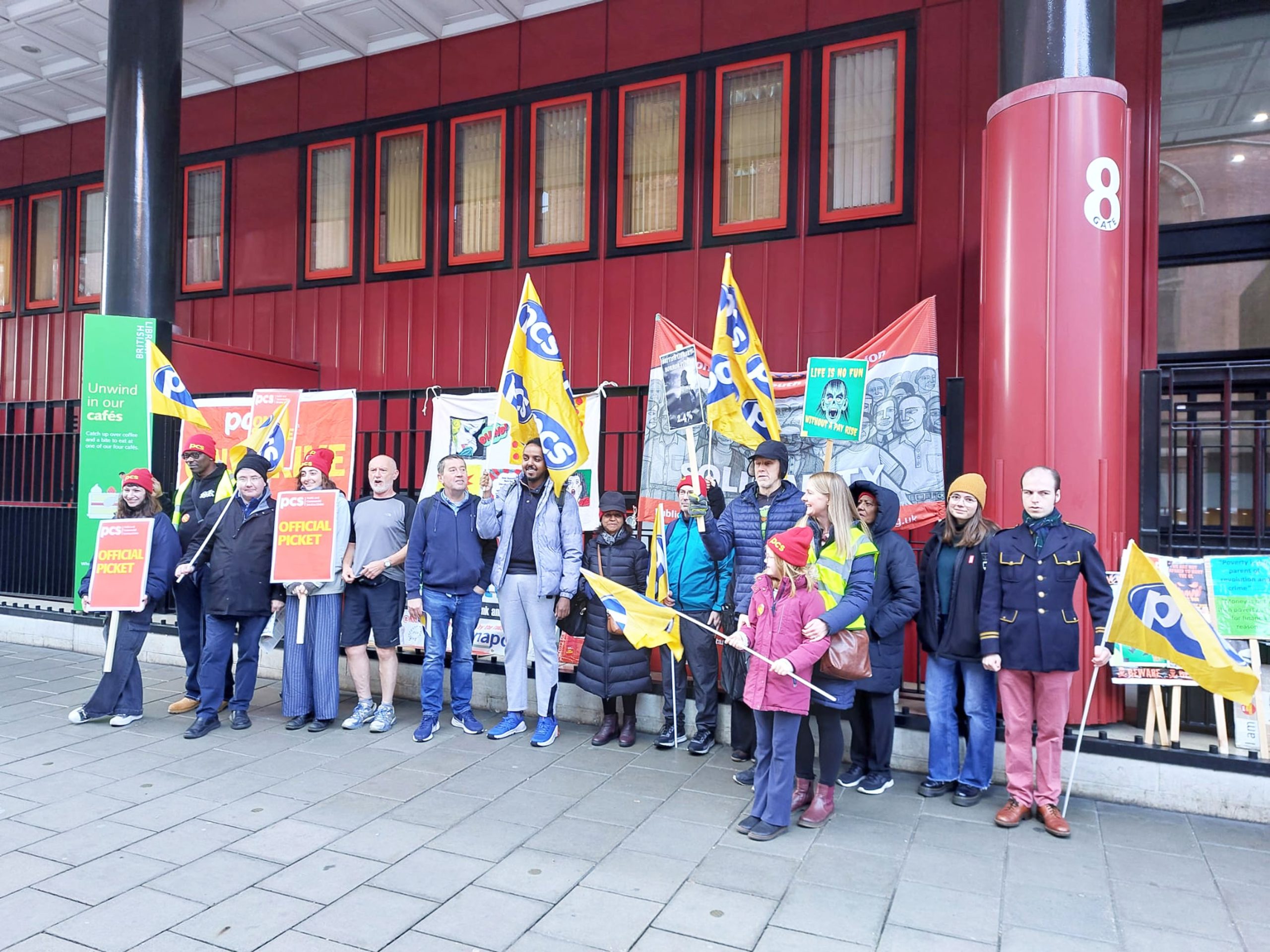
The BLN believes that members will fight when it is needed, and when their elected leadership builds a serious campaign to deliver a ballot for industrial action designed to win. This is evidenced by the numerous successful ballots this year in PCS – Ofgem, Met Police, FM workers, Land Registry, MyCSP, British Library, to name just a few. Members understand the need to fight, but they have no faith that their union will wage the necessary battle against the UK government.
Elect a new, socialist leadership for PCS
It has been clear for a long time that the current leadership does not have the political will to stand up to the employer. We have watched the value of our pay erode and threats to our members’ jobs, without a fight. PCS members who want to fight the government on pay and jobs must unite to elect a socialist leadership for our union in the NEC elections next spring.
Join the BLN: bln.org.uk