

Editorial of the Socialist issue 1347
The Observer newspaper quotes a Labour grandee lamenting that the autumn Budget was “all tacticalism, transactionalism, no overall plan or purpose other than survival.” They weren’t wrong. It was a ‘tactical’ but doomed attempt to mask continued austerity, soothe markets, and cling on.
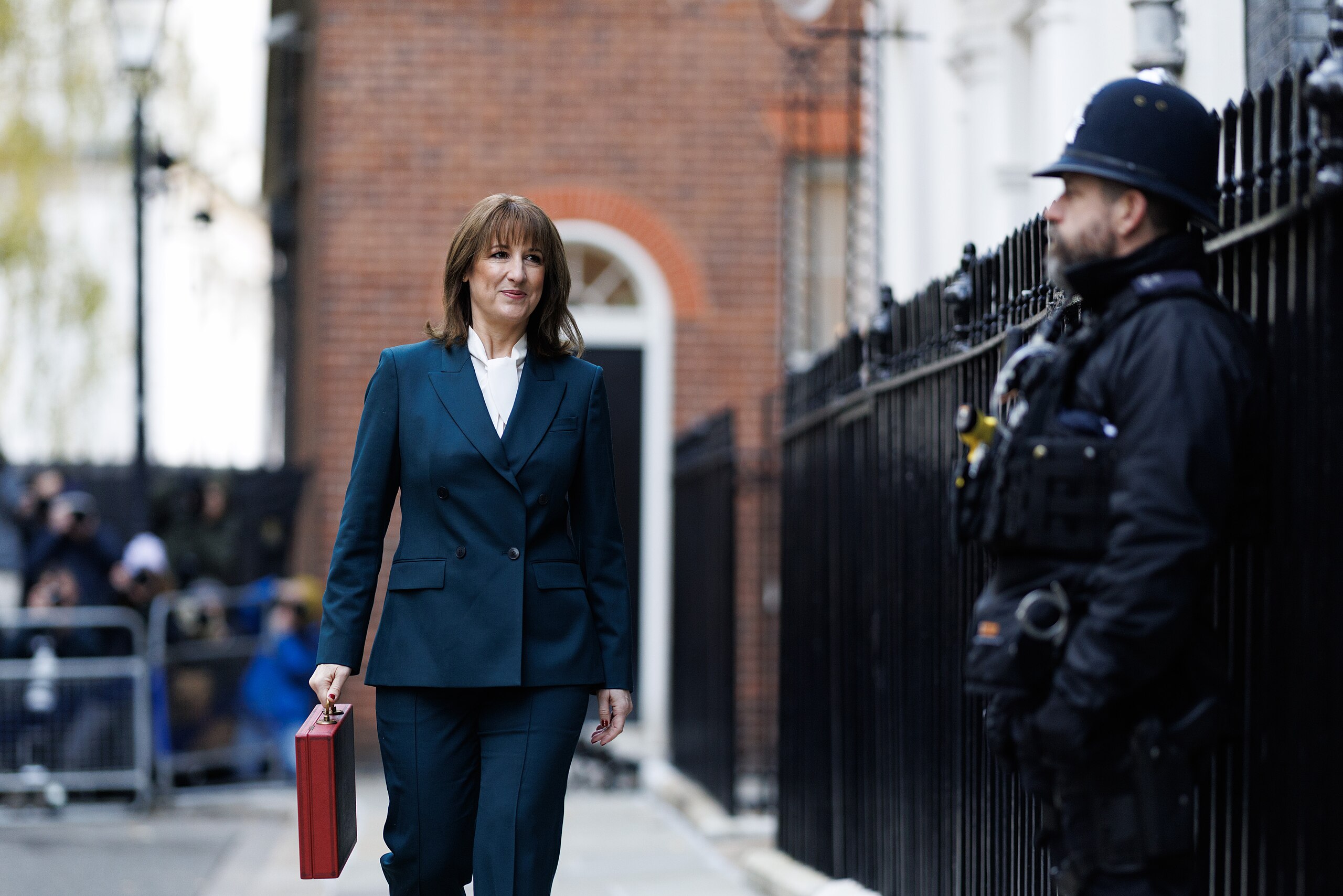
In the months running up to the Budget, amid intense lobbying and threats from the bond markets, and opposing pressure from Labour backbenchers too, speculation on the future of prime minister Keir Starmer and chancellor Rachel Reeves was rife.
Post-Budget, their ‘survival’ remains far from guaranteed. The working class must organise to fight the continued driving down of our living standards promised by this Budget, and to see that Starmer’s government is replaced by one that represents our interests, with a socialist programme.
Nationalising the 150 top banks and corporations under democratic working-class control and management would lay the basis for starting to plan how society’s wealth and capacity are used to meet the needs of all.
The urgency of this task was bolded and underlined by Labour’s retreat on the Employment Rights Bill the day after the Budget. Like the Budget, this proves that Starmer and Reeves do have an ‘overall purpose’. They seek to serve the interests of the capitalist class which demands that our living standards are driven down.
Since the Budget, Starmer is trying to quiet his noisy critics among the bond vigilantes and big business bosses, who are never satisfied, by showing an even greater commitment to continuing benefit cuts.
The start of the Budget was shambolic, with the Office for Budget Responsibility accidentally publishing its analysis before Chancellor Rachel Reeves had presented it to parliament. However, the aftermath has been even messier, with Reeves accused of exaggerating the scale of the ‘black hole’ in the economy in an effort to ‘roll the pitch’ for attacks on living standards.
Taxes
Reeves announced £26 billion worth of tax rises, the overwhelming majority of which fall on working people. £8 billion in the form of a ‘stealth tax’ – maintaining tax thresholds so that lower earners start paying tax, or go up a tax bracket, when they get a pay rise. £4.7 billion will be raised from capping tax breaks on salary-sacrificed pension contributions.
Ruth Curtis of the Resolution Foundation, writing in the Financial Times, described it as the chancellor playing for time with “a ‘tax and save’ rather than a ‘tax and spend’ Budget. Only in 2027 will we know how far and how darkly the ghost of this week will cast its shadow”.
Reeves’s decisions are expected to give her a £22 billion margin for error against her fiscal target. In other words, in the context of a cost-of-living crisis, Starmer and Reeves have chosen to refill the coffers out of workers’ pockets.
They have no plans to spend on the actual black holes of local government funding, schools funding, university funding, or NHS funding. This is a bid for their own survival – so they can carry on attacking us! Curtis estimates they have raised £6 billion “to compensate for forecast changes” and £12 billion “was used to increase her rainy-day fund”.
Hated Labour
But this remains the second-worst period for living standards being squeezed since the 1950s. That’s why Labour has been languishing at about 18% in public opinion polls, on a par with the hated Tories. Both are on track to make significant losses at next May’s elections and have a tiny social base of support.
Only 3% say the economy is in a good state, with 67% saying it will get worse over the next year. The freeze on already unaffordable energy bills and train fares can’t cut through that. And almost half of those polled consider the Budget unfair compared to one in five who thought it fair.
That’s why thoughts of their own survival will also have been a factor motivating Labour backbenchers to demand a Budget containing positive commitments to living standards. They face fury in their constituencies from people at the sharp end of Starmer’s continuation of Tory austerity.
Two-child benefit cap
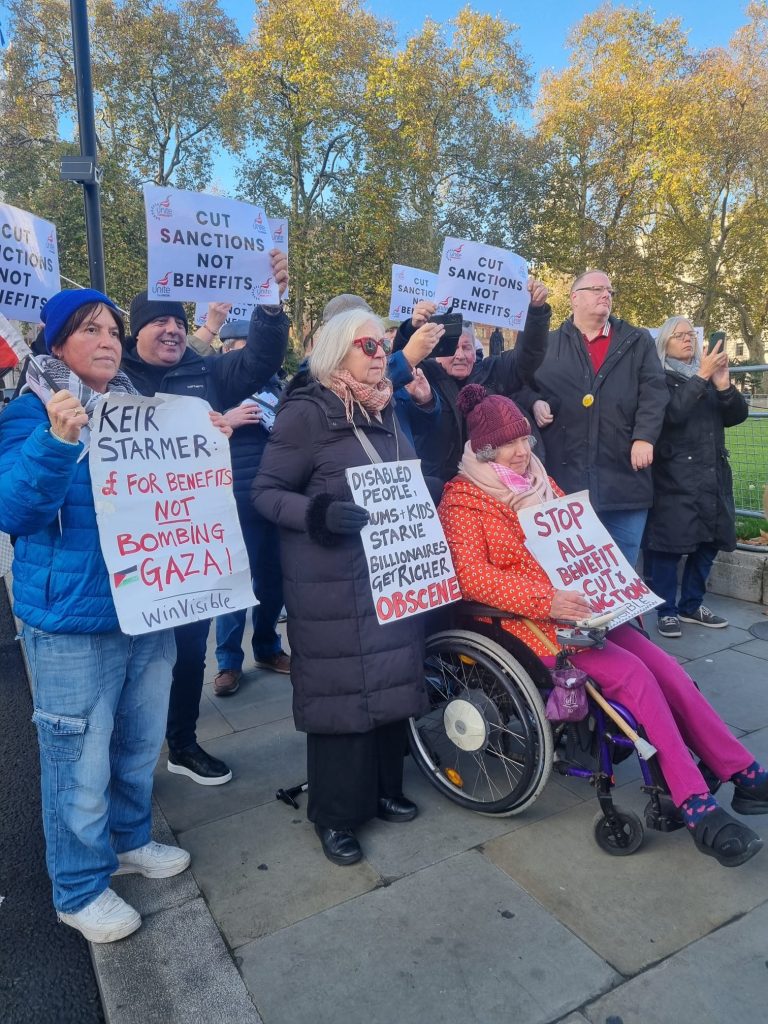
Backbenchers were cheering as they pointed to the abolition of the two-child benefit cap, cruelly kept in place since Labour’s victory in July 2024, and the introduction of a ‘mansion’ tax. While removing the abhorrent limit on support for families with more than two children is to be welcomed, it does not transform the situation facing working-class families.
The cap will be lifted from April at a cost of £3 billion. It is estimated that this will lift 450,000 children out of poverty. But it is estimated that in Britain, the sixth richest country in the world, four and a half million children are living in poverty. And the overall Budget will not transform that situation.
Yes, Labour will exact a bit more from those living in the most expensive homes, but not as much as it is taking from people on the other end of the housing spectrum. The so-called ‘mansion’ tax is expected to raise £400 million – a token ‘rounding error’ cosplaying as a wealth tax.
True to Tory form, Nigel Farage has sought to present this as a tax on “alarm clock Britain,” the “small businesses and hard-working taxpayers who keep this country running”, to pay for benefits. He doesn’t let the fact that 70% of families hit by the two-child benefit cap have a parent in work get in the way of his attempts to whip up division. The low-paying Scrooge bosses responsible are let off the hook by Reform UK.
Trade unions
Unfortunately, he was not challenged by the leader of the TUC (Trades Union Congress) Paul Novak. Instead of cutting across Farage’s attempts at division with a call for workers to unite against Labour’s attacks, he said: “The Chancellor has delivered urgent relief to millions of hard-pressed households up and down the country and helped to rebuild our public services.”
Novak is out of touch with workers’ sentiments in saying: “The policy decisions announced today will disproportionately benefit those low and middle-income households at the sharp end – and tax increases will fall on the wealthiest.”
What he should be doing is using his position of authority with the over five million members of TUC-affiliated unions to drive forward the motion agreed at the TUC Congress in September for a mass trade union-led demonstration against Labour’s austerity. It is a mistake to allow Farage to pose as the opposition to Starmer and Reeves’s Budget.
Sharon Graham, general secretary of Unite the Union, was correct to say that: “On the fundamental issues of who pays for the crisis and the investment required to back British industry, the wrong decisions are being made… The chancellor has picked a side. Health workers, engineers, and tanker drivers will pay through stealth taxes, while city bankers and billionaires go largely unscathed.”
Unite’s analysis shows that the decision to freeze income tax thresholds will result in ten million workers paying the higher rate of income tax. The number of workers paying the higher rate will have gone from one in ten in 2019-20 to one in four by 2030.
The Budget shows the urgency of acting on the decision made at Unite’s policy conference in the summer to re-examine the union’s relationship with Labour. That motion was motivated by the experience of Birmingham Labour council using fire and rehire policies to cut bin workers’ wages by up to £8,000.
The opportunity of next May’s elections is to challenge the austerian defenders of capitalism with socialist no-cuts candidates. That must start now with campaigns to prepare local no-cuts needs budgets.