


Build council homes
Control rents
Unfreeze housing benefits
Ben Goldstone, Croydon Socialist Party
Labour’s newly announced homelessness strategy, while containing some measures that are welcome, is overall inadequate and nowhere near radical enough to actually eradicate homelessness.
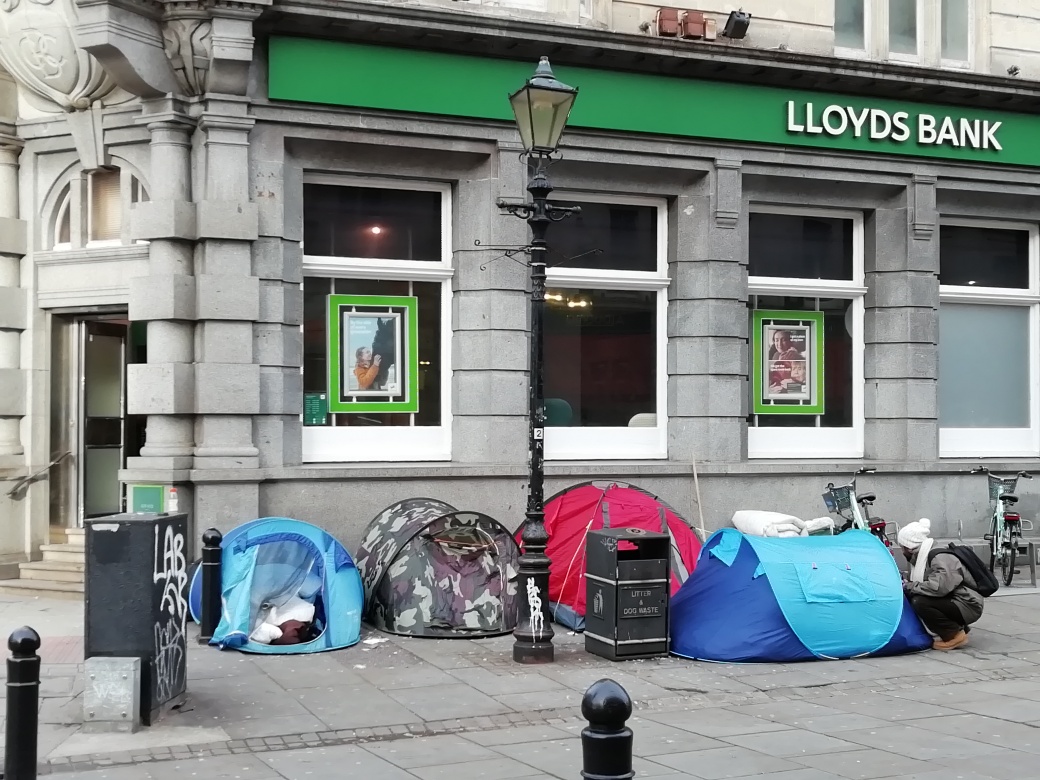
300,000 individuals and families in England alone are now experiencing the worst forms of homelessness, research from charity Crisis has shown. A record number of households are in temporary accommodation, including 170,000 children, the government’s own data reveals.
The government has been forced to act because of the severity of the current situation. It has made three key pledges: to halve the number of long-term rough sleepers, end the use of bed and breakfasts for housing families, and prevent more households from experiencing homelessness. To achieve these quite modest goals would require an end to the austerity measures aimed at placating the markets.
Homelessness is at crisis levels and local authorities’ frontline services are at capacity, and facing rising demand. Research by St Martin’s in the Field (a homelessness charity) has shown that 85% of frontline staff have seen an increase in demands for their service in the past twelve months, and a majority feel they are at risk of burnout.
After years of austerity, homelessness services need to be fully funded. Local councils should stop all cuts, use reserves to fund vital services, and demand that national government plug the gap.
Charities have warned that the current plans do not include an expansion of the Housing First scheme, which provides those who are homeless and have complex needs with housing and support. This needs to be coupled with a mass building programme of affordable and high-quality council homes.
Two important measures that could also be taken, which the government hasn’t announced, are controlling rents and unfreezing housing benefits. In the UK, up until October 2025, average UK monthly private rents increased by 5% in the last year. All the while, people are finding it increasingly difficult to afford their rent – recent figures show that, on average, tenants pay 36.3% of their wages on rent.
The Local Housing Allowance element of benefits is meant to cover the cheapest third of properties in an area; however, the freeze has meant that it has not kept up with rising rents, leaving people struggling. Unfreezing housing benefits and giving workers and communities control over private rents would mean that those on the lowest wages are not pushed into arrears, evictions, and ultimately homelessness.
