



Lessons of the Gorton and Denton by-election on how to defeat Reform
Keir Starmer is currently clinging to his job, desperately trying to portray Peter Mandelson as an aberration, completely different to other New Labour politicians who he claims believe in ‘duty’ and ‘public service’. But Mandelson was at the heart of Tony Blair’s transformation of Labour into New Labour – an out-and-out capitalist party.
This is the man who said back in 1998 that he was “intensely relaxed about people getting filthy rich”. There was never anything relaxed, however, about his desire to make sure he got filthy rich. In 1998, and again in 2001, he had to resign from the Cabinet as a result of dodgy financial dealings. This, and, of course, his long association with the paedophile sex trafficker and banker Jeffrey Epstein, were well known to Starmer when he made him US ambassador in the hope he could successfully suck up to Donald Trump.
Before that Mandelson had played an even more important role for Starmer, and – more fundamentally – for the capitalist class. In the period of Jeremy Corbyn’s leadership of the Labour Party, Mandelson proudly declared that he worked “every single day in some small way to bring forward the end of his tenure in office.” It has now been revealed that he was allowed to personally vet parliamentary candidates in the 2024 election in order to weed out those on the left. Far from being an aberration, Mandelson – with his messianic drive to annihilate Corbynism and to make Labour once again a reliable representative of the capitalist elite – is ‘Starmerism’ personified.
Your Party not contesting by-election
The Mandelson affair can only increase the chance of Starmer’s increasingly hated New Labour being defeated in the Gorton and Denton parliamentary by-election taking place on 26 February. However, it is not going to be the new party founded by Jeremy Corbyn and Zarah Sultana, ‘Your Party’, taking him on at the ballot box.
On the contrary, Your Party is not standing. The leadership’s statement justifies this by saying that “the single greatest threat to this country right now” is a “far-right Reform government” and that they do not believe “a Your Party candidacy would serve our collective goals” and so instead they will “actively mobilise against the far-right” in this by-election. Your Party MP Zarah Sultana has been explicit that this means backing the Green Party candidate, and this is implicitly the position of the whole Your Party leadership. A similar position has been taken by others on the left, including George Galloway’s Workers’ Party.
The current situation was not pre-ordained, however. Back in the summer of 2025, when Jeremy Corbyn and Zarah Sultana first announced a new party, there was a huge surge of enthusiasm. More than 800,000 signed up to support it. Opinion polls indicated that this – as yet unformed – party could get up to 18% of the vote nationally. That response demonstrated the positive memory that millions had of Labour’s anti-austerity programme under Corbyn and, above all, the clear potential to build a party that – instead of being one more party of the capitalist elite – would be a party of and for the working-class majority. Had that opportunity been seized, not least by a systematic campaign aimed at the base of the trade unions, Your Party could now have been a powerful force, with the potential to win the Gorton and Denton by-election.
Unfortunately, we are very far from that. Instead of turning out to the working class, Your Party’s leadership has taken a top-down and controlling approach. No wing of the party’s leadership sees that the working class is the central force in the struggle for socialism. There is therefore no concept of building a party based on the organisations of the working class, in particular the trade unions which organise more than six million workers. As a result Your Party is not on course to meet its initial potential to become a mass democratic workers’ party. Just over 11,000 people have taken part in the nomination process for the party’s current leadership election (see below), a tiny fraction of the numbers who were initially enthused by its announcement.
Green victory possible – but what are the lessons?
Given the current situation, it is inevitable that casting a vote for the Green candidate is going to be the choice of the big majority of those in Gorton and Denton who want to both punish New Labour and to stop Reform from winning. As a result, it is not excluded that Hannah Spencer, the Green Party candidate, could be the next MP for the seat. Just as the victory of the Plaid Cymru candidate in the Caerphilly by-election last October was met with relief by many across the country – happy to see Labour defeated, but not by Reform – the same would be true in response to a Green victory on 26 February.
However, whatever the outcome of this by-election, it is going to intensify discussions on how to defeat Reform at the ballot box. There is a clear danger that the approach taken in this by-election becomes generalised. This would be a serious mistake. There are many different elements in the current electoral support for the right-populists of Reform. Farage is cynically harnessing all the reactionary ideas – particularly anti-migrant moods – that have been whipped up by successive governments, including this one, in order to win votes.
Above all, however, Reform, falsely posing as standing for the ‘little people’, is being picked up by voters as a means to express their rage against all the establishment politicians, which will only have increased in response to the latest Epstein revelations. There is only one force that could cut across this – and that is party of the working class, with a socialist programme and fighting determinedly in defence of working-class people from every background. There have been multiple opportunities to start building such a party over recent years. The biggest was Corbyn’s leadership of the Labour Party. In the 2017 general election, under his leadership, Labour’s anti-austerity programme won over more than a million voters from UKIP, the predecessor of Reform.
We could have been in a very different situation today if, instead of repeated attempts to conciliate with the pro-capitalist forces in Labour – epitomised by Mandelson – Corbyn had launched a struggle to transform the Labour Party into a genuinely anti-austerity workers’ party. This would have included fighting for MPs to be subject to compulsory reselection by a democratic party under the control of its members, with the rights of trade union affiliates restored. Another missed opportunity to build a workers’ party was Enough is Enough – half a million strong and launched by two national trade union leaders and the then Labour MP Zarah Sultana during the 2022/23 strike wave.
And of course, the initial enthusiasm for Your Party was another indication of the potential for such a party. It is also shown in the debates that are developing in the trade union movement on political representation, not least the virtually unanimous vote by the Unite conference last year, representing over a million members, to reassess the union’s relationship with Labour. It is vital to take those debates forward, and to fight for steps towards the organised working-class having an independent political voice in order to successfully cut across the right-populists.
‘Progressive Alliance’ no alternative
It is already clear that right-wing trade union leaders are going to use the need to stop Reform in order to desperately try and justify continued support for a Labour government that is attacking the working class. In reality this approach amounts to rolling out the red carpet for Reform. Others, however, will suggest that a ‘progressive alliance’ is needed, where voters are encouraged to back one candidate with an alleged better chance of winning in order to stop Reform. Where the boundaries are of what counts as ‘progressive’ is rarely defined.
Green leader Zack Polanski has certainly taken a more vocal anti-austerity stand than previous Green leaders, including denouncing ‘the system rigged for the rich’, but he has indicated that his ‘progressive alliance’ could include Labour, provided Starmer is no longer its leader. Yet it is clear that, after the experience of Corbynism, the capitalist class is determined never to allow another genuinely left Labour leader, and while a new leader will want to appear to be a ‘new broom’, the fundamentally anti-working class character of Labour would not change.
If the workers’ movement was to refuse to step into the electoral field in order to back allegedly ‘progressive’ candidates that then continue to attack the working class, this would guarantee future victories to Reform and their ilk, even if it managed to block them in the short term in a particular election. What is more it would leave the working class without a political voice.
In this volatile political period it is impossible to predict the outcome of the next general election. There are going to be further opportunities to found a mass workers’ party which would completely transform the current situation. But for all those who are rightly desperate to stop a Reform victory it is also necessary to think about what would be needed to defeat Reform if they were to win a general election. Trade union membership has increased 200% in councils that they lead, and a Reform government would face huge working-class opposition from day one. But how much more strength that movement would have if there was at least a block of socialist working class MPs offering real opposition in parliament? By contrast if the only parliamentary opposition was from capitalist politicians calling on Reform to be more ‘pro-establishment’ it would help them to maintain their false anti-establishment credentials for a period. There is a comparison here with the debates that took place in the trade union movement at the start of the last century where huge pressure to back the allegedly ‘progressive’ Liberal Party in order to block the more openly reactionary Tories was ultimately unsuccessful in preventing the working class starting to build its own party.
So should we just back the Greens?
Some of those initially enthused by Your Party have since joined the Greens, hoping that it can develop into the kind of party that is needed. The Greens already have four MPs and more than 800 councillors, and are certain to get more of the latter elected in May. That is why leading trade unionists have signed a petition, initiated by the Trade Unionists for a New Party campaign, calling on Zack Polanski to join the struggle against local authority austerity and insist that “no candidate shall appear on the ballot paper on behalf of the Greens who has not made a public commitment to vote against all cuts and closures to council services, jobs, pay and conditions should they be elected as a councillor on May 7th.”
Clearly a positive response to the petition by Polanski would be a step forward. Up until now, however, that has not been the approach of the vast majority of Green councillors. Their existing councillors could already be an important weapon in the fight against local council cuts, but instead in 41 councils they are currently part of administrations – in coalition variously with Labour, Liberals, ‘Independents’ and Tories – and are implementing cuts and council tax rises on the same basis as other councillors. Nor are they all taking an anti-austerity stand even when in opposition. In Warwickshire County Council, where Reform leads the authority, Green councillors were among those who voted against Reform – in order to demand a bigger increase in council tax. To state the obvious this will do nothing to cut across Reform!
The Green Party is not a workers’ party, and a trade union that affiliated to it would have no say in its democratic decision-making process. More fundamentally, it does not see the working class as the force that is central to social change. It is also a party that – in essence – accepts the constraints of this rotten capitalist system. That it has not yet been prepared to take a stand against local authority austerity but has instead joined local coalitions with capitalist parties, points to the danger of how in the future it could follow the road of Green Parties in Germany, Ireland, Scotland and elsewhere in joining capitalist pro-austerity governments.
Clearly, some in the Green Party are socialists. However, it would be a serious mistake for socialists and trade unionists to stand aside from the elections this May – and future parliamentary by-elections – in order to back Green candidates regardless of their position on austerity. Instead we need the broadest stand of trade unionists, socialists and working-class community candidates as possible – alongside Your Party and genuine anti-austerity Greens – as a step towards overcoming the current crisis of independent working-class political representation.
Your Party CEC elections
Voting in the CEC elections is scheduled to run from 9-23 February. Unfortunately, the Socialist Party members that wanted to contest the elections, Dave Nellist, April Ashley and Moe Manir, were undemocratically excluded on the grounds that they are members of the Socialist Party as well as Your Party, despite the Socialist Party writing to the Your Party leadership well in advance in order to try and clarify the issue. (See: Letter to Your Party, from the Socialist Party – Socialist Party)
Nonetheless, we call on Your Party members to vote for candidates in their regions who support the call for the party to ‘turn to the working class’, to put the trade unions central, to make the most of the opportunities presented for an anti-cuts socialist stand in May’s elections, and stand against exclusions of socialists.
This approach is not wholly applicable for all the candidates for the National Office holders. Neither Jeremy Corbyn nor Zarah Sultana, for example, see the need to orientate to the organised working class with a campaign aimed at the base of the trade unions. However, to vote for one but not the other would accelerate the possibility of an early split – without a sufficiently clear demarcation – which would set back the role Your Party could still play, if it ‘turns to the working class’, in the formation of the mass workers’ party that is needed.
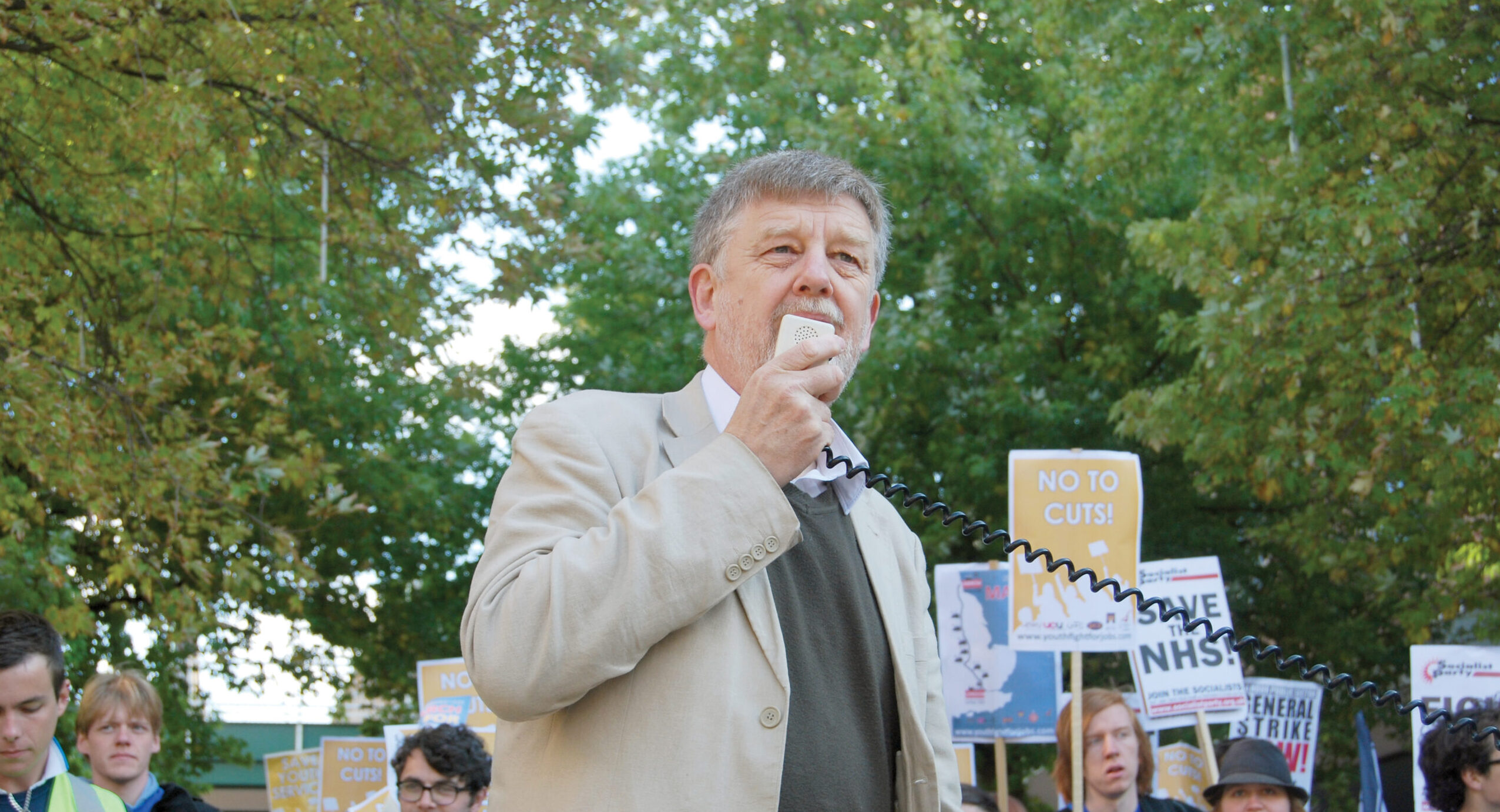
Dave Nellist says: “Coventry SP is recommending voting for Councillor Grace Lewis as No. 1 in the Your Party executive elections for the public office holders’ seats, as the first councillor to switch to Your Party, who has championed the local People’s Budget conference and nationally campaigned on an anti-austerity and anti-war agenda.”
