


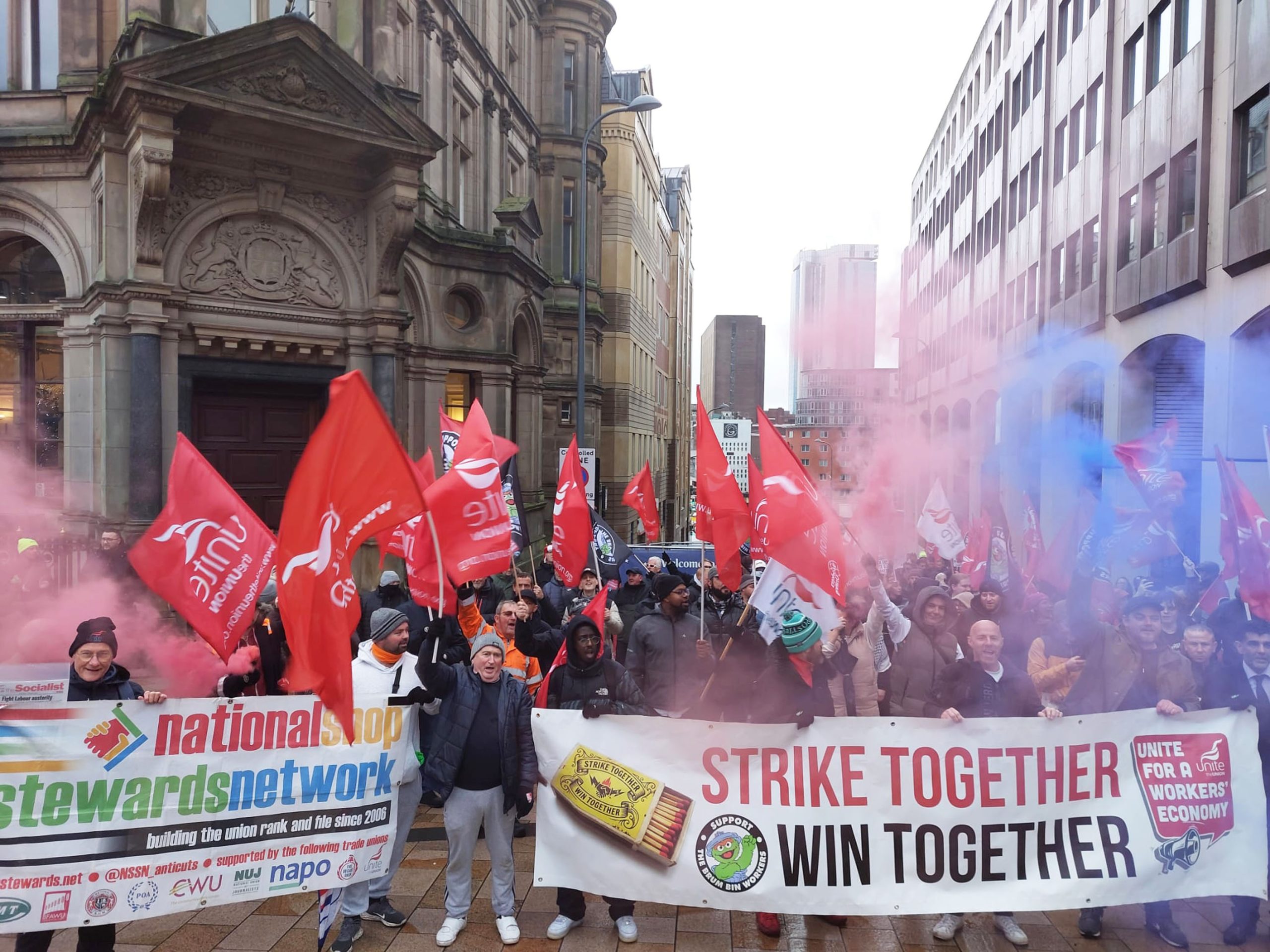
In recent months, independent activists supporting striking Birmingham bin workers have been disrupting bin collections by standing and walking in front of bin lorries at the depot gates. Having already outrageously obtained an undemocratic injunction to prevent bin workers themselves conducting normal legitimate picketing, the council is currently applying the courts to prevent any and every “persons unknown” from doing so anywhere within the city.
The Socialist has received this anonymous letter:
As one of the so-called “persons unknown” now targeted by an injunction application from Labour Birmingham City Council, I am more convinced than ever that this legal offensive is about suppressing effective solidarity, not solving a dispute. The council’s own evidence shows just how rattled it has become by the determination of Birmingham’s refuse workers and their supporters. After fourteen months of strikes backed by Unite the Union, the authority is now asking the courts to criminalise tactics that have exposed the reality of its pay-cut agenda, increased the pressure on the council and hampered its scabbing operations. The council admitted during the court hearing that collections are down 50% and it is struggling to cope.
Solidarity has grown because people across Birmingham understand what is at stake. These workers face losses of thousands of pounds a year, while senior management salaries remain untouched. That injustice has mobilised trade unionists and campaigners, including support networks coordinated through Strike Map and the National Shop Stewards Network. Their involvement reflects a wider recognition: an attack on one group of workers is an attack on all.
The council claims it only wants to prevent ‘disruption’, but the disruption has been caused by the council’s attack on the workers, which the action of supporters is aimed at forcing employers to negotiate to resolve. If granted, this injunction could threaten protesters with fines, asset seizure, or even prison, simply for standing with workers. That is a dangerous precedent. It reveals how quickly legal mechanisms can be deployed to curtail collective action when it proves effective.
The protests outside depots have been peaceful, disciplined, and rooted in a proud tradition of working-class people standing together in solidarity. Supporters have used slow walking and a mass presence to highlight that a service built on slashing workers’ wages is not sustainable.
Yet instead of negotiating seriously, the council has stated that it is prepared to dip into its reserves to bankroll lawyers and injunctions. It will spend to break the strike, but not to settle it. That choice speaks volumes about Labour’s priorities in a city already struggling with years of cuts and declining services.
This should increase questions for the leadership of unions that remain affiliated to the Labour Party, not least Unite. Many workers hoped that the change of government would mean a rollback of anti-union restrictions. Instead, we are seeing the same old playbook: wage cuts imposed, resistance met with lawfare, and democratic protest portrayed as the problem rather than the policy that provoked it.
Whatever the court decides, the dispute will not be resolved through injunctions. It will end only when the council negotiates a fair settlement. Until then, “persons unknown”, and this should mean the whole trade union movement, must and will remain standing shoulder to shoulder with the bin workers – both industrially and politically – defending their livelihoods and the principle that solidarity is not a crime.
By P. Unknown