


Marco Tesei, UCU NEC member, personal capacity
The National Executive Committee (NEC) of the University and College Union (UCU) met on Friday 13 March. Incredibly, despite the existential funding crisis in post-16 education and the two national ballots that have been run in recent months in both higher and further education (HE and FE), this was the first NEC meeting since 7 November.
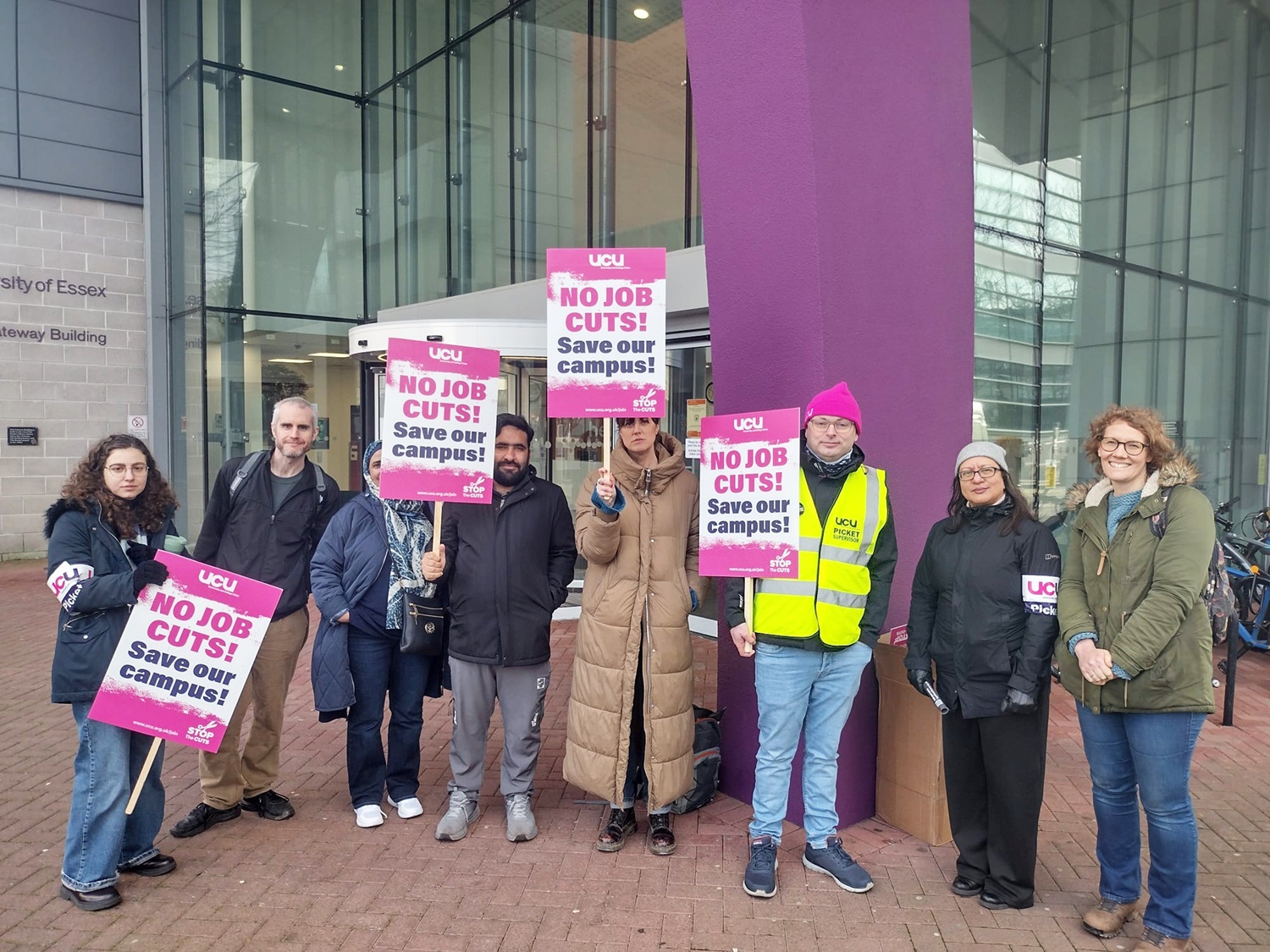
The anger of post-16 education workers is at boiling point, shown by a whole number of bitter local disputes against job cuts and closures. At UCU Congress in May 2025 both sectors voted overwhelmingly to ballot for national strike action. With a serious centrally led ballot campaign and the leadership’s genuine will to win for 120,000 members, this could have become a major national showdown with Starmer’s government over funding.
Instead, despite an overwhelming vote for action, the ballot in HE missed the Tory 50% turnout threshold (disgracefully still in place after 20 months of this Labour government). In her report to the NEC, Grady acknowledged that some members did not have confidence in the leadership’s strategy and therefore decided not to vote.
In FE, members were balloted on a disaggregated basis, which meant that although over 90% of members voted for action and the threshold was beaten nationally, only 32 of England’s over 200 colleges won mandates and, beyond a few local wins on pay and workload, FE’s key demand for a binding national bargaining framework remains unmet.
Yet at the March NEC, the urgency of the situation was evaded in general secretary Jo Grady’s report. Instead of a plan for how to take our fight forward, we were offered a dry overview of the sector’s dire state, as if there’s little we can do about it! Her only stated strategy is to continue to lobby ministers and local MPs, and hope that the new cross-party parliamentary group she recently set up – without NEC knowledge and whose membership is still largely unclear – will deliver results.
Political representation
On political representation, I asked about last year’s Congress motion 63, which called for UCU to explore alternatives to Labour and invite Jeremy Corbyn and other pro-worker MPs to the NEC. Grady said that Corbyn had been invited but was unavailable, while Zack Polanski had been invited to UCU Congress instead. As if to say: ‘I consider that job done now.’
The reference to Polanski, along with UCU’s fringe meeting at the last Green Party conference, suggests a shift in Grady’s political positioning. Until recently covering for Labour, she is now dismissive: “Starmer’s living on borrowed time”. Are she and her supporters (who hold a majority on the NEC) now pinning hopes on the Green Party as a future saviour of post-16 education? Or are they using it as a means by which to try to avoid working with other unions to take steps towards a party based on the working class, that fights in workers’ interests?
Following Grady’s expression of enthusiasm for the Together ‘Love, Hope and Unity’ march against the far right on 28 March, which – without NEC discussion – UCU is supporting, Socialist Party member Duncan Moore asked whether she had reminded the TUC General Council of its September congress resolution to name the date for an anti-austerity demonstration. That would have a greater effect on undercutting support for Reform and winning the funding we need. A motion proposed by Duncan instructing her to propose a date to the TUC had been agreed overwhelmingly at the November NEC.
Grady did not answer the question, but instead dismissed it, saying the TUC definitely wasn’t an organisation that would confront the government. But the TUC organises over six million workers with huge potential power and its leaders must be kept under pressure. Which other organisation does she think has the same power to confront the government? This again is the avoidance of a serious struggle.
How much UCU has donated to Together has not been revealed to the NEC – we will be demanding full oversight by the elected lay leadership of donations and how they are spent, including that the demands of the Together Alliance should be trade union demands.
For branch reps like me, who work tirelessly and know in our bones that members are ready to fight, this unwillingness to lead the massive fight that is required to save post-16 education is deeply frustrating.
Keep up pressure for a serious struggle
But reps should not lose heart. The fighting mood in HE and FE cannot be held back indefinitely, and continuing austerity will only intensify it.
We have to keep arguing that it is only nationwide collective action that can achieve our demands. In FE colleges, where localism has long dominated, this is crucial. This must go hand in hand with developing a new layer of fighting branch reps who are also willing to stand in UCU national elections and give a lead.
