


Caspar Loettgers, Sol (CWI Germany)
In 2025, the Economist magazine named Portugal the ‘Economy of the Year’. According to the magazine, high growth rates and a lucrative stock market promise good investment opportunities for those with the necessary capital. But this is not enough for the Portuguese capitalists. In order to remain an attractive production base, particularly for German and French companies, capital demanded further structural ‘reforms’ from the government. Following two general strikes, Portugal’s working class has, for the time being, fended off these plans.
‘Trabalho XXI’ was the name of the labour market package presented in July 2025 by the minority government, consisting of the conservative CDS-PP and the conservative-liberal PSD. According to these plans, protection against dismissal was to be weakened, collective agreements made easier to terminate, the right to strike undermined by ‘essential services’, outsourcing simplified, and the weekly working hours unilaterally extended by companies to up to 50 hours through individual hour banks. These reforms were intended to follow on from years of neoliberal policies which, since the euro crisis, have eroded social standards and were designed to make Portugal more attractive to investors.
Portugal stands still
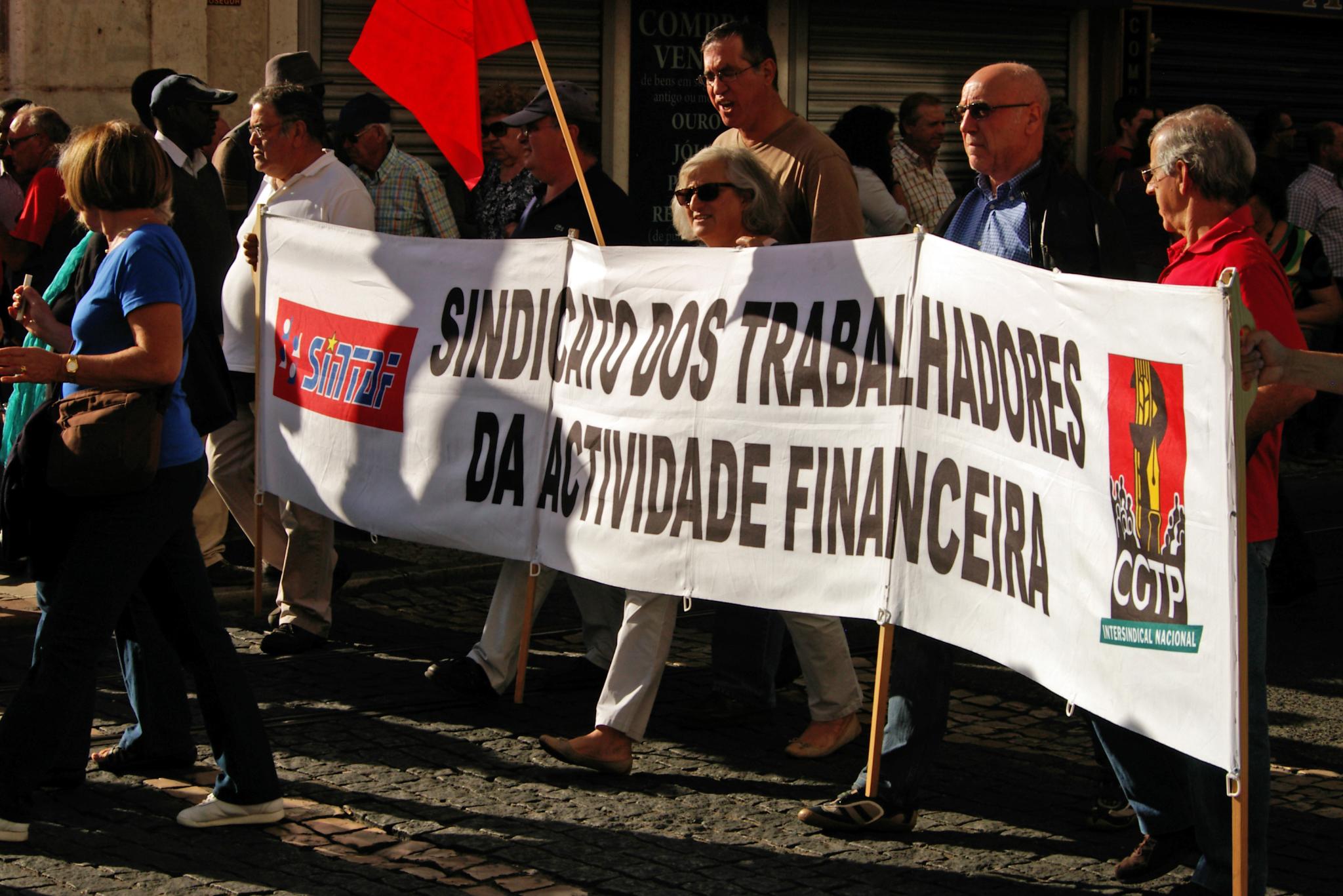
The government’s proposals were rightly met with outrage among the general public. In Portugal, 1.8 million people are already living on less than 632 euros a month. Poverty is particularly acute in the overseas territories due to their long history of oppression. In the Azores, almost one in three people lives in poverty. Consequently, the call by the two largest trade union confederations, the CGTP and the UGT, for a one-day general strike in December 2025, was well received.
On 11 December, Portugal came to a standstill. In a country of 10.8 million inhabitants, around three million workers took part in the strike – as many as during the revolutionary period in April 1974, when the Salazar-Caetano dictatorship was overthrown.
From the outset, the government tried to play down the level of participation in the strike. The Minister for the Presidency, António Leitão Amaro, stated: “This appears to be more of a partial strike by the public sector. The country is functioning. The level of participation is negligible.”
The reality, however, was clearly quite different. At the country’s largest factory, the VW Autoeuropa plant, the production lines were at a standstill that morning; in most hospitals, only emergency services were available; and at Lisbon Airport, half of all flights were cancelled (100% of TAP Airlines flights and 80% of EasyJet flights). Demonstrations took place in all major cities; in Lisbon, 30,000 people, among others, and in Porto 10,000 people expressed their anger at the government’s plans.
In June of this year, the CGTP organised another general strike, which received widespread support despite the UGT leadership’s refusal to call for a strike.
There were also numerous sectoral strikes spread across the last few months.
When the legislative package was finally tabled for its first reading in the Assembleia da República on 19 June, only the parties of the minority government and the Liberal Initiative (IL) voted in favour. The Left Bloc, comprising various left-wing parties, voted against it.
The far-right Chega party negotiated with the government right up to the end, but then, surprisingly, also voted against it. However, it did not do so because it was opposed in principle to reforms in the interests of capital, as the negotiations showed. As recently as 2019, Chega went into the election calling for the trade unions to be dissolved and the labour market to be fully liberalised. Yet even Chega relies on a voter base that would be affected by labour market ‘reforms’ and which largely rejected them. As in Germany, there are also sections of the working class in Portugal who, out of anger at the existing conditions and disappointment with left-wing parties, give credence to the right-wing’s pied-pipers’ slogans. The pressure from the strike movement was so great that the Chega leadership ultimately felt compelled to side with the left-wing parties against it.
From a defensive struggle to the offensive
Ultimately, under capitalism there will always be a tendency to roll back hard-won reforms in the interests of the working class. In Portugal, too, Labour Minister Ramalho announced shortly after the lost vote in parliament that she would “take up the matter again”. This makes it all the more important now to build on this success and prepare further strikes to secure improvements. In doing so, we must also discuss how to build consistent political representation for the working class – in the form of a mass socialist workers’ party.
