


Mila Hughes
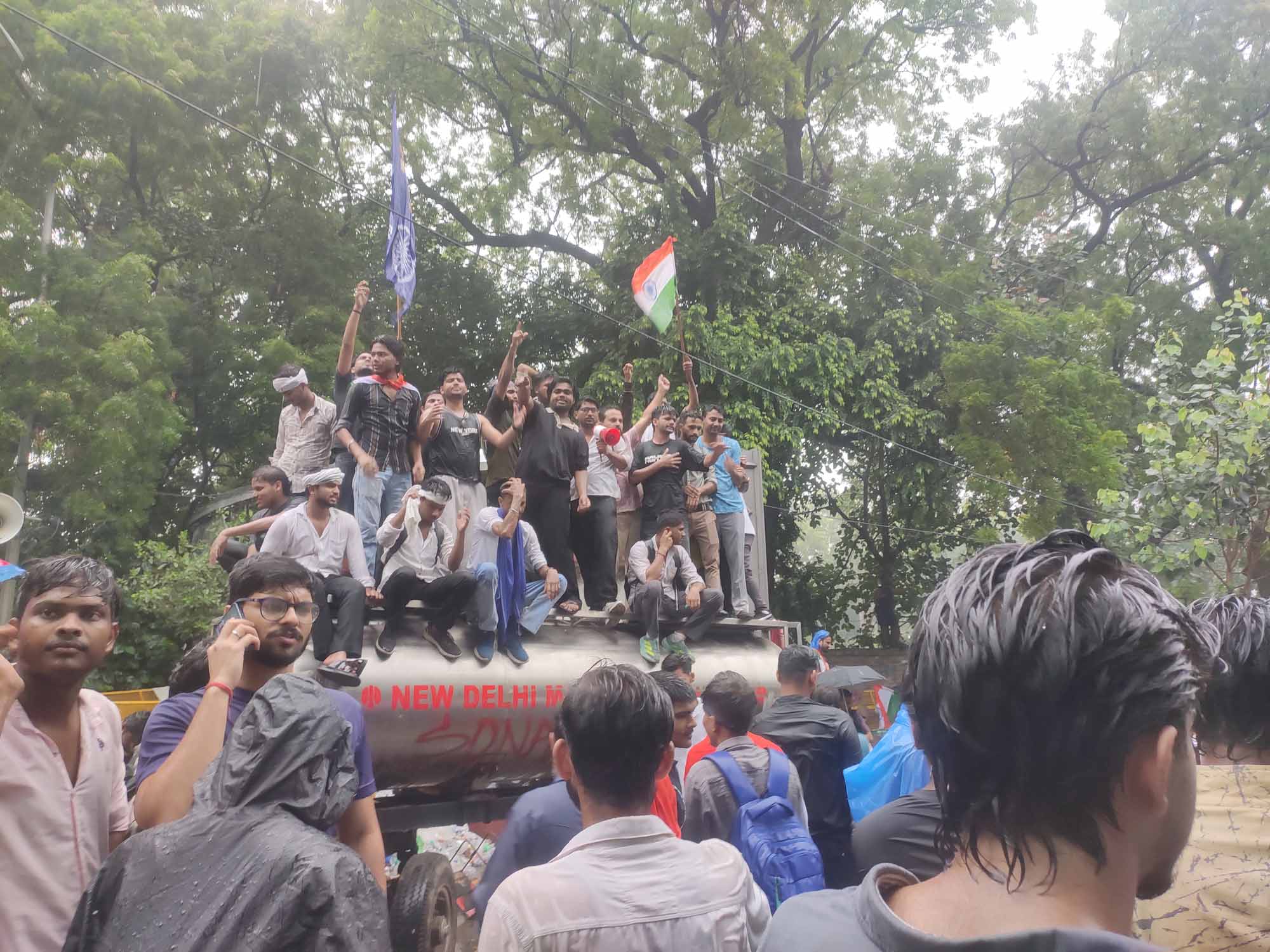
A joke about cockroaches has grown into a wave of challenge to Narendra Modi’s Bharatiya Janata Party (BJP) government in its twelth year in power. What began in May as an online jab aimed at India’s Chief Justice has, within weeks, pulled hundreds of thousands of young people onto the streets in several main cities; forced the resignation of a government minister; and put the sharp question of jobs, corruption and democratic rights back at the centre of Indian politics.
The spark came from Chief Justice Surya Kant who, from the bench, dismissed some unemployed young people and social media critics as “cockroaches” and “parasites”. Within a day, a young political strategist studying in Boston, Abhijeet Dipke, had turned the insult into a movement: the Cockroach Janta Party (CJP). That slogan speaks for itself as the voice of the ‘lazy and unemployed’, with millions following online. By early June, the joke had become a physical occupation of Delhi’s Jantar Mantar protest ground, joined by established left student unions, AISF, AISA and SFI among them. Growing online anger fused with a leaked paper in the NEET medical school entrance exam that forced two million students to sit the test again.
There was also Ladakhi engineer and campaigner, Sonam Wangchuk, who raised the temperature further with a 26-day hunger strike, ending only after he was dragged off the protest stage by plain-clothes police and hospitalised. When more than ten thousand marched on Parliament on 20 July, they were met with the brute force of the state with tear gas, baton charges and mobile internet shutdowns. Human Rights Watch documented scores of injuries, with one protester left in a critical condition.
Education minister forced out
The movement spread to main cities like Mumbai, Bengaluru, Hyderabad and beyond. In the media, they are already calling it the most serious challenge to Modi’s authority since the 2020-21 farmers’ protests and the 2019-20 movement against the Citizenship Amendment Act. In a defeat for Modi, Education Minister Dharmendra Pradhan was forced to resign which shows the potential of a force on the streets and was a victory won not handed down from above.
None of this came from nowhere. Behind the exam scandal lies a much deeper crisis facing India’s young people under BJP rule. The Azim Premji University’s ‘State of Working’ India report finds roughly four in every ten young graduates unable to find work, with only a small fraction landing permanent, paid jobs within a year of finishing education.
Since 2004, there have been 110 incidents of major exam paper leaks affecting 22.5 million candidates, the overwhelming majority of them since the BJP took office in 2014. The rising cost of living, while fortunes are made by a handful of Modi-linked billionaires, and entrenched caste networks deciding who gets ahead, is the reality of most Indian youth. This is met with a government that answers protests with jailings, communal scapegoating and internet blackouts, hence the ‘cockroach’ joke landed on ground already primed to erupt.
Modi’s government talks endlessly of a ‘Viksit Bharat’, a developed India built by its youth. For millions staring down a rigged exam or a locked job market, that promise reads like a sick joke.
Members of New Socialist Alternative, the CWI’s sister party in India, have been out at Jantar Mantar and in solidarity actions elsewhere, raising the banner of socialism inside a movement still searching for a way forward. Alongside the existing left student unions, we have argued against pinning the movement’s hopes on a single hunger strike or a backroom deal with a minister, and for democratically elected action committees, controlled by protesters themselves, capable of drawing striking workers, trade unionists and the wider working class into the fight.
Anger at rigged exams is real and justified, but it will not be settled by reshuffling a cabinet. We have argued for linking the exam struggle to the fight for guaranteed jobs, decent pay and a publicly funded plan of work, and against the movement being funnelled into yet another capitalist party. Talk has already begun of the CJP’s leaders forming one that would leave untouched the profit system producing this crisis in the first place.
What India is living through is part of a wider wave. In 2022 it was Sri Lanka’s Aragalaya, in 2024 Bangladesh, in 2025 Nepal’s Gen Z movement, which toppled a government within days. Each has shown that a regime which looks unshakeable can be forced onto the back foot by young people and workers acting together. India’s rulers have just discovered the same thing.
The task now is to turn this glimpse of what youth and working-class action can achieve into something lasting: independent organisation, a socialist programme, and a mass party fighting not just for one minister’s resignation, but for a society run in the interests of the many who build it, not the few who own it. That is the case we will continue to make alongside the young people and workers building this movement from struggle.
Solidarity with the movement
London
Hundreds of protesters gathered in Trafalgar Square on 26 July in solidarity with the Cockroach movement, in a demonstration organised by the Students’ Federation of India (SFI). The crowd, formed mostly of international students, held placards calling for the resignation of major BJP politicians, including Indian prime minister Narendra Modi, alongside placards expressing solidarity with struggles faced by people across India, including ending violence in Kashmir and fighting the rise of Islamophobia. Many posters directly mocked statements made by prominent Indian political figures, echoing the sarcastic and defiant spirit with which the cockroach symbol was adopted.
Speakers in attendance took turns to voice their resentment against the oppressive regime and its effects on young people’s economic futures and unemployment in particular, leading the crowd to chant “inqilab zindabad” (long live the revolution), a slogan which dates all the way back to the Indian fight for freedom from British rule over 100 years ago. Swedish climate activist Greta Thunberg addressed the crowd with a message of solidarity.
Several Socialist Party members from across London attended, showing our solidarity with the struggle. We had many discussions with impassioned protesters and our message of running the education system and the broader economy in the interest of the working class resonated with a crowd, who felt disenfranchised by a state that has openly disregarded the needs of the people. By adopting the cockroach label, these young people have taken what was meant to be a dehumanising insult from the ruling class and turned it into a symbol of resistance.
Hamza Khan
Leeds
Around 40-50 people, mostly students from India, gathered outside Leeds University in a protest linked to the mass youth movement taking place in India.
In part, the protest had a tone of celebration, after the education minister Dharmendra Pradhan had just been forced out of office under pressure of the movement. But there was also conviction that this was only the first victory, and the fundamental issues had not been resolved. Protesters spoke about their own experiences in the education system, and about broader issues including state authoritarianism and the cost-of-living crisis.
Ali Mansfield
Socialist Students solidarity message
Build for international youth walkouts on 20 November
Socialist Students sends its full solidarity to the student and youth protests organised by the Cockroach Janta Party, which have erupted in India in reaction to the exam paper leaks, against a backdrop of rising youth unemployment and the bleak future facing young people. This movement has been met by brutal repression by the Indian state, but that’s not stopping the movement.
The sense that our generation doesn’t have a decent future is not only provoking youth rage in India but all over the world. In Britain we also face rising youth unemployment, a broken underfunded education system, and racist division being stoked from our own Labour government. And the Labour government is now planning fresh attacks on benefits and education provision for disabled students, as part of a wider round of attacks on the working class – all while boosting military spending.
All over the world, capitalist crisis means that our future in the hands of the super-rich will be bleak. But young people are fighting back. Internationally, over the past few years youth movements have erupted in various countries, including a wave of uprisings across South Asia. On Friday 20 November, young people across Europe will be walking out and protesting under the slogan, “Fight for our futures, not their wars!”. We say fighting for our futures means fighting for socialist change. If you want to get involved and build a walkout at your school, college or university, visit socialiststudents.org.uk.
