


John Williams, Unite Exec (personal capacity) and Socialist Party
Labour’s Employment Rights Act sounds great, doesn’t it? Fire and rehire and zero-hour contracts both scrapped; compensation for scrapped shifts; no age exemptions for the minimum wage; guaranteed hours. Now, all we have to do is wait for Labour to get in and deliver and we’re all quids in!
This was probably the response from some just over two years ago when they were desperate to see the back of the Tories and get the ‘biggest overhaul of workers’ rights in a generation’.
But since then, the promised reforms have been delayed again and again while ‘consultations’ have taken place. This has been done deliberately: radical reforms were promised, then years of consultations let big business pile on the pressure and fearmonger that it will crash the economy, requiring the laws to be watered down.
Unite the Union has made clear that the legislation must not be watered down in any shape or form. Newly elected general secretary Sharon Graham described the workers’ reforms package as having more holes in it than a piece of Swiss cheese, in part because of the delays and consultations, and was the only trade union leader not to endorse the Labour Party manifesto in 2024 because of this.
A recent article in the Financial Times claimed that certain measures in the Act will mean £3 billion more in the pockets of workers (for them a bad thing!), with £1.2 billion of that money compensation for cancelled shifts. That’s not as much as it sounds, given the population of the UK and the fact that our wages have stagnated since the financial crash of 2007. But any hits to their profits are enough for big business to whip up opposition to it.
Big business or workers?
But we aren’t there yet. The devil is in the detail, and it’s likely the government will want to water it down even further. Business secretary, Jonathan Reynolds has said businesses, the government and trade unions will have to find a compromise. Will Burnham’s new government compromise in the interests of big business or workers?
What will we see then? The government wants to give guaranteed minimum hours, with the threshold for ‘low-hour contracts’ between 8-20 hours a week. Unions are pushing for the new rules to apply up to 48 hours per week and to any worker on a variable contract. Amazingly, big businesses have said this is bad because it will include student and seasonal workers. Yes, exactly! We want the most exploited to have more rights and enough money to live on.
There’s been no promise of full compensation for cancelled shifts either. Any hospitality worker will tell you the pain of this. Coming into work or being told on the day that you’re not needed means a full day’s pay gone. This gets even more expensive for workers who might have paid for transport and childcare costs. This doesn’t get any easier if you’re told to go home halfway through your shift either.
Who decides?
Another issue is rota changes. This can happen on the day, the day before, the week before. But we need to plan our lives. There’s already supposed to be ‘consultation’ on rota changes, but the reality is in un-unionised workplaces the law doesn’t apply. The same with holiday days being used without permission to subsidise guaranteed minimum hours.
There’s also the issue about how the guaranteed minimum hours is worked out. Should it be worked out by the average hours a worker has had in the past week, month, year etc? Business will no doubt lobby to make the method for how the hours are worked out is done to ensure the workers will get as little as possible. And possibly change the rotas way in advance to get the average hours down.
It’s up to us
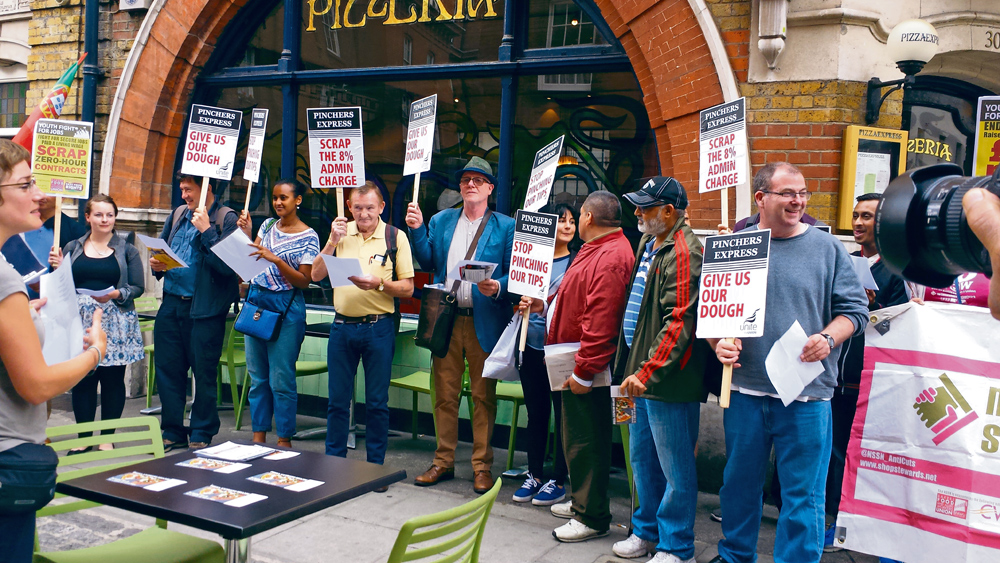
Even if we get some good things from legal changes, like full compensation for cancelled shifts, it will ultimately be up to workers ourselves to fight for full and fair implementation. And that means joining and building unions that will fight for our rights at work.
With Andy Burnham and his new government promising radical change, now is not the time for a wait and see approach. We need to fight for the full implementation of the Employments Rights Act, and for workers control of any new legislation that comes in. That means fighting for the trade unions to organise and mobilise and take the action needed to hold Burnham’s feet to the fire.
