


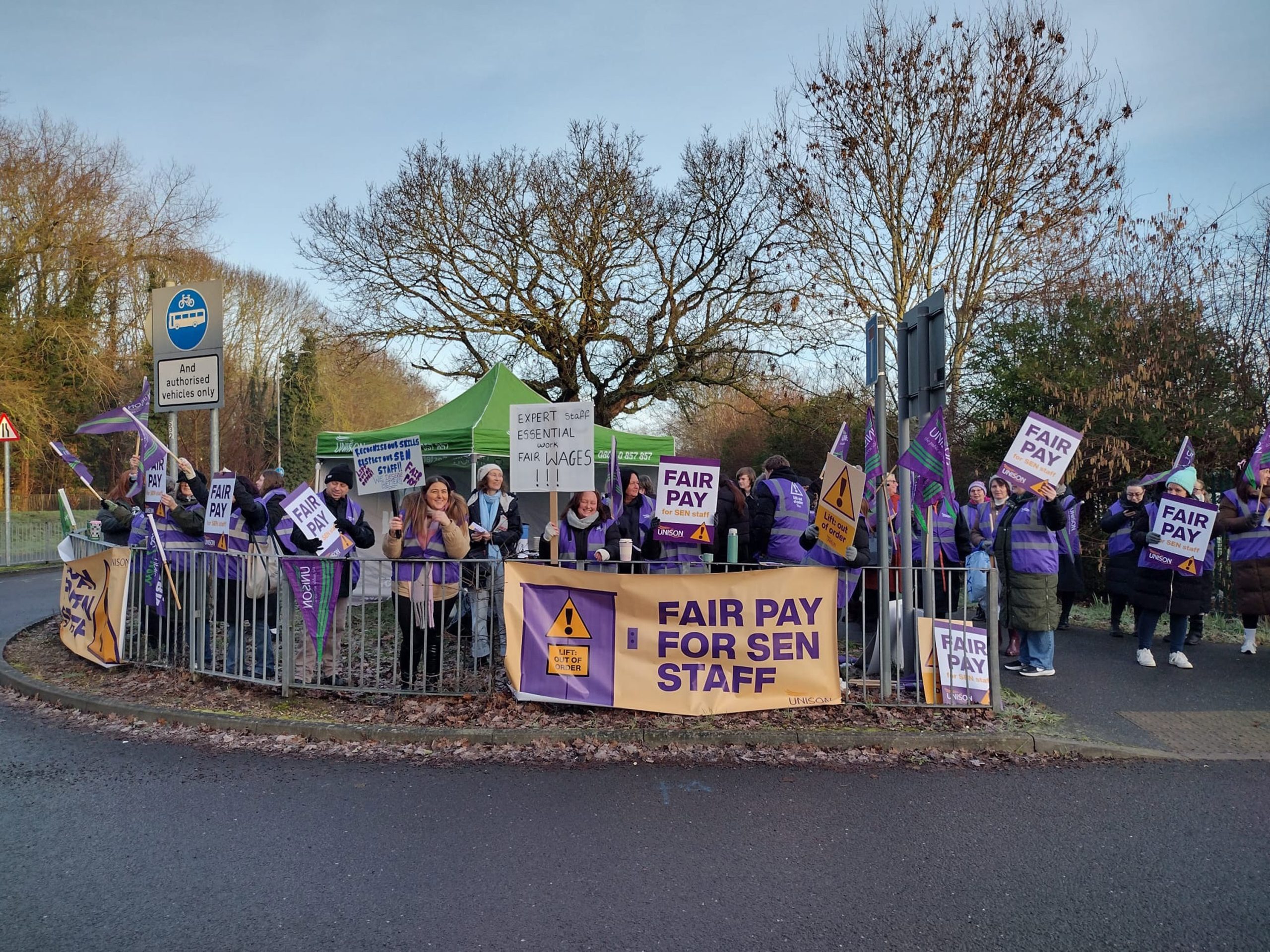
Members reject 3.3% but leadership did not build campaign for action
Hugo Pierre, former Unison National Executive Committee member
Unison members in local government were offered a pay increase of 3.3%, just matching CPI-inflation in April, despite submitting a claim for £3,000 or 10%, whichever was the greater.
A selective ballot of the local government and school membership took place during July. 81.8% of Unison members voted to reject that offer, as pay rates are way behind the level in 2009 – reflecting the considerable anger over the way the cost-of-living crisis is affecting them.
However, Unison’s NJC committee, which negotiates the claim and decides whether or not to take action, looks set to accept the offer as the proportion of members voting in the strike ballot, at 28.4%, was below the Tory strike ballot turnout threshold of 50%.
The NJC specifically targeted branches that had previously got within 10% of the threshold in two previous national member ballots for strike action. In those ballots, two branches with more than 1,000 members got over 50%, but this time there were none. In fact, this time in only one employer over 500 did over 50% of the members vote.
Members let down
Unison members will again feel let down that they did not get the turnout needed for serious action. Activists have reported a lot of support for action where they’ve been able to contact members directly.
However, it does highlight the lack of confidence in the leadership of the union, which has a right-wing dominated National Executive Committee but a left general secretary, Andrea Egan, from the Time for Real Change grouping (TFRC).
The pay rise should have been agreed by 1 April, but most members would have been unaware of the pay claim, let alone a pay campaign, at that stage. The union’s negotiators were entranced by the employers ‘feet-dragging’ tactics. They planned no campaign while the May council elections took place, when they could have geared up members to take a pay campaign to all the candidates!
The right-wing-dominated NJC committee has failed to mobilise support for those branches that had previously shown they were keen for action. The pay campaign only started with the ballot for strike action!
Left needed to fight for a serious campaign
The strategic leadership of the dispute didn’t implement measures that could have made a real difference. Starting the ballot at the beginning of and then ending it within the school summer holidays, instead of continuing for a week after the end, probably affected turnout. Members also want their pay rise fully funded, with extra money into local government, fearing that otherwise their pay rise could lead to job cuts.
The TFRC majority on Unison’s Local Government Service Group Executive (SGE), and the general secretary, gave a commitment to back up balloting branches with resources from staff. However, many branches were left on their own and even those targeted with help found it was not best coordinated with the work of branch activists. The biggest organisational obstacle is the lack of workplace reps.
The left-led SGE should have applied pressure to the NJC members to demand a bold campaign, starting early – and could have campaigned themselves. With a new prime minister in place, Unison should have been demanding Andy Burnham re-open the pay talks and pledge extra funds for local government.
Tory thresholds still in place
This result re-emphasises the need for Andrea Egan to maximise pressure on Burnham’s Labour government to bring about the immediate scrapping of the Tory’s anti-union strike ballot turnout thresholds. Starmer reneged on his promise to do it within his first 100 days in office and Burnham mustn’t be allowed to get away with not doing it now. Why not demand that Unison’s parliamentary group of MPs table a motion in parliament when it returns on 1 September?
Andrea should fight for Unison’s existing policy for a national demonstration against local government funding cuts, as part of a trade union-organised fightback against austerity this autumn.
The union’s leaders, in particular Unison’s left TFRC grouping, must not wait for Burnham to deliver for Unison members, but have to start a serious mobilisation that enthuses activists to fight for pay ‘back to 2009 equivalent’ and no to cuts.
Next year’s National Executive Council elections will be a fight for the left to win leadership of the union, alongside a TFRC general secretary. Socialist Party members will help build for that. If members see a serious fight from the top, that could help to transform Unison.
