


Isis Smyth, Liverpool South Socialist Party
The years-long discussion over the potential nationalisation of Thames Water continues under Andy Burnham’s premiership. While he has previously called for “public control” of water companies, Downing Street sources say there is no prospect of the immediate renationalisation of Thames Water. Burnham is reportedly concerned about accruing more government debt.
Labour MPs and mayors close to Burnham have reportedly been encouraging him to consider a ‘third way’: a ‘mutualised model’ which would see water companies transformed into not-for-profit organisations run by local people. They argue this could remove the potential debt Burnham is concerned about, while maintaining public control. They hope that Thames Water, close to financial collapse and currently looking for new buyers, could be a guinea pig. If it is deemed successful, they may hope these measures could be extended to other water companies.
The prospect of the mutualisation of privatised water will ignite hope in many workers. With the average household in England and Wales spending over £600 per year on water bills, any hint of a reduction would be appreciated.
But as usual, it’s the bosses, even of failing businesses, and their profits that are being thought of. The ‘mutualised model’ is only raised in the context of letting Thames Water off fines and environmental obligations! The government wants to avoid having to put Thames Water under temporary government control with a Special Administration Regime (SAR). A SAR would mean appointing an administrator to pay off some of the debt and give compensation to shareholders before finding a new private buyer. If they did so, they’d have to face putting the rest of the sector on notice, and the contagion of SARs may spread. Already, Thames Water’s creditors are gearing up to take the government to court if this deal fails, and Burnham is under huge pressure to bow down to big business.
So, between the two choices, mutualisation looks like a better choice from Labour’s point of view. This would convert Thames Water into a cooperative and give shareholders compensation using shares rather than cash. So not real democratic public control – nothing would change for workers. The mutualised model would still be left with a huge pile of debt, paid for by us! Meanwhile, money would not be going towards repairing infrastructure and complying with hygiene standards.
We need real nationalisation, kicking the private vultures out of the water industry, taking control, ownership and profit out of their hands. We could run the industry democratically, with workers and local communities having a real say in what we need. Burnham’s concerns of government debt upon nationalisation do not hold up. These fatcats should be paid no compensation, only those who have a proven need should get any cash.
The Socialist Party argues for proper nationalisation of water companies, under democratic workers’ control and management, as part of a planned economy in which the wealth and resources of society are directed to improve all our lives not the balance sheets of a few. This would allow access to clean water while ensuring workers don’t have to foot the bill.
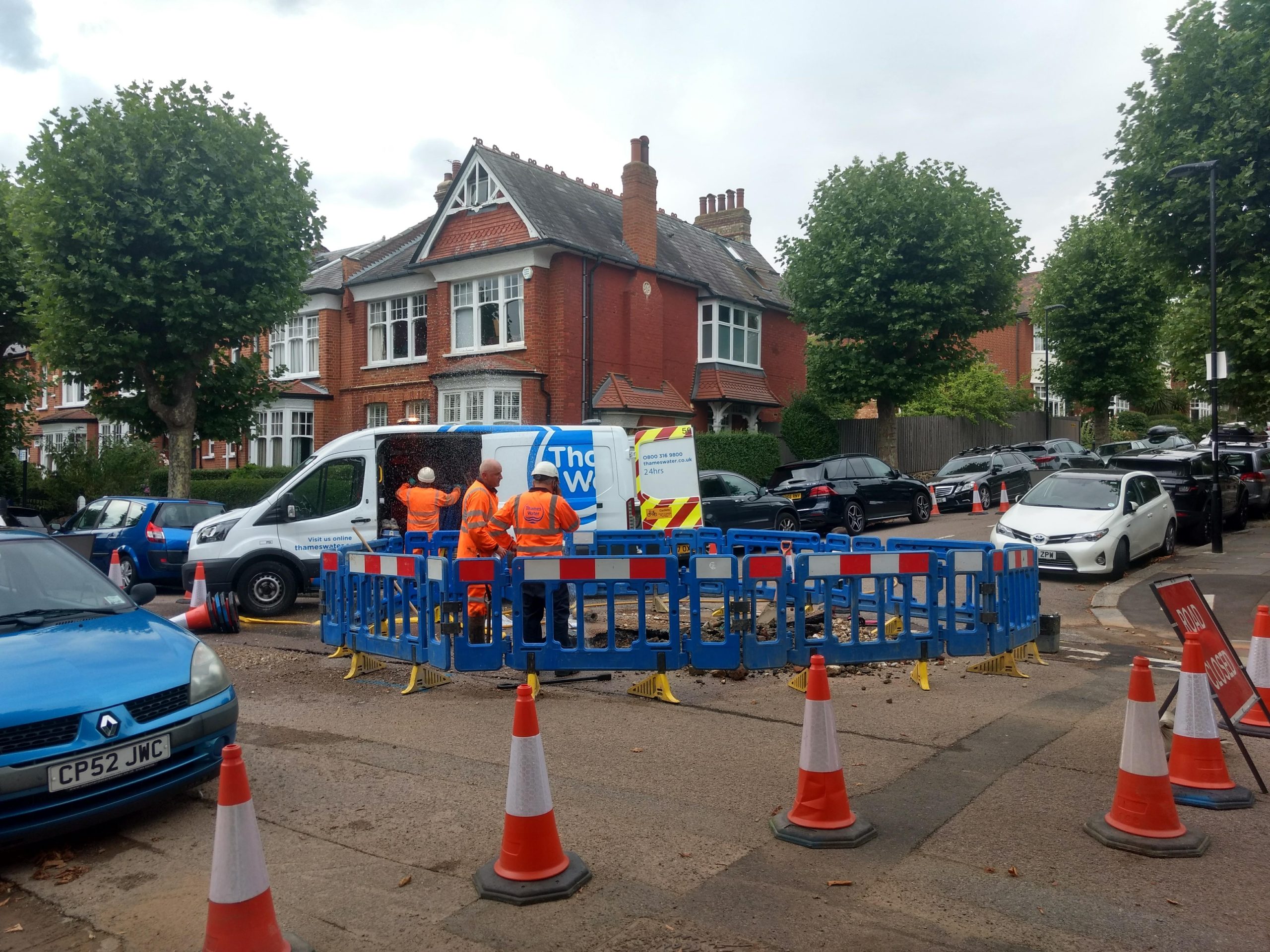
During the latest heatwave, 10,000 homes in East London and Essex were without water for days as multiple pipes broke, with low pressure or no water on and off, for five days for some. Despite being in the middle of a heatwave, drought and hosepipe ban, water was running like a river down a street in South Woodford at one point, after a water main burst.
As the repairs dragged on, temporary bottled water distribution points were set up, but these were swamped and also inconvenient for anyone who doesn’t drive. Anyone lucky enough to find bottled water in local supermarkets had to pay for them. As one fellow angry resident asked: “Are you going to give us a refund on the water we pay for?” Thames Water increased bills by 40% in April 2025.
The water supply disruption came the same week as it was reported that Thames Water paid its finance chief a £1 million signing-on fee in July, as the company struggles with a mountain of debt and faces temporary nationalisation. These infrastructure problems are nothing new, but even more unacceptable coming during a heatwave and drought, and throwing huge bonuses at the bosses isn’t going to solve anything. Permanent, genuine nationalisation, under democratic workers’ control and management, is the only solution.
Scott Jones
Loughton, Essex
