


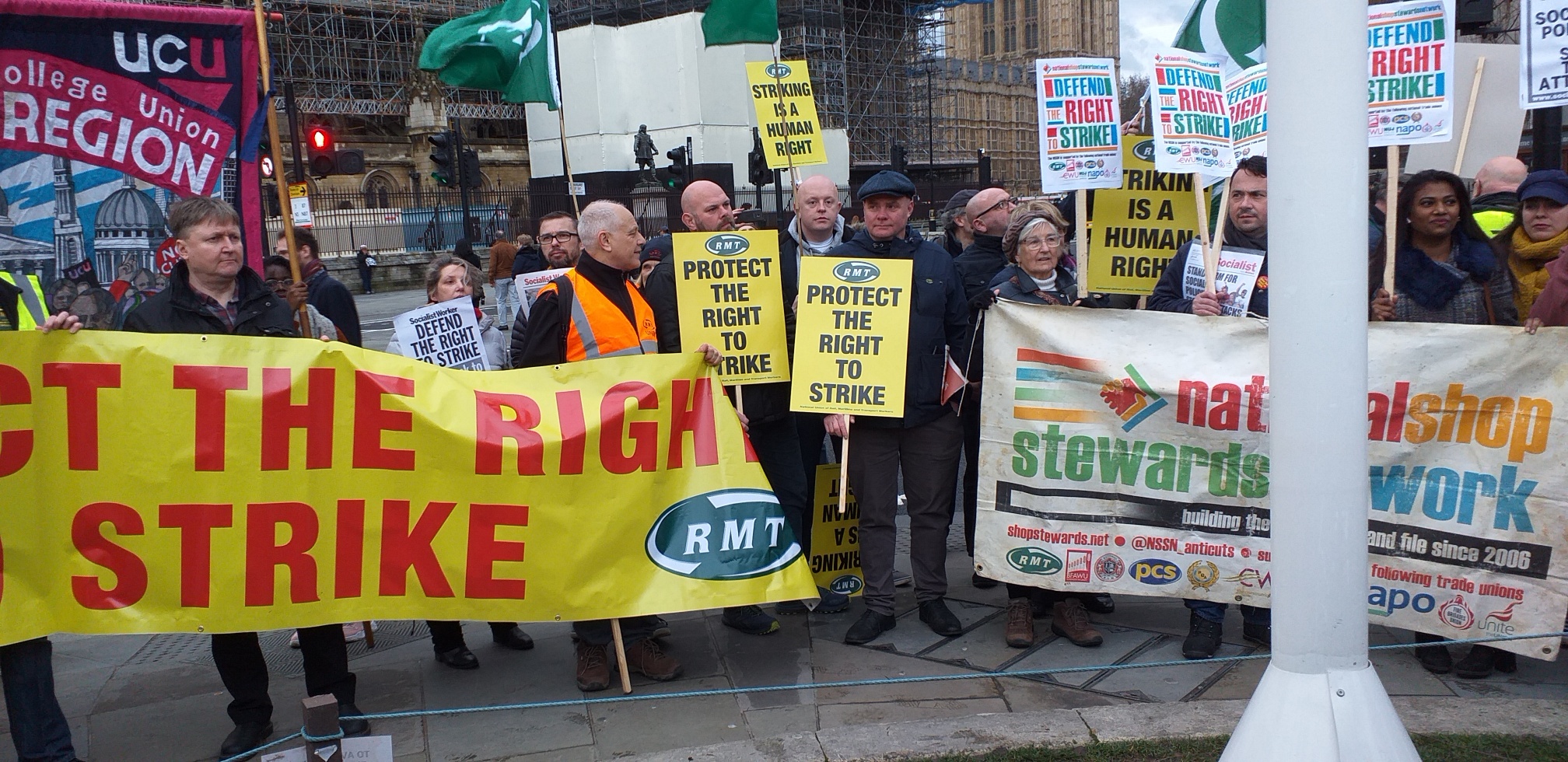
Editorial of the Socialist issue 1380
Legislation allowing for electronic or ‘hybrid’ balloting for trade union strike votes came into force on 25 August. The Tories’ draconian anti-strike 50% voter turnout threshold however, remains, despite Labour’s promise to deliver on its ‘make work pay’ policies within 100 days of office – now nearly 700 days overdue.
The threshold will be an unnecessary barrier to the hundreds of thousands of public sector workers in NEU, UCU and PCS, who could ballot for strike action this autumn.
Speculation over the summer – perhaps fanned by a section of the trade union leaders or Andy Burnham’s campaign camp seeking support from union activists – was that the introduction of electronic balloting would coincide with an abolition of the threshold. That was what had been implied by business secretary Jonathan Reynolds, one of those cabinet members to stay in place with the new prime minister.
Excuses
Instead, the e-ballot ‘statutory instrument’ explanatory note points to a clause in the 2025 Employment Rights Act requiring an assessment of the impact of e-ballots on turnouts before the threshold is removed. A nonsensical excuse.
The trade unions should be fighting for the abolition of all the Tory anti-trade union laws, including those outlawing workplace votes of members on the basis of in-person democratic debate and discussion – the most effective means to engage maximum numbers of workers. The new rules actually allow for workplace ballots for industrial action, laughably only with the agreement of the employer and overseen by an ‘independent’ scrutineer!
Tellingly, when the statutory instrument went through the House of Lords, Tory ‘Lord Sharpe of Epsom’ moved a motion in opposition, raising concerns that it “risks making industrial action easier”. He was reassured enough by the response of the government that this would not be the case that he withdrew his opposition!
Missed opportunity
While parliament was nodding through the new rules, Andy Burnham was preparing to challenge for Labour leader and prime minister. Unfortunately, none of the leaders of the Labour-affiliated unions took the opportunity to put any conditions for their endorsement of Burnham – for example to demand his immediate repealing of the 50% threshold. An act that would be well within the gift of the new prime minister immediately, if willing.
A group of trade union leaders – including from NEU, PCS, Aslef, UCU, BFAWU, POA and NASUWT – wrote to Burnham the day after he took office saying: “We believe that there is a pressing need for this failure to be addressed as a matter of priority and would welcome the opportunity to discuss this with you further at the earliest opportunity.” Unfortunately, on its own, that simply won’t cut it.
TUC demo
NASUWT also has a motion to the TUC in September calling for it to “campaign for the immediate removal of the 50 per cent ballot threshold”. It is clear that achieving that, however, will require action from the trade unions. The motion to the TUC which does outline the kind of action needed to apply significant pressure on Burnham is from PCS calling for “a national Saturday demonstration this autumn for investment in public services, against austerity and for pro-worker policies”, linking this to “a united campaign on pay, and, if needed, to plan for coordinated industrial action.” The demand for an immediate repeal of the 50% threshold should be added to the demands of an autumn demo.
The leaders of all the trade unions and TUC delegates should feel the pressure from members to back the PCS motion, and the TUC leaders to act on it. As part of building that pressure, the National Shop Stewards Network is organising a lobby of the TUC in Brighton on 13 September.
The anti-strike threshold’s usefulness as a tool to prevent workers’ action is undoubtedly why it remains. However, as the strike wave showed, they are not an absolute block on national trade union action.
The struggle for their abolition is inextricably linked to the struggle for the trade union movement to take a lead, mobilising a fight to defend working-class living standards – industrially and politically.