


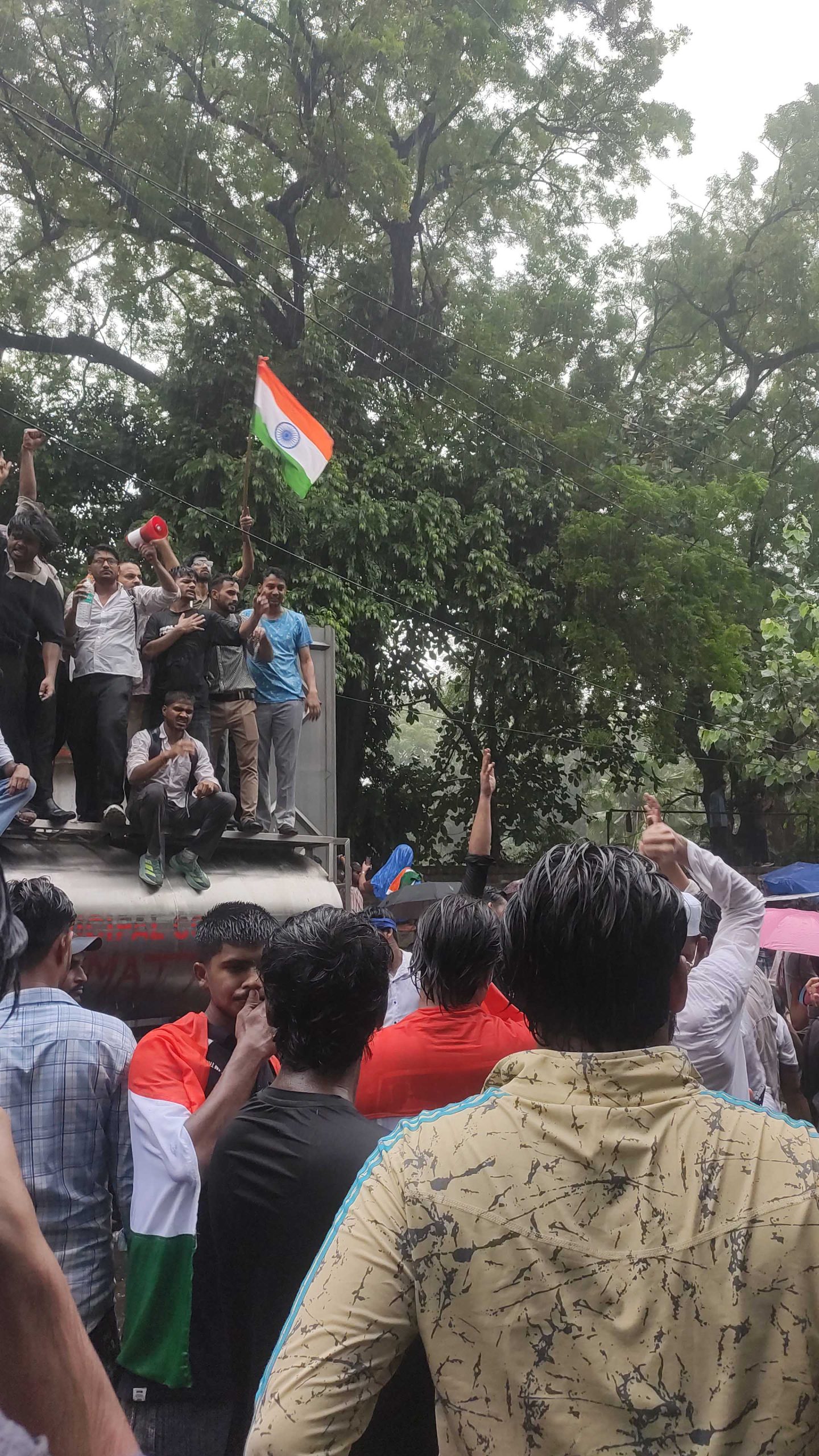
Thousands defy detentions as the youth revolt broadens to Modi’s repressive regime
Mila Hughes
When India’s Education Minister Dharmendra Pradhan resigned in July, the government hoped the ‘cockroaches’ would scuttle back into the walls. Three months on, they are still on the streets. On 10 October, thousands gathered in Delhi to demand the resignation of Chief Election Commissioner Gyanesh Kumar. This is due to the turn of the Cockroach Janta Party (CJP), attempting to go further than addressing the crisis in education, extending to the crisis in the system that young people face.
The immediate trigger is a revision of the electoral rolls under which more than 130 million names have been removed since last year. The ruling Bharatiya Janata Party (BJP) and the Election Commission deny any manipulation and say the exercise is only clearing out duplicate and ineligible entries. For millions of young people who already see a system rigged against them, from exam papers to jobs to the ballot box, the denial carries little weight.
It’s clear that the shaking up of the ministers including Pradhan ignited a further anger among young people. They moved from “sack the minister” towards a challenge to the Prime Minister and the system he presides over. The fight over the voter lists is a continuation of that process and it has broadened the campaign from rigged exams to the potential to question who rules and how.
While the CJP issued ultimatums and called people onto the streets, the establishment opposition Indian National Congress Party offered signature drives, online portals and marches to state election offices. The Congress-led ‘Vote Chori’ campaign (which means ‘stealing of votes’) has its place, however it does not challenge the root causes or point towards the need for broader struggles.
Repression
The BJP government’s answer has been one of fear and repression. On 10 October, police boarded a flight carrying CJP leaders Abhijeet Dipke, Saurav Das and Ashutosh Ranka as it landed in Delhi and took them into police custody. More than 2,000 protesters were detained, including several opposition MPs. Ahead of this planned protest, train services into the capital were cancelled, metro stations closed and mobile internet suspended in parts of the city.
The leaders were released the next day, on condition of “no breach of peace for one year”, which is clearly as vague as possible to scare off any action. Dipke called Modi “an embarrassment to India” and Das said the state was effectively at war with its own citizens. Small groups still marched, and police detained some of them again.
None of this is new. In May the CJP’s account on X was withheld inside India. It was back within minutes under a new handle. A movement whose organising happens on global platforms is harder to switch off than one tied to a single office or newspaper. But, as members of the CWI in India New Socialist Alternative have pointed out, a movement that lives mainly online is also a movement without democratic structures to decide its direction.
These events also show that police detentions and scare tactics can empty a city square for a day, however this cannot remove the causes as to why young people remain furious. Graduate unemployment is at an all-time high, wages can’t cover the cost of living, there is a workforce squeezed by Trump’s tariffs, and a government that answers protest with internet blackouts. All are still there.
New Socialist Alternative has been campaigning throughout. It’s clear that the movement needs democratically elected action committees controlled by the majority taking part, which can survive the arrest of any leader. It needs to link up with the already striking workers and trade unionists, because the power to stop the economy lies in the majority working class. This needs to be armed with a socialist programme that goes beyond the resignation of one official but to fight for jobs, decent pay, democratic rights and a society run in the interests of the many.