


The 60-year fight for justice by a heartbroken working-class mining community
Scott Jones
It was a foggy morning, but after days of heavy rain it was sunny above the mist in the village near Merthyr Tydfil, South Wales, and the children were in good spirits on the morning of Friday 21 October 1966. It was the last day in school before half term. After singing ‘All Things Bright and Beautiful’ in assembly they returned to their classrooms at Pantglas Junior School just before 9.15am.
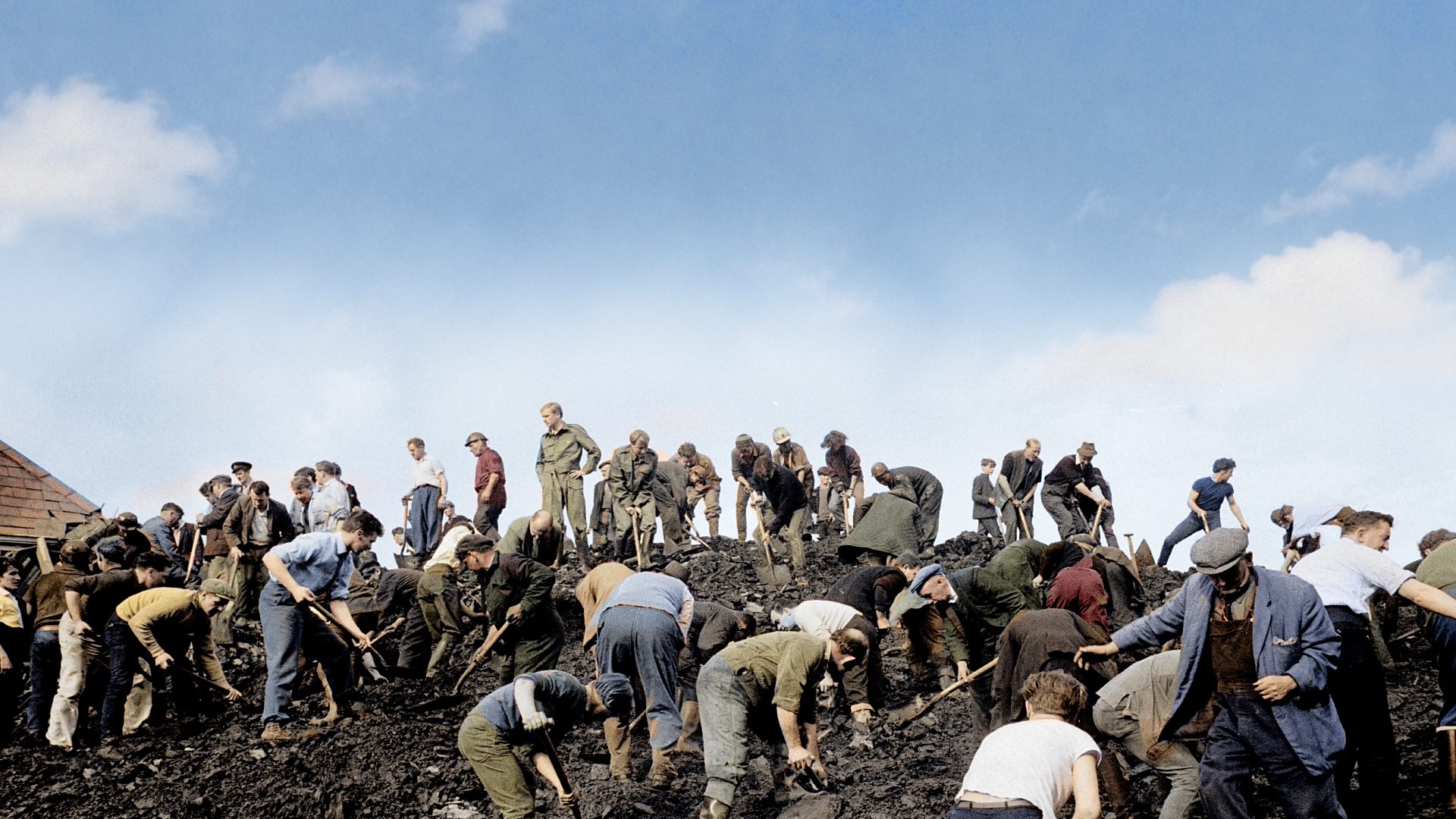
Some would say later they had heard a roar like thunder, then a crash. In no time at all there was nothing but silence. Over 100,000 tonnes of slurry from a coal tip had slid half a mile down the mountain, engulfing the school and several houses, killing 144 people, including 116 children, in minutes. It would take years, decades in some respects, to get justice. But following the tragedy, Aberfan was the village that fought back.
The documentary shows the women of the village joined by miners from up and down the Valley as they tried in vain to find survivors, but none were found alive after 11am. We see images of the devastation illuminated by floodlights as day turned to night, narrated by newsreel footage from the time, as the reporter sums it up saying: “Tonight is a night of absolute tragedy, I have a feeling that tomorrow will be a day of anger.”
‘A man-made disaster’
Through unimaginable grief the community knew they “had to fight”. We hear one father at the time say: “We accuse the National Coal Board (NCB) of nothing less than murder”, while arrogant NCB chair Lord Robens treated it like an accident and turns up in the village lying about the spring and stream underneath the tip. But it was “100% a man-made disaster” as one former miner says. As early as 1963 concerns had been raised locally. One letter was headed: “Danger from coal slurry being tipped at the rear of Pantglas School, Aberfan”. The inquiry found violation of tipping regulations.
A survivor who lost her sister says: “The village lost half its children, the community was crying out for help and the services we needed to try and rebuild, there were homeless living in caravans.” The NCB initially offered just £50 compensation if you lost a child – not per child – only £50 even if you lost two. A disaster fund was started, raising millions from donations worldwide. It came under the control of the Charity Commission, but the community felt it had to go cap-in-hand to get access to it. A leaked memo to workers even said: “Ascertain whether parents had been close to their children” before giving money. One bereaved father ended up getting arrested for campaigning for control of the fund. “Everyone let us down. And on top of all that the tips remained.”
The NCB still refused to remove the tips, citing costs. The government backed the NCB and both ignored letters and meetings of the local grassroots Tip Removal Committee. The community had had enough of the contempt and being ignored. A coach of a hundred people travelled to meet the Welsh Secretary at his office in Cardiff, after he again told a delegation that the tips would remain. Inspiring footage shows the crowd bursting into the building and dumping a sack of slurry and coal waste on his desk! This documentary is brilliant because it is the first which fully shows all these fights.
Eventually, relieved and vindicated, the community celebrated the government finally relenting and agreeing to remove the tips, but as one says now, “we should have known it was too good to be true.” The cost would come out of the Disaster Fund which was meant to be used for the community, not to right the wrongs of the government and coal board. After further years of campaigning the money would only be repaid, not allowing for inflation in 1997 and then fully in 2007.
The legacy of Aberfan, like coalmining as a whole, looms large in South Wales. We’re all told about it as children and know people in our communities connected to it in some way. Infrastructure and other reminders remain, like many of the tips that still pose a danger, despite legislation. As climate change worsens, some tips have slid into communities in recent years like in Cwmtillery in 2024. It’s estimated it will cost £600 million to make them safe.
That cost is still placed ahead of human safety and that man-made tragedies like Hillsborough and Grenfell still occur shows that capitalism will always prioritise profit over everything else. That is why we need to fight for socialist change, with real nationalisation (unlike the NCB) under the democratic control and management of workers and working-class communities, so future man-made disasters can be avoided.
Aberfan: The Village That Fought Back aired on BBC Two and is on iPlayer now
