


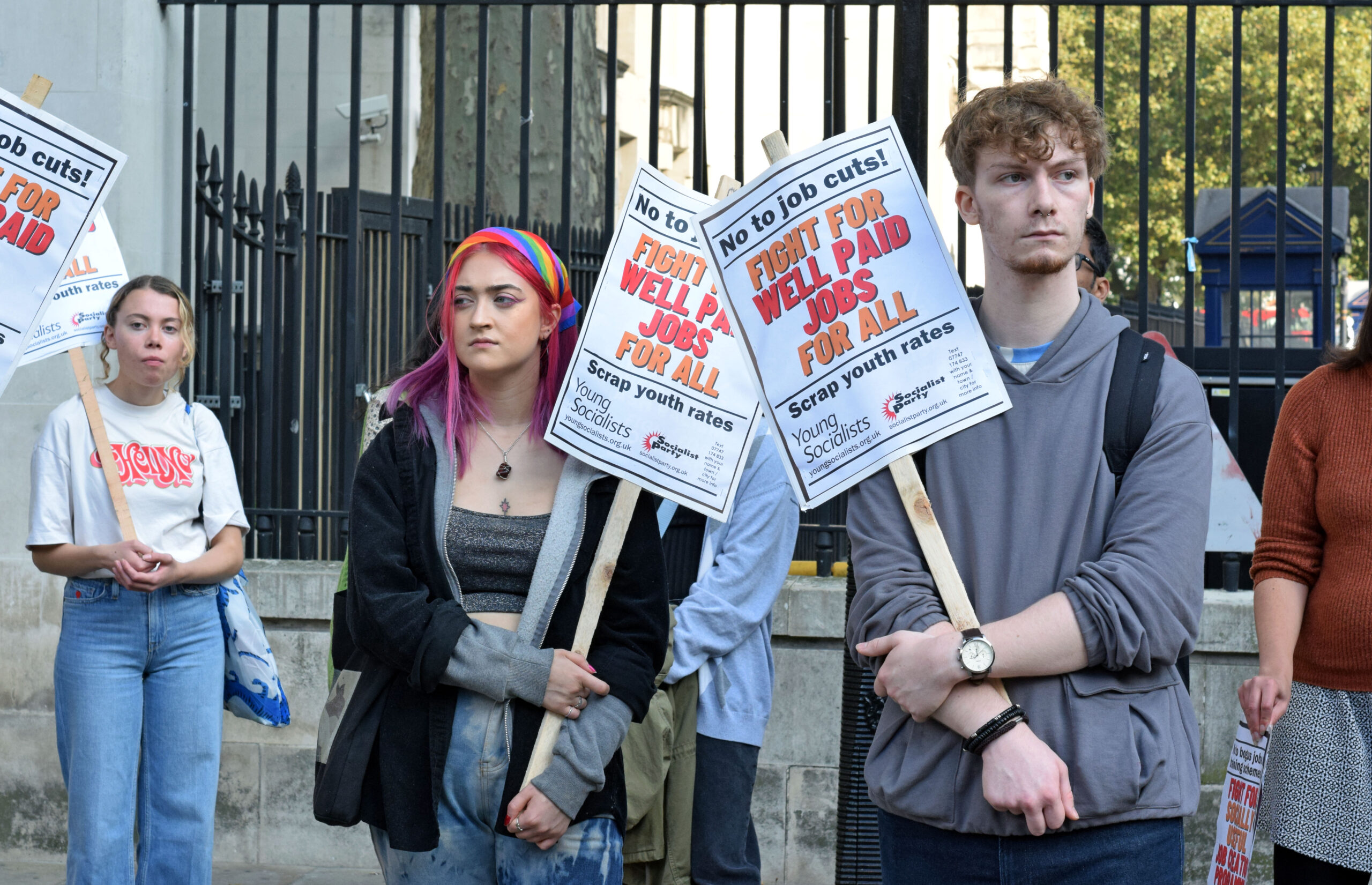

Anna Beishon, York St. John’s Socialist Students
Young people are being forced to take the brunt of capitalism’s failures. We are told to find work and build a future – yet when capitalism fails to provide decent jobs, affordable housing or adequate support, the response from politicians is to punish the youth.
The parties of the capitalist establishment are looking at changing the way the benefits system works for young people. Andy Burnham has postponed publication of the Milburn Review into NEETs (young people Not in Education, Employment, or Training) until after the Budget on 28 October, but is clearly signalling cuts to the benefits young people can receive. Kemi Badenoch, the leader of the Tory opposition, proposes restricting Universal Credit for young people who have not worked continuously for six months.
This is viewed as the antidote to the nearly one million young people classified as NEET, because taking away vital support for struggling youth will apparently encourage them into work.
There is a narrative that today’s youth are lazy and unwilling to work, when in reality, they face some of the bleakest prospects in decades: insecure work, stagnant wages, rising university costs and a worsening mental health crisis.
The pandemic hit young people particularly hard, with disrupted education, isolation, lost job opportunities and significant damage to social development, with many still suffering these consequences. We were told that these sacrifices were necessary, yet we have been left with little security or support in return.
Instead of addressing these failures, through increased mental health funding, investment in education and services, the government is choosing to strip away the support that many young people rely on to survive.
Capitalism means that profit takes priority over all else, and the most vulnerable sections of the working class tend to be the first to be attacked in times of capitalist crisis. We’ve seen the proposed removal of the triple-lock on pensions, migrants scapegoated, LGBTQ+ people targeted by right-wing politicians, and disabled people portrayed as a burden to the benefits system.
Benefits cuts will likely worsen the NEET crisis. Removing financial support will deepen poverty, food insecurity and ill health, while disabled young people will be pushed further away from work. For example, Sainsbury’s has created a ‘KickStarter’ scheme, an unpaid work-experience programme with CV workshops and shop-floor experience. 5,000 places go to this programme, while another 5,000 places are “delivered through its own programme”. Instead of using their annual multi-million-pound profits to invest in young people, capitalists would prefer to exploit their labour for free to increase those profits.
After travelling to and from these placements, spending money on food, and working for free, young people will be worse off. This is the contradiction at the heart of the NEET crisis: young people are told that the answer to unemployment is to simply work, while the jobs and opportunities available to them fail to provide a route out of poverty.
Young people cannot be bullied into a better future through benefit cuts, nor can unpaid work experience substitute for secure, guaranteed hours with good working conditions and at least a £15-an-hour wage. If capitalism cannot provide young people with a decent life, then it is capitalism, not young people, that needs to change.
