


Mira Glavardanov
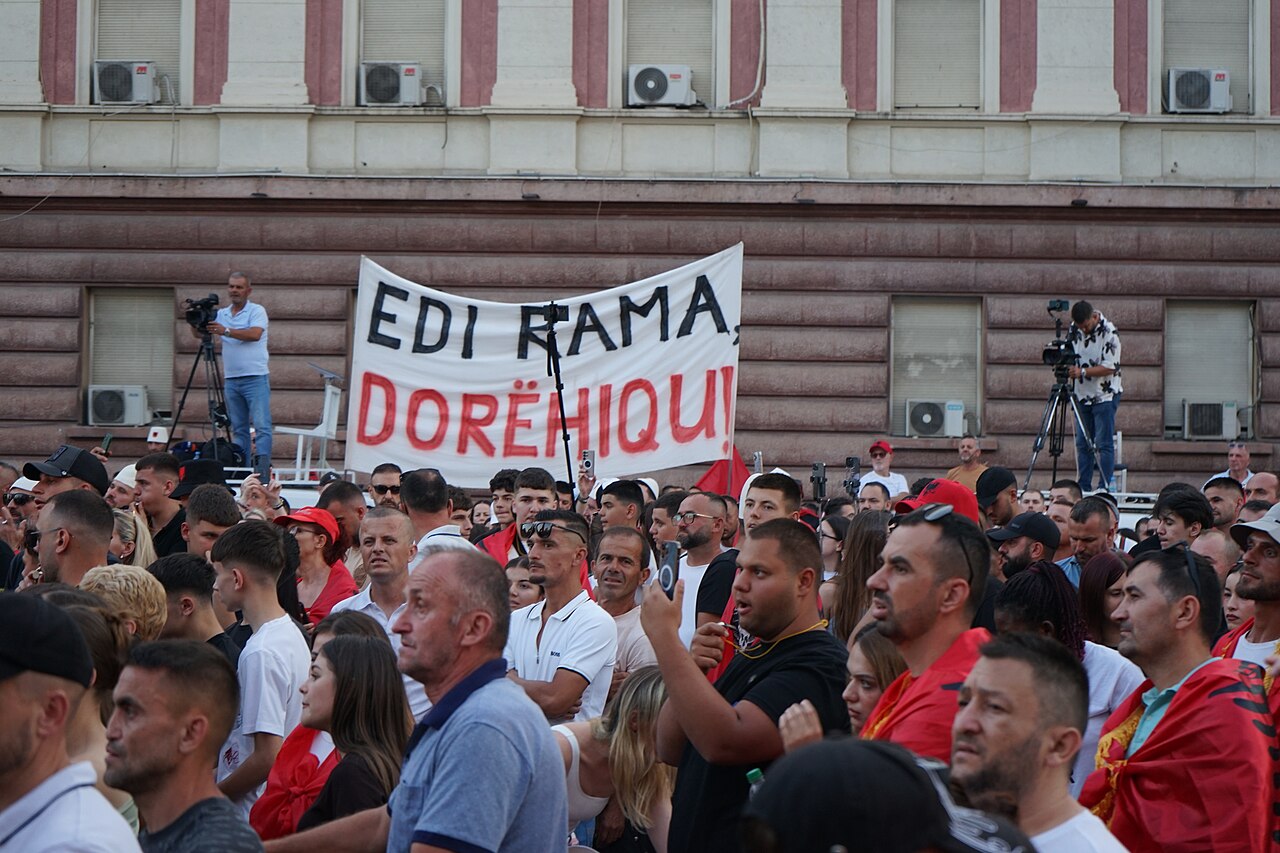
The Albanian masses have been on the streets for almost five months. Protests started in May when it became known that the prime minister, Edi Rama, was more than willing to give away a nature reserve on the beautiful Adriatic coast to foreign developers. Since then, there have been massive, peaceful protests every day in the capital, Tirana. In the last week, protesters were joined by students who walked out from the universities, with their own demands for better and more affordable education and better job prospects after graduation.
Students have brought about a new, angrier dynamic to the protests, which is not surprising. After five months of patient marches through the city, and after seeing radical student protests in many European countries recently, it was only a matter of time until Albanian students would organise and take the next step of their own. Student protests have spread to other cities.
Students’ demands for lower university fees, and more available jobs after graduation, are only part of the demands against the high cost of living, in general. Housing, for example, in Tirana and other cities, is completely unaffordable to most people. But in a country with such high emigration, the student demands also mean that young people are determined to stay and build their lives at home. They are demanding a future in Albania.
This demand is coupled with the main slogan of the five-months-long ‘Flamingo Revolution’ – that ‘Albania is not for sale’. A luxury tourist resort on the Albanian coast is a project dreamt up by Trump’s daughter Ivanka and her husband Jared Kushner, whose company is responsible for some equally controversial developments around the world.
Albanian prime minister Edi Rama is still vowing that he will remain in power. He knows that he is not under pressure to resign from the EU leaders, yet. Like many heads of unpopular regimes who lose all reasonable arguments, he is also claiming that ‘foreign interests’ are behind the protests; a ludicrous statement from someone who serves the interests of foreign capital against the Albanian people. Edi Rama attacked the protesters in a speech at the recent UN General Assembly. In a latest extraordinary video, the Albanian prime minister insults the protesters as a “jealous, violent mob” who are a threat to the country’s path into the EU.
None of this will save Rama. When the majority of people rise against a regime it is only a question of time until it will fall. The question is what comes next. The desire to live in a truly democratic country, free from corruption, where people make democratic decisions about their land, resources and economy, will lead to a conclusion among growing parts of the population that this is only possible in a socialist society.
That socialist society will have very little in common with the ‘communist’ rule of Enver Hoxha, and the oppressive Stalinist bureaucratic system that ruled until 1991. A genuinely socialist society would see the economy planned by the democratic control and management of the working class. Such a transformation would be an inspiration for working-class people throughout the region to follow.
