


Editorial of the Socialist issue 1387
On 20 November, hundreds of thousands of school, college and university students, across Europe and beyond, will strike or walk out of lessons under the slogan ‘fight for our futures, not their wars’. In Britain, Socialist Students is playing a leading role.
On the same day, Andy Burnham will be buddying up with the bosses’ politicians in Brussels, discussing how Britain can develop a closer relationship with the EU. He will meet with EU leaders who are trying to force through continuing grinding austerity while increasing military spending, and many of whom are facing mass protests and strikes – meting out state repression in response.
Europe coming to Britain
Reporting on the plans of Socialist Students, a founding organisation of the international network of youth organisations coordinating the walkouts across Europe, the Sunday Times refers to British establishment politicians’ concerns about events like those in France coming to Britain. There, hundreds of thousands are protesting, students are blockading their schools, workers are striking in solidarity and defending students from the police. “Hard left brings French protest lessons to British schoolchildren”. They are right to be worried!
In Serbia, the two-year-long mass student protest movement has now defeated the authoritarian Vucic government in elections. The ‘student plan’ they have put forward includes, among other reforms, the demand for free education.
Like Serbia, Britain might not currently be in the EU, but young people and workers are no more or less likely to accept the austerity status quo continuing. And that is exactly what Chancellor John Healey is lining up to deliver in his 28 October Budget, published after the Socialist has gone to press.
Healey will attempt to use the Budget to talk up confidence in the UK economy. He will boast about its ‘resilience’ and point to the fact that it has had the highest growth in the G7 over the first half of 2026. At 0.5% in Q2, Britain’s economic growth is pitiful by historic standards, and in big part inflated by the AI boom – itself a bubble waiting to burst.
Capitalist commentators have described France as being trapped between the bond markets and the barricades. Essentially the same pressures apply to Britain too. It’s why, despite Burnham’s vibes for change, the omnicrisis facing British capitalism will continue – crumbling schools, NHS facing annual winter breaking point, universities on the brink of collapse, the highest industrial energy costs of any advanced economy, the lowest investment-to-GDP ratio in the G7, and more. None of which will be fundamentally addressed in the Budget.
Austerity reversal ruled out
Investment on the scale needed to start to reverse decades of austerity and underfunding is ruled out by the threat of rising interest rates on UK government debt and the threat of bondholders selling up. Without Healey even lifting a finger, the cost of government borrowing grew to £24.5 billion in September, £1.9 billion more than predicted. Government debt repayments reached their highest level on record in September too. Add to that the other inflationary effects of Trump’s war on Iran and Healey’s ‘fiscal headroom’, in order to stick to his self-imposed ‘fiscal rules’, has shrunk by about 40% since March.
Of course for those who make them, ‘rules’ are always flexible. The capitalist investors operating in the bond markets can accept an extra £20 billion for the government’s investment bank – intended for use as cheap loans and grants to big business to entice investment. They will accept small increases to limited taxes levied on banks or gambling companies too, maybe with some grumbles. Unacceptable to them is repairing our crumbling public services or taking any substantial wealth or power from the big business bosses.
‘Bond vigilantes’
Commentators talk of Healey’s intention to keep his head below the parapet, and point to the fact that France has currently taken Britain’s spot as the primary G7 nation in the crosshairs of the ‘bond vigilantes’. Healey has deferred big decisions until his Spring statement, hoping despite everything that things will be more stable and favourable then.
Average households will have incomes between £400 and £770 lower in real terms by 2029-30 compared to when Labour took office, according to October research by the Joseph Rowntree Foundation. We already feel poorer – consumer confidence is falling. Interest rates are set to rise, driving up mortgage payments. The cost-of-living ‘breathing room’ measures that will be announced, while welcome for those of us anxiously watching prices rise, really will amount to crumbs.
‘Chainsaw austerity’
“The political appetite for a broad overhaul seems to be growing as living standards stagnate”, the Financial Times columnist Tej Parikh says. His piece calls for “chainsaw economics”, evoking the brutal austerity agenda of Argentina’s Javier Milei.
Burnham has already thrown a big chunk of meat to the capitalists braying for more austerity – the end of the pensions’ triple lock, worth up to £50 billion a year by 2050. They are demanding more, including cuts to benefits, which the Labour government is also set to oblige, albeit with a cynical veneer claiming to ‘save’ young people from benefits.
Keir Starmer failed to successfully complete his attack on pensioners’ winter fuel payments and disability benefits. The majority of the big-business bosses are currently backing Burnham to succeed. They are being assisted, in part, by trade union leaders who – in different ways and on different scales – are acting to shield Burnham from workers’ anger. Part of that has been to try to frustrate nationwide strike action developing.
It is a sign of the pressure from members that they have not succeeded. National ballots for action in three unions are taking place or set to start – for PCS members in the civil service, further education workers in UCU, and probation workers in Napo. Strike dates have been announced by consultant doctors in the BMA.
Trade union demo
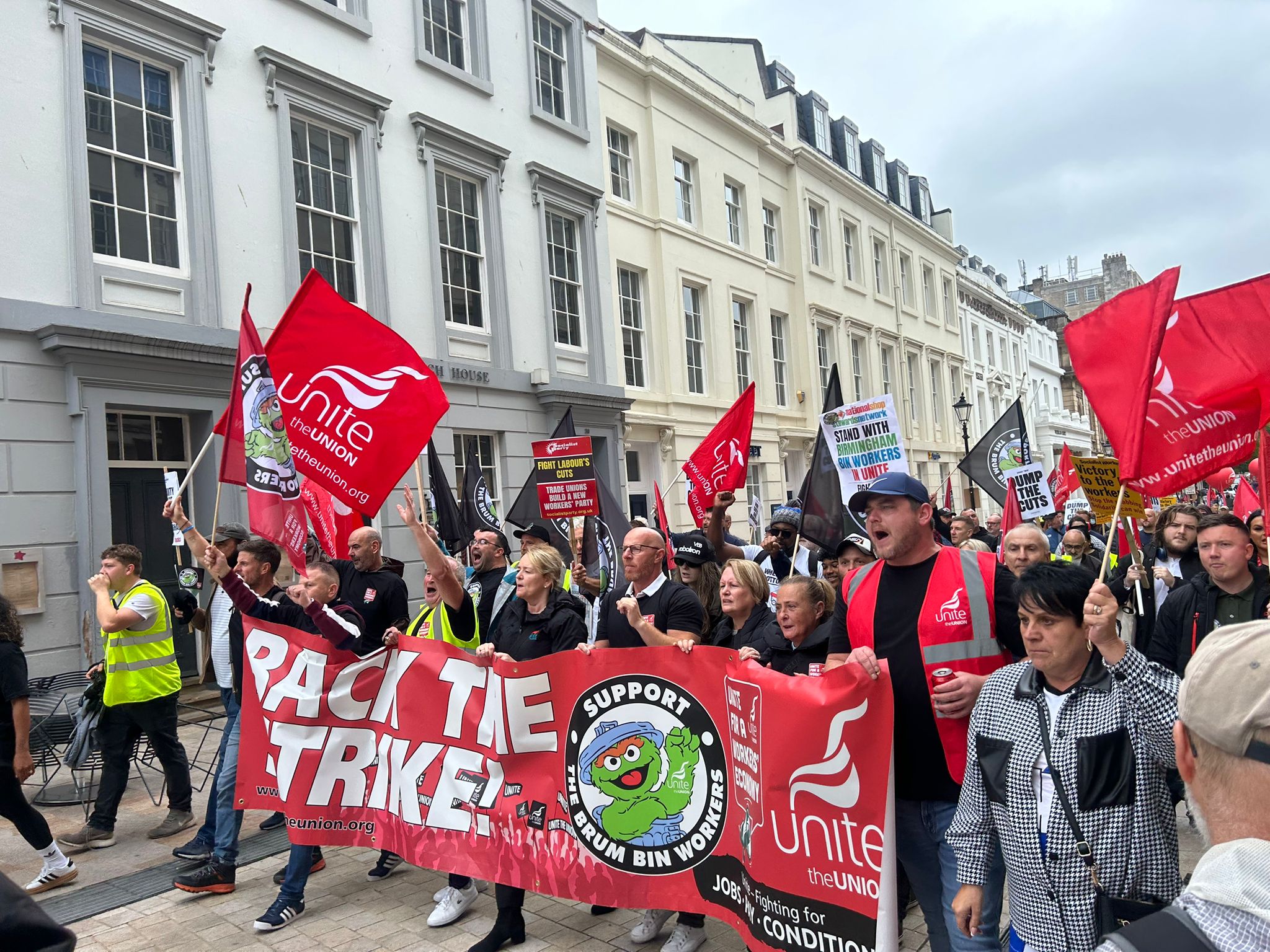
September’s Trades Union Congress (TUC) voted for a PCS motion to organise a union-led weekend anti-austerity demonstration. The first post-Congress TUC General Council meeting on 21 October, responding to a question raised by the Unite delegation, referred the issue for discussion to the General Council’s Executive Committee, which includes the general secretaries of the major unions and others, on 2-3 November.
Members’ pressure should be brought to bear on those union leaders to name the date for a demo. And if necessary, leaders of individual unions should be prepared to build a coalition of the unions willing to take the lead defending the working class from attacks under Labour.
Struggles are inherent in the situation, especially as workers and youth watch and are inspired by events on the continent and globally. In both France and Spain it has been the struggles of young people and of mass protests which have compelled the trade unions to call strikes and general strike action.
Socialist Students, in building for the 20 November youth strikes, has consistently pointed to the crucial role the organised working class can play. It is a boost that the National Education Union has voted to back the action. The University and College Union is staging a day of protest over university cuts and underfunding too. Momentum is building towards a huge day of protests Europe-wide including in Britain, preceded by general strikes in France and Spain.
The bond market pressures on Burnham’s Labour remain. As for the barricades defending working-class and young people from further austerity attacks, they need to be built and strengthened. Building for the 20 November youth strikes, and maintaining pressure on the union leaders for action are key.
