

Unions must act to defend living standards
Editorial of the Socialist issue 1389
“The Budget must be the moment that the prime minister’s programme starts to match his rhetoric”, general secretary of biggest public sector union Unison, Andrea Egan, wrote in the Guardian newspaper two days before Andy Burnham’s government had its first ‘fiscal event’.
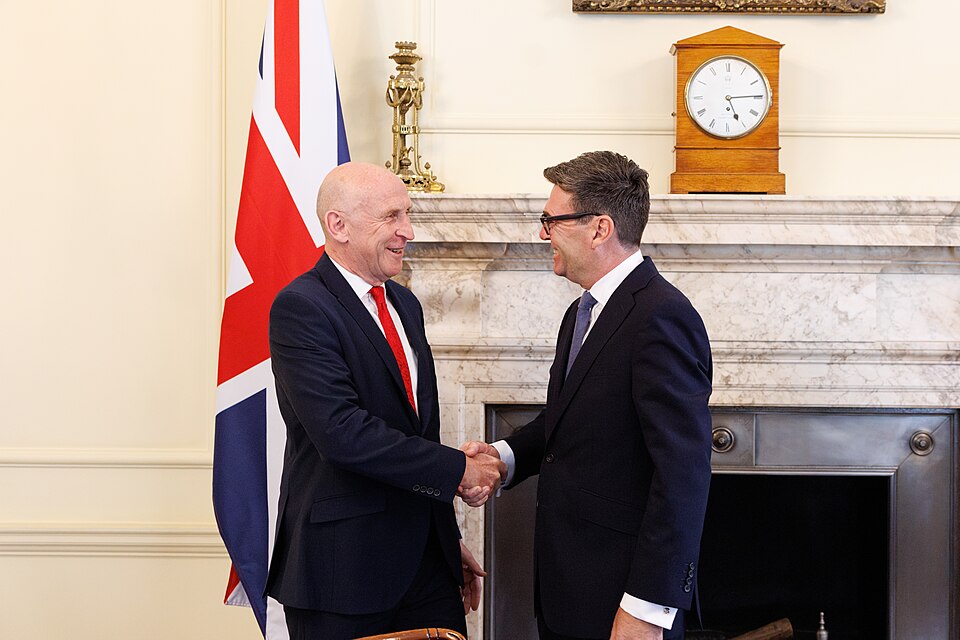
“Is that it?” heckled a Labour backbencher as Chancellor John Healey sat down after delivering it. “The prime minister came to power promising to end 40 years of neoliberalism, and instead we got 4p off gherkins,” Tory leader Kemi Badenoch quipped. Which is funny. Except it’s not.
Cost-of-living crisis continues
When use of the term ‘cost-of-living crisis’ took off along with inflation in 2021, for many the word ‘crisis’ implied something short – ‘a six-month sort of situation’. Now it’s knocking on six years.
And so the £100 off energy bills announced won’t be sniffed at. Many will have been straight onto the council website to double check which council tax band they are on and work out if they will qualify – a fifth of low-income households in London and the South East won’t. The measure really is ‘cold comfort’ when it is considered energy bills in real terms this year – once government support is factored in – are forecast to be higher than during the last energy price shock (2022-23).
When Burnham took office in July, polling by More In Common asked people how long they would give him to deliver on the cost of living. The answer with the most responses was six months – that deadline is fast closing in.
Between now and the scheduled end of the Parliament (2028-29), real household disposable incomes are forecast to fall in total by £1,050 a year. Far from so-called breathing room, what is in store is a strangulating tightening of household finances.
Ahead of the Budget, Andrea Egan said: “We expect a big, multiyear funding plan to restore investment and wages in our public services – alongside kicking profiteering vultures out of the public sector through bringing services back in-house. These measures should be funded by finally making the wealthy few pay.”
Those kinds of measures are exactly what Unison’s million-plus members need, so too the working class as a whole. But Burnham’s first Budget fell spectacularly short of those expectations. Capitalist commentators are talking of a ‘brutal’ spending review next year.
What’s more, the morning after being filmed downing pints to celebrate his miserable Budget, Healey took to the airwaves to promise cuts to the welfare bill – the overwhelming majority of which goes to support pensioners and disabled people. A sign the government is feeling under pressure, the Treasury frantically phoned producers of Radio 4’s Today programme to plead that is not how they wanted things to be presented!
Political representation
Unison has a whole host of union-sponsored Labour MPs. Similarly, the other Labour-affiliated unions. Many unaffiliated unions have formal parliamentary groups too.
Imagine the role even a small group of MPs could play if they were to act collectively as steadfast fighters for the kind of anti-austerity policies Andrea Egan identifies as needed. Unison could, for example, make membership of its parliamentary group of MPs contingent on moving a motion or amendment to oppose Burnham’s triple lock attack on pensions, for example. So too in the other unions.
On Brexit, fossil fuel licences, benefit cuts and more, the nascent splits are developing in the Parliamentary Labour Party – like they did under Starmer and in the Tory party before – because of the huge class pressures on it.
And the question of the trade unions building their own political force independently of the Labour Party will again rise to the surface. By the time Unite the Union holds its rules conference to discuss Labour affiliation in Summer 2027, it will be acute. Socialist Party members in Unite have argued for that to be brought forward to avoid a situation in May 2027, where thousands of council seats are up for election, without the working class represented.
When Burnham took office, the Socialist referred to Starmer’s two-year tenure and asked: “On what basis will Andy Burnham possibly be able to significantly outlast him?”
The answer is: not on this basis!
As Andrea Egan put it: “There’s no dodging a battle with the vested interests committed to keeping things as they are.” Which is why the Socialist Party has been to the fore demanding the trade unions lead that battle, including by naming the date for a union-led demo against austerity this winter, which was on the table of the TUC General Council executive meeting taking place 2-3 November. What better way to back up the national strike ballots of civil servants, further education staff and probation workers? What better way to follow up the student strikes taking place on 20 November in Britain and across Europe – where mass eruptions of youth mobilisations have already been a prelude to workers’ strikes, including general strikes.
