


Editorial of the Socialist issue 1390
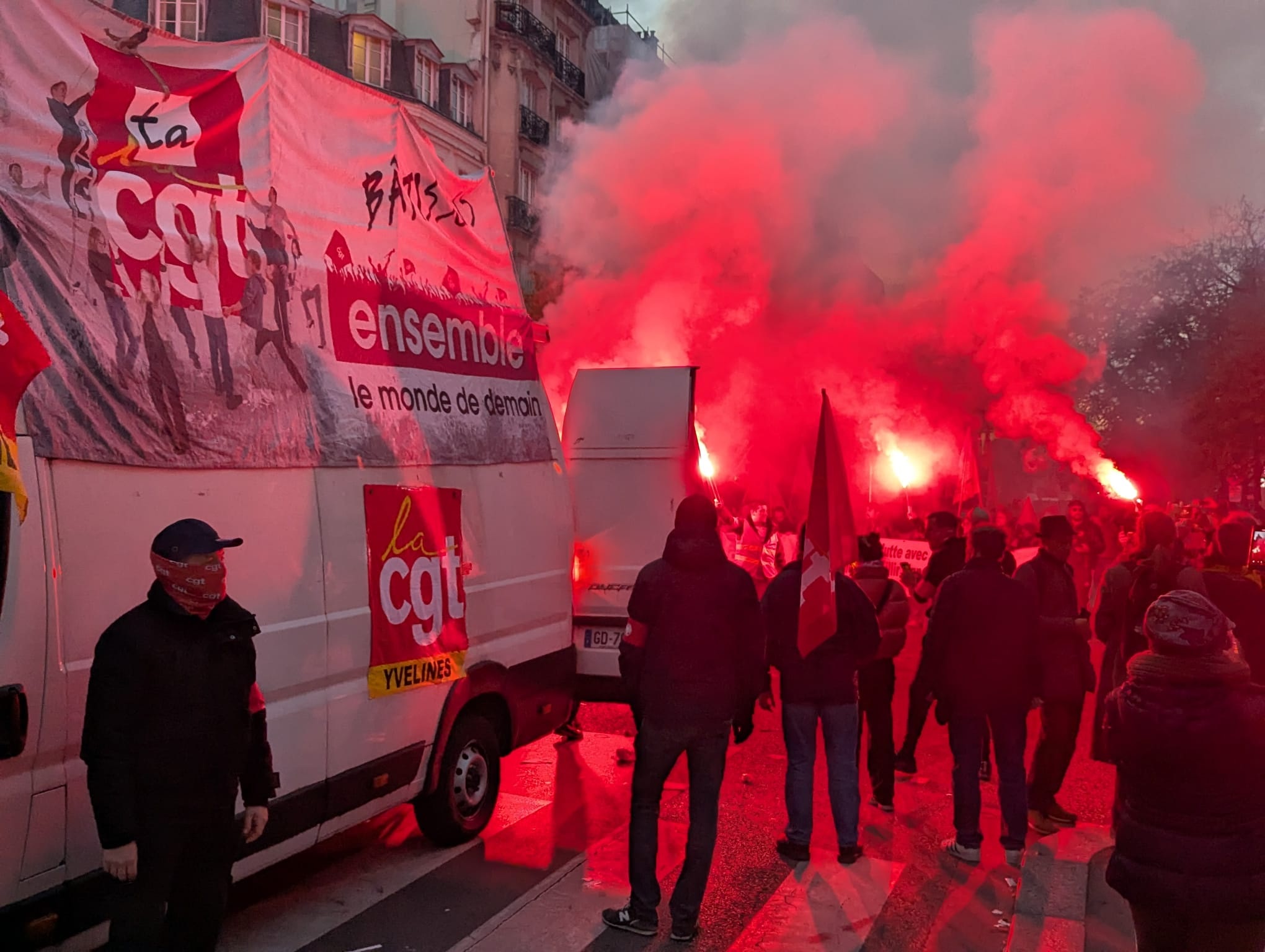
In Europe the working class is striking back. In France on 5 November, an estimated 1.6 million took part in a day-long general strike precipitated by GCSE- and college-age students blockading their schools in protest at austerity conditions.
In Ireland, after decades of relative industrial quiet, trade unions took part in a day-long public sector general strike on 14 October – pressured to act by members demanding pay which meets the rising cost of living. After weeks of the unions trying to negotiate with government, another day is set to take place on 12 November.
In the Spanish state, it was the brutal reality of the profit-fuelled housing crisis which triggered the mass movement, and now general strike set to take place on 11 November. As that movement has progressed, another brutal and tragic crime of the profit system has seen at least 69 killed in a rail disaster – a consequence of rail privatisation and cuts. With that backdrop, voters will go to the polls for a snap election on 29 November.
On 30 October, Genova in Italy was the epicentre of a million-strong day of protests and strikes, which included solidarity strikes by dockworkers at 113 ports across 22 countries. In Italy, hundreds of thousands of youth marched too.
In every corner of the continent, youth and workers are rising.
An era of capitalist crisis
Capitalism can offer only grinding austerity, stagnant or declining living standards and no future for young people. And – as evidenced by the volatility on the stock markets as AI shares plunged, wiping out between $2-3 trillion of value in a single day – the system is teetering on the brink of an acute crisis. What would inevitably follow would be even more brutal attempted assaults on living standards.
The capitalist governments attempting to manage this crisis-ridden system are at an impasse. The austerity measures demanded by the capitalist class are utterly unpalatable for the working class and young people. The capitalist parties, including ex-workers’ or social democratic parties, which in previous periods have had reserves of social support on which to rest, have had those foundations eroded by people’s real experience of the capitalist system – a process accelerated in the period since the Great Recession.
This is epitomised by France. When the 577-strong French National Assembly came to vote on the latest austerity budget on 4 November, 458 voted against and 2 abstained, the rest were absent. In the run-up to the presidential election, no party could be seen to back the austerity budget. It will now go straight to the upper house of the Senate for debate on 20 November. And the government may have to resort to bypassing parliament to get it through – with all the politically inflammatory consequences that come with that, including a possible no-confidence vote precipitating the government’s fall.
Where the political crisis for the capitalist class has led it to resort to unreliable and destabilising right-populist forces – for example Donald Trump in the US – that too is being rejected by the working class. Bolsonaro Jnr in Brazil has been defeated and now fled to the US. Vučić in Serbia has been defeated electorally by a two-year-long mass movement led by students.
That does not mean the forces of reaction are therefore in terminal decline. The conservative and right-populist combination of the PP and Vox in the Spanish state are ahead in opinion polls (for what they’re worth). Polls too suggest populist right Marine Le Pen would win in the second round of the French presidential elections which are scheduled to take place next year, if the administration staggers on that far. In both cases, those governments of the right would come to power in a period of huge turmoil and workers’ struggles – and would likely act as a whip to provoke further struggle.
But victory for the right is not at all certain. And in France, with the movement still in the ascent, there is a real possibility of a Jean-Luc Mélenchon presidency, which would electrify Europe.
Hot autumn just the start
The events of this hot autumn mark the start of processes. In many ways, they have echoes of the struggles that took place in the immediate aftermath of the Great Recession in response to the first austerity attacks. The events now involve new generations unburdened by those defeats as well as those hardened by the lessons of that first wave.
The historic setback of socialist and class consciousness that corresponded with the collapse of the top-down bureaucratic and brutal Stalinist regimes of the Soviet bloc at the beginning of the 1990s, and the capitalist triumphalism and relative economic boom that followed, has still not been overcome.
But a new wave of events is unfolding, on the basis of which the consciousness of big sections of workers and youth can leap forward – drawing conclusions about what kind of political programme is needed as an alternative to the rotten capitalist system, and crucially how to organise to fight for it.
The Socialist Party is wholeheartedly supporting the united action of youth internationally walking out on 20 November, helping to build those walkouts alongside Socialist Students in Britain. And also supporting the call for the development of a new international youth network to coordinate future youth struggles, fighting for socialist change.
In all of the struggles taking place, the question of how the working class and young people can organise collectively most effectively is posed. It is no accident that the youth in France have taken up the methods of strikes and pickets, and appealed to the powerful organised working class for support.
The capitalist classes themselves so clearly face their own crisis of political representation. The working class and youth in struggle are faced with the task of developing their own democratic political organisations and parties.
In all of those struggles, the Socialist Party and the other sections of the Committee for a Workers’ International, will fight to hasten and strengthen the development of those organisations. At the same time, we will continue to strengthen and develop our own forces fighting for a programme for the working class to take power and begin the socialist transformation of society.
