

Socialists opposed the war aims of Argentinian junta and Thatcher – and campaigned for working-class struggle to overthrow both
Dave Carr, East London Socialist Party
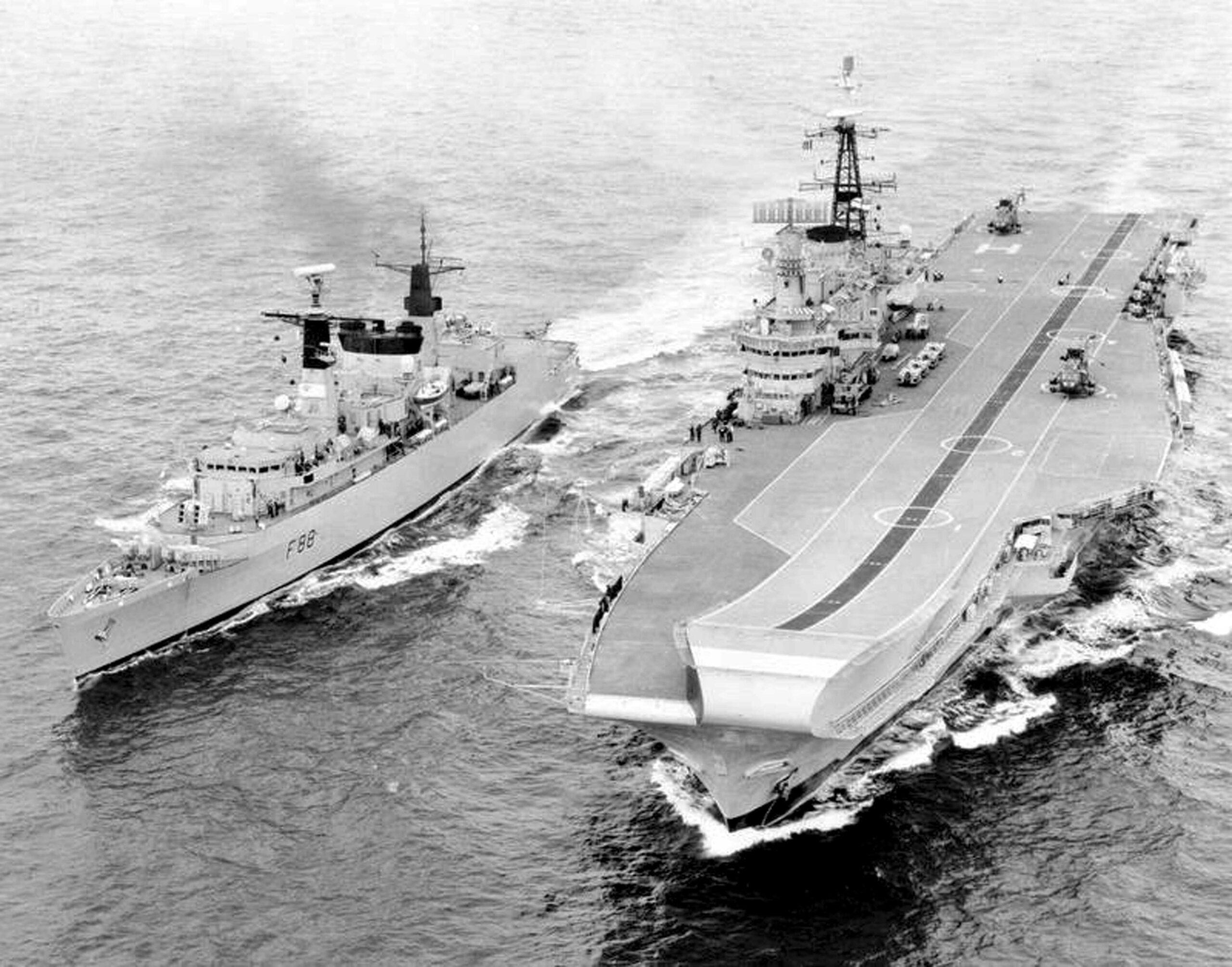
On 5 April 1982, a hastily assembled Royal Navy taskforce sailed out of Portsmouth Harbour and headed 8,000 miles into the South Atlantic to battle Argentinian armed forces which, days earlier, had invaded a collection of sparsely inhabited outcrops of land known as the British Falkland Islands, or the Malvinas in Argentina.
How was it possible that, seemingly out of a clear blue sky, Margaret Thatcher’s three-year-old government had declared war on the Argentinian military junta?
The Thatcher government had previously shown little interest in maintaining the Falklands. In 1980 it had dispatched minister Nicholas Ridley to convince the Falklands Islanders and Argentina to accept a 99-year lease scheme – which both parties rejected.
‘Cordial relations’
Moreover, before the conflict, the British government enjoyed cordial relations with General Galtieri’s murderous regime in Argentina.
Indeed, the Argentinian junta’s ‘free marketeer’ and Thatcher-admiring finance minister, José Martínez de Hoz, had been invited to 10 Downing Street in June 1980. And despite the widely publicised human rights crimes of the junta, he was reportedly feted by the executives of British Aerospace, GEC, Shell, Rolls-Royce and Plessey.
Thatcher’s government had aggressively pursued arms deals with the junta, and Argentinian military officers were trained every year in Britain.
The previous Callaghan-led Labour government had also sold arms to Argentina, but with the pathetic stipulation that they shouldn’t be used to suppress dissent or invade the Falklands!
Days before the outbreak of war, in March 1982, David Joy, a British embassy official in Buenos Aires, praised the dictatorship, writing: “Although I am all for human rights… I am already beginning to have more than a sneaking suspicion that the country is more likely to progress materially under the present regime which re-established order and government, than any government elected by the rabid communist/left-wing Peronist taxi driver who drove me to the office this morning.”
Pre-war politics
Argentina’s generals had seized power in 1976 and, with US financial and military backing, launched a brutal ‘dirty war’ against militant trade unionists, socialists and other political opponents. Subsequently, up to 30,000 people were ‘disappeared’ ie rounded-up, tortured, and assassinated.
However, by 1982 the dictatorship was economically, politically, and socially spent.
The country’s organised labour movement was bravely taking to the streets demanding the downfall of the junta. Just two days before the military seizure of the Malvinas, and despite mass arrests, the CGT union confederation called a widely supported general strike.
The regime’s deep unpopularity, and the pressing social weight of the workers’ movement, meant that the junta, in a desperate move for survival, gambled everything on a nationalist adventure of seizing the islands.
In Britain, Thatcher’s Tory government was also unpopular. It had presided over rampant inflation, and then applied its savage curative of neoliberalism by engineering the deepest recession that century, leading to mass unemployment.
In response, in late 1980 and early 1981, the Labour Party, including the Militant-led Labour Party Young Socialists, and the trade unions organised huge demonstrations against the government in cities around Britain, something that would be unthinkable today under Keir Starmer.
Between April and July 1981, inner-city riots linked to mass youth unemployment and institutional racism erupted in London, Liverpool, Birmingham, Leeds and Manchester.
International standing
The remote Falklands Islands were an economically unviable remnant of 19th century British imperialism and, apart from stamp collectors, most people in Britain prior to the war had never heard of them.
However, from the perspective of Britain’s ruling class, the Argentinian invasion, unless countered, would have represented a devastating humiliation for British imperialism, which had been in rapid decline since World War Two.
Its status and prestige internationally hung in the balance. Thatcher, like Galtieri, also gambled – but won.
The war and aftermath
The sinking, by a British submarine, of Argentina’s battleship ‘General Belgrano’ (which, at the time, was sailing away from the conflict zone) led to an outpouring of jingoism in the establishment media. “Gotcha” was the infamous headline in the Murdoch-owned mass circulation Sun newspaper.
This mood of jingoism, affecting many workers, was only partly deflated when Argentinian jets, armed with French manufactured Exocet missiles, sunk HMS Sheffield two days later.
Thatcher rounded on France’s Mitterrand government, which was publicly backing the British government, for supplying the Argentinian military with technical support.
The US administration of president Reagan, an ally of both the Argentinian regime and the British government, initially called for a diplomatic solution to the conflict, but quickly came off the fence to support Thatcher as the war developed.
The short, ten-week, but bloody, war (1,000 killed and 2,500 wounded), led to a close-run military victory for the Tory government, and the defeat and swift collapse of Argentina’s dictatorship.
Thatcher, basking in the radiated glow of nationalism generated by the war, went on to pummel the Labour Party, led by the hapless left-leaning Michael Foot, in a landslide Tory general election victory the following year.
Politically, along with the fortuitous economic largesse of North Sea oil revenues coming on stream, Thatcher, now nicknamed the ‘Iron Lady’, felt supremely confident to take on the ‘big battalions’ of the organised working class, notably the National Union of Mineworkers (coined “the enemy within” by Thatcher) in 1984-85, and others.
The miners heroically fought to preserve their jobs and communities, only to be abandoned by the TUC and Labour Party leaders.
The Militant-led socialist council in Liverpool (1983-87), mobilising the city’s working class, also fought Thatcher, and succeeded in wresting significant financial concessions from her government.
But it would take the Militant-led anti-Poll Tax movement, eight years later, to reduce the Iron Lady to iron filings!
Response of the left in Britain
The response of the Labour Party leadership to the war was lamentable. Its right-wing MPs fully backed the task force, while Labour leader Michael Foot called for a negotiated solution – as if either warring party was going to back down.
Foot was a lifelong supporter of the Campaign for Nuclear Disarmament (CND), although, like Starmer today, he supported the Western military alliance of Nato. Nonetheless, his CND sympathies were seized upon by the right-wing media and political establishment who portrayed him as a pacifist who wouldn’t stand up to dictators like Galtieri.
Left MPs, such as Tony Benn, towards the end of the conflict, called a ‘peace march’ and demanded that the United Nations (UN) mediate to stop the war – a utopian demand, given that the UN was in permanent paralysis due to the blocking vetoes of the ‘Cold War’ protagonists of Western imperialism on the one side, and the Stalinist states of Russia and China on the other.
Benn and co’s demand cut little ice with the public, but it allowed the capitalist media to reinforce the notion that left-wingers were ‘defeatists’ who wouldn’t defend ‘democracy’ and the ‘freedom’ of the Falkland Islanders.
Some revolutionary groups in Britain gave ‘critical but unconditional support’ to Argentina’s national claims which, in reality, meant giving support to the junta. This alienated them from the overwhelming majority of workers in Britain who abhorred the Galtieri dictatorship.
Militant supporters (predecessors of the Socialist Party), who condemned the ruling classes of both countries, were attacked in an ultra-left manner by these pseudo-revolutionaries who quoted, out of context, the Marxist revolutionary Leon Trotsky’s opposition in the 1930s to British imperialism’s threat to invade Brazil, which was then ruled by a dictatorship.
Trotsky had argued that as the British invaders would doubly enslave the Brazilian working class, both as a nation and as a social class, it would be necessary to give critical support to Brazil in the event of war.
We argued that if British imperialism invaded and occupied Argentina, thereby doubly enslaving Argentinian workers, the situation would have been akin to the scenario outlined by Trotsky. But that scenario was not, and was never likely to be, posed in the Falklands War.
Militant denounced both the junta and Thatcher, and opposed the war aims of both. We argued that the oppressed workers in Argentina had no interests in supporting the war aims of the generals. This was evidenced by Argentina’s demoralised army conscripts of many poor youth, who saw little reason to fight.
Instead, we called for a revolutionary ousting of Galtieri by the working class in Argentina and a relentless struggle to overthrow capitalism and build a democratic socialist society.
In Britain, we also called on the labour movement to continue to wage a determined and widespread class struggle to force a general election and bring down the Thatcher government.
Home thoughts – anxious families as the war intensified
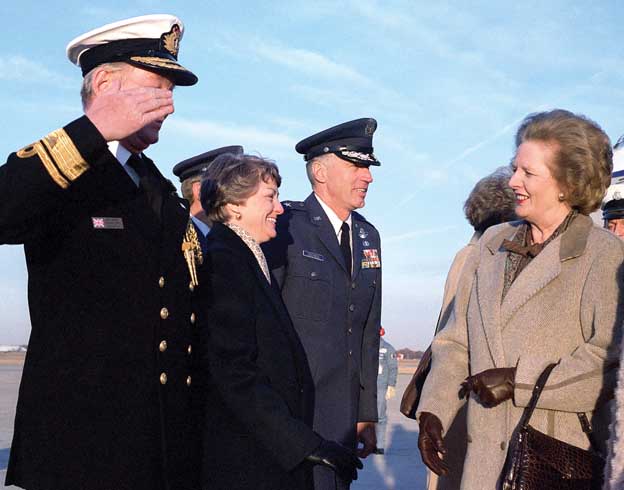
Living in Gosport, just across the harbour from Portsmouth naval dockyard, meant that the war was very much real. Everyone knew someone who was joining a ship or working in the dockyard to prepare the ships.
Once the fleet set sail all that the anxious families had to keep in touch with the events was the daily announcements from a Ministry of Defence spokesperson, who did indeed sound like a ‘Speak Your Weight’ machine! Not much humanity in those announcements.
A friend of mine invited me to come along to a support group for women with partners in the fleet. She had read what we had carried in ‘Militant’ and was impressed with our class position.
I went along, in slight trepidation, but I was welcomed. I just listened to what those stressed-out women said and I tried to portray it in the Militant newspaper (forerunner of the Socialist).
After a couple of meetings they were happy to read what I had written. Probably not many had ever heard of Militant but they were pleased their voices were being heard.
But when Thatcher sank the Belgrano it was like being punched in the stomach. Everybody feared retaliation.
Then the Sheffield was sunk. Gosport was suddenly crawling with international press. They all wanted to interview the partner of someone on the Sheffield.
The women knew they could easily be exploited and turned quite a few media crew away.
Then a BBC team turned up to one of the meetings, desperate to interview someone with links to the Sheffield. The women discussed it but the only person they knew was an officer’s partner, probably through their kids’ nursery. They knew he was the Medical Officer so they thought she might be OK.
Somehow the interview got fixed up. A group of us piled into several BBC cars, one of the women introduced me as from the Militant, “but it’s only a small paper, you won’t have heard of it”. I think the BBC had actually!
As the casualties mounted, things were grim. Many sailors suffered serious burns from the polyester overalls they wore then.
There was a parade in Portsmouth at the end of the war. Not much of a victory parade with people with visible burns and many badly traumatised by what they had seen.
I spoke to a young sailor who had helped bring some of the dead bodies home. And who had, with the rest of his shipmates, refused to sleep below the water line for fear of being sunk.
Thatcher was lucky but many working-class people were not.
Alison Hill
“We’re all human beings”
Interviews with the wives of sailors on HMS Sheffield, HMS Invincible, and HMS Arrows, taken the day after the Sheffield was sunk (from Militant, 14 May 1982).
“Most wives are expecting more bloodshed. We are waiting to hear which ship will be next. We feel for the families of the Argentinian sailors too. They are in the same position as us, after all we’re all human beings.
I don’t like this ‘officer and gentleman’ business though: when the British officers invited the Argentinian officers to dinner, just after they’d had the men shooting at one another in South Georgia. That just shows they’re all the same sort – Tories, or worse.”
“Most people joined the navy for a job and training, not to fight a war. Lots of blokes haven’t got much choice anyway. If there’s no other jobs available, the Navy is the only way of getting a job.”
“I think most of the men are just hoping that it will be over soon. They’ve been working long hours on the ships and conditions can’t be good. On the Invincible the messes are very overcrowded with Marines sleeping on the floor.
“They’ve been issued with dog tags, for identification if they get killed or badly injured, and they’ve filled in their wills. My husband’s will arrived in the post the other day.”
“You can’t be sure of anything anymore – anybody who votes for this [Tory] government now after this must be mad. They’ve even reduced the overseas allowance, and if my husband’s wages go down any more we’ll have to give up our house and go back to a quarter (navy accommodation).”
“She [Thatcher] might go on about pride and stiff upper lip, but she didn’t mind crying on TV when she thought her son was lost in the desert. I wouldn’t have minded joining those people on telly in Buenos Aires the other night – tearing up Thatcher’s photos and stamping on them!”
The Rise of Militant by Peter Taaffe
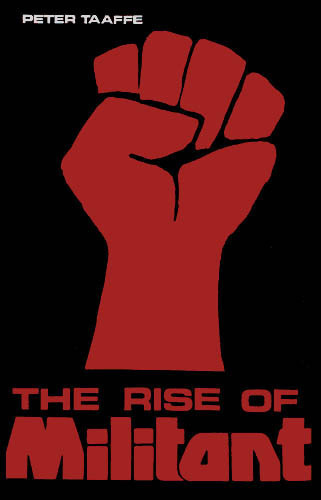
“Workers can give no support whatsoever to the lunatic adventure now being prepared by the Thatcher government… the Labour Party and the trade union movement could stop Thatcher dead in her tracks. The labour movement must declare that it has no confidence whatsoever in the policies or methods of the British government… Labour must demand a general election in order that a Labour government can support and encourage workers’ opposition in Argentina.”
Militant, 9 April 1982 and quoted in chapter 20, ‘The Falklands/Malvinas War’
£13.50 including postage
Available from Left Books
