


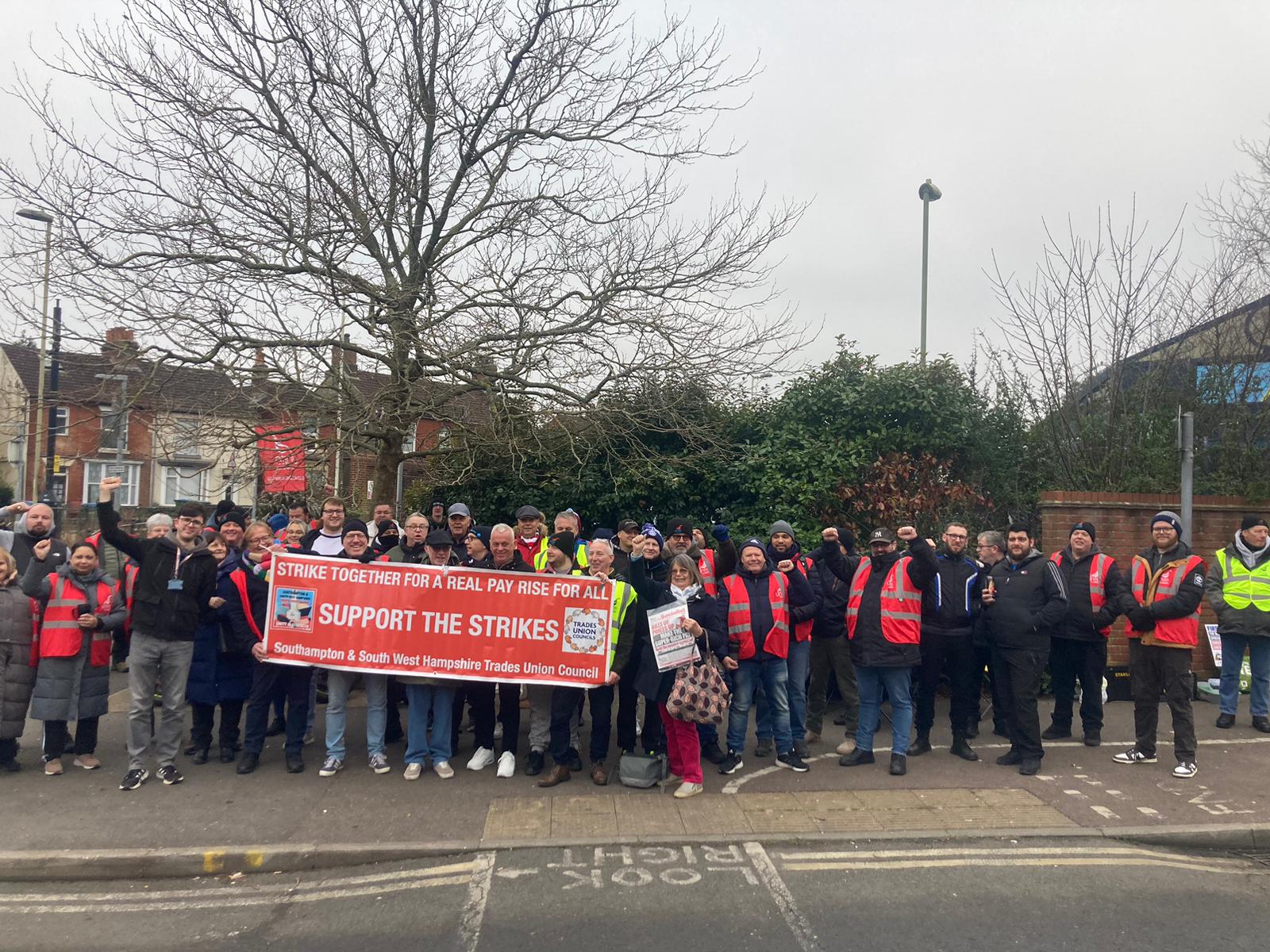
Bus workers, members of Unite the Union, across Portsmouth and Hampshire have been taking strike action since talks stalled in December. The company, First Group, failed to make a fair pay offer. It offered workers just a 4% pay deal, and has also refused to reinstate many of the terms and conditions that were removed during the Covid pandemic. Meanwhile, the First Group CEO was paid more than £1 million in salary and bonuses last year. One driver spoke to the Socialist about the important and challenging day in the life of a bus driver and why they deserve better pay.
Being a bus driver in the UK is more than just steering a large vehicle from point A to point B. It’s about ensuring passenger safety, maintaining punctuality, and navigating through often challenging roads.
My working day starts about two hours before I actually get to drive a bus. The average start time for early duties is around 6.30am, so I’m generally up about 4.30am. You need to be well awake and fresh for the long day ahead, so rushing in to work is not an option where safety is concerned.
When I arrive at the depot, my first task after signing on, checking any diversions on my route and being issued with my duty card, is to conduct a thorough pre-trip inspection of the bus. There are 29 different checks to carry. Any issues I find must be reported to the network controller onsite and fixed before departure. This meticulous inspection is crucial. The passengers we carry deserve nothing less than to know that they are in safe and capable hands when boarding our buses.
The first routes require heightened alertness and awareness of your surroundings due to the busy roads and increased pedestrian activity. Navigating through the morning rush hour, managing timing schedules, while ensuring passenger safety, is paramount.
As the morning rush subsides, the midday period can bring a mix of different tasks and challenges. Some drivers may have longer routes covering suburban or rural areas, while I may be shuttling passengers between city centres in Portsmouth and Southampton. This time is also when me and the other drivers may have their allocated breaks, allowing for a much-needed rest. During breaks, me and the other drivers often review our routes, check for traffic updates, and prepare for the next segment of our shift.
Afternoon shifts often include school runs, which require special attention and care. Ensuring the safety of young passengers is a significant responsibility. This period can be particularly busy and requires excellent time management skills to maintain punctuality. We as drivers must also be vigilant, keeping an eye out for children boarding and disembarking the bus, ensuring they do so safely.
As the day winds down, I support the evening commute, which can be as busy as the morning. After the last route, I return with my bus to the depot, where I conduct a final post-trip inspection before logging off. I will report any issues or incidents, and complete the necessary paperwork.
Being a bus driver comes with its set of challenges – traffic, inclement weather, and dealing with various passenger behaviours. However, the role is also incredibly rewarding. Drivers play a crucial part in their communities, providing a reliable service that helps people get to work, school, and other essential destinations.
- Strikes have taken place every weekend in January and early February and are planned for 12-14, 16-23 and 25-27 February
