


Mariam Kamish
Since 15 March, US forces have hit 800 targets in Yemen – including a detention centre holding African migrants. Hundreds of people have died. Trump has intensified those air strikes, while axing measures to limit civilian casualties. On the 29 April, Britain joined in, bombing a military facility. Clearly, for Starmer it’s been important to show Trump that Britain is a valuable ally.
Biden and Sunak conducted air strikes on Houthi targets in Yemen, claiming they were necessary to defend world trade.
Yemen is important to world capitalism. The Mandeb Straits which borders it is, in normal times, for up to 22% of global shipping. This is how Middle East oil and gas reaches the Suez Canal. The Aden region of Yemen also has major gas and oil reserves.
But since late 2023, attacks by Houthi rebel forces – backed by Iran – have disrupted that vital shipping lane between Yemen and the Horn of Africa. The Houthis say their aim is to put pressure on Israel to stop attacking Gaza.
As a result, much of the international shipping has been rerouted around Africa at great expense.
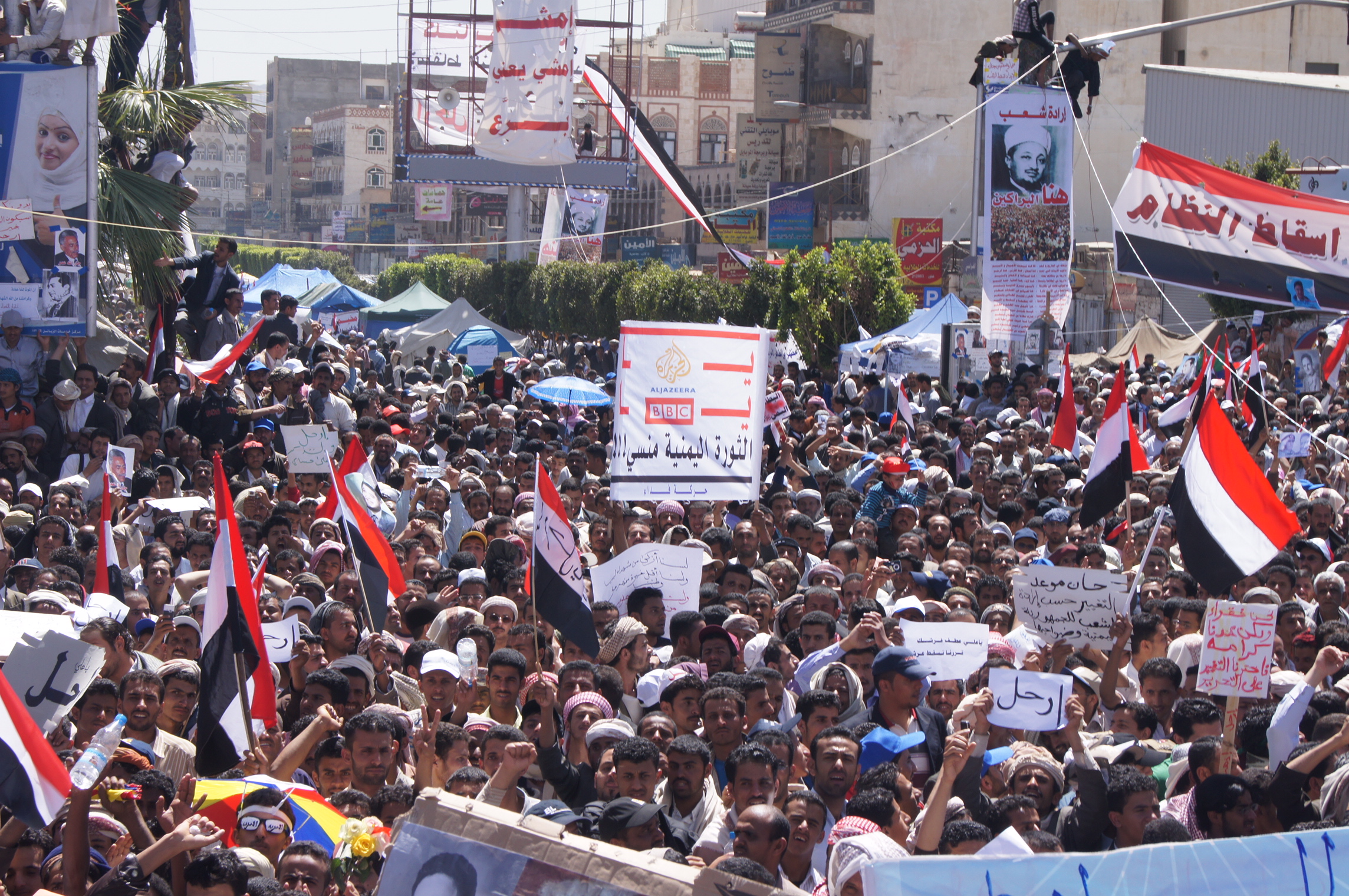
In 2011, revolution in Yemen followed the revolutions in Egypt and Tunisia. People talk about the Arab Spring. Arabs call it al-Hirak.
Working class
Yemen lacks the large industrial base that Egypt has, for example – it lacks the social weight of confident, independent workers across a wide range of industry. So, while twice weekly general strikes became routine in Yemen, they never moved to an all-out general strike, clearly demonstrating the limitations of the movement.
Yemen’s left political parties proved largely a hindrance. At the height of the movement, millions were in the streets, but the leadership controlled and contained the movement.
At the same time, imperialism was determined to prop up the completely discredited regime. By ignoring repression and corruption and the regime’s inability to control vast areas of the country, imperialism allowed a political vacuum to open up in the North that let the right-wing religious populist tribal force – known as the Houthis – grew until it was able to descend on the capital and take over the government in August 2014.
On the one hand, the movement showed an awareness that revolutionary energy needed to be channelled into effective organisation. You could see that with the beginnings of democratic committees at certain points in 2011. It didn’t go far, but that process didn’t happen elsewhere at the time, even in Egypt.
Young people interviewed in the streets of Ta’izz talked about how the revolution was in danger – revolutionary youth had to defend it.
There was a certain mood that ordinary young people and workers had made the movement and the politicians had jumped on board and seized the leadership. That opened up the way for populist religious leaders to get a hearing.
They needed to appeal to rank-and-file soldiers to join the revolution. And they needed to unite the masses from all religious strands, from the cities and the rural areas, in all regions, with a programme to renationalise oil, gas and land.
A socialist Yemen could have become a genuine beacon to workers and the poor across the region.
Instead, there has been a decade of civil war, with Saudi Arabia leading air strikes and backing the discredited coalition government they helped restore in the south.
War has driven more than 4.5 million Yemenis from their homes. Despite its mineral wealth, the country faces an acute risk of large scale famine. More than 18.2 million are in dire need of assistance.
The working class and the poor masses in the south of the country have a revolutionary history. They could play an important role in the struggles of the region in future.
