

Hannah Sell, Socialist Party general secretary
The Guardian newspaper on Saturday 24 May 2025 printed an obituary for Peter Taaffe. It began by stating, accurately, that in the 1980s Peter Taaffe “was famous in political circles, and Labour Party grandees shivered at the sound of his name”.
Fear of the shivers of ‘Labour Party grandees’ appears to have been a central factor in the Guardian’s refusal to publish the first obituary for Peter that they received, four weeks earlier, on 28 April 2025. The Guardian had approached an individual Socialist Party member to write an obituary. He proposed that I write instead. Guardian obituaries agreed to that suggestion, but in the event did not feel that they could publish the resulting draft, by myself and Tony Saunois, as it was considered not to be a sufficiently balanced account.
We are nonetheless publishing the obituary here, to let readers judge for themselves. And because the whole incident is another illustration of the role of the capitalist media in general, and the Guardian in particular, which claims to produce “fearless investigative journalism – giving a voice to the powerless and holding power to account” and to be “entirely free from political and commercial influence”.
One excuse they would probably give for their decision not to publish is that the Guardian’s readership is a big general one, many of whom would have little recollection or knowledge of Peter Taaffe. To describe him as “towering”, for example, as we did in our obituary, would not mean much to them. We of course would have been happy to replace ‘towering’ with another description. Yet it is also a fact that the Guardian obituaries column frequently praises subjects from a particular field, such as a violin authenticator whose “expertise was unmatched”, or a “superb actor” who was nonetheless “little known to the general public”.
And the obituary finally printed, authored by someone not sympathetic to us, concedes that Peter was “famous” in “political circles” at least. So, it seems, it is okay for the Guardian’s big general readership to read praise for figures of whom they know nothing, provided they are not leading Marxists.
In particular, it was beyond the bounds to publish a favourable obituary of a Marxist who played a key role in movements that shook the capitalist class, and which are burned into the memories of those Labour leaders who disgracefully came to the capitalists’ aid by attacking those movements.
That includes, especially, those ‘shivering Labour Party grandees’ who were in the forefront of attacking Liverpool City Council. No doubt they would not accept our description of Neil Kinnock’s 1985 Labour Party conference speech as “infamous”, for example. But if that was so again we would have been okay with deleting the word ‘infamous’, or making other minor textual changes, if we had been asked. Moreover we would have been very happy to debate the issues around the struggle of Liverpool council, and anything else for that matter, in the pages of the Guardian.
And if the Guardian’s obituaries department were concerned about how ‘balanced’ our obituary was on these points, why did they not at least carry out any of the checking for factual accuracy that they claim is the norm before publication? They could have begun by reading Neil Kinnock’s 1985 speech to the Labour Party conference, available in The Penguin Book of Modern Speeches, published in 2017 (suggesting that it is well-known, even if the Guardian couldn’t accept our ‘infamous’ description).
We called it infamous because in it, Kinnock launched a broadside against Liverpool council including explicitly referring to the alleged casualties of the Liverpool struggle being those “whose jobs are destroyed, whose services are crushed, whose living standards are pushed down to deeper depths of insecurity and misery”. This was the complete opposite of the truth about what happened in Liverpool, where, as we explain in Peter’s obituary, not one single person was made redundant and public services were dramatically improved.
At the same time, Kinnock used his speech to praise those Labour councillors who made “very unpalatable, totally undesirable” and “hellish choices”, by which he meant adopting his preferred ‘strategy’ of the ‘dented shield’ – reluctant cooperation with the cuts to local authority funding from the Tory central government, rather than mobilising a mass struggle to demand the cuts were reversed. That ‘strategy’ has now been followed by Labour councils for another forty years, resulting in the calamitous state of council services today.
An open debate on who had the best approach forty years ago could only enrich the pages of the Guardian. This, however, would be anathema to a publication which has always been guilty of what Leon Trotsky described in an article ‘Historical Objectiveness’ (April 1933) as “hypocritical ‘impartiality’”, the “blunting of sharp edges”, “conciliatory moralising”, and looking back on past class struggles and saying they can be avoided in the future if only “the private owners will be more generous, and the hungry people more moderate”.
This approach attempts to disguise the Guardian’s essential defence of the existing order. Trotsky once said of the Times, then a more serious capitalist paper than it is today, that it told the truth nine times out of ten, the better to lie on the crucial tenth occasion when its vital class interests were at stake. The same could have been said of the Guardian throughout its history.
Supporting capitalism
It has long nurtured a reputation as a more liberal ‘left-leaning’ paper, but when ‘push has come to shove’ has supported the maintenance of the capitalist system. In the 1926 general strike, while the Manchester Guardian tried to maintain its liberal reputation by opposing aspects of the government’s Emergency Powers Act, it nonetheless backed the capitalist class using the army and navy to break the strike.
In fact a century earlier, in 1821, the Manchester Guardian was founded by a cotton mill owner, and was openly deeply hostile to the workers’ movement. Hence it was described in 1836 by the working-class Manchester and Salford Advertiser as “the foul prostitute and dirty parasite of the worst portion of the mill-owners”.
Still, historically the Guardian has been more willing than it is today to stand by its maxim that ‘facts are sacred’. In July 1931 Trotsky even wrote a letter to it thanking it for being “the sole newspaper in whose pages there has appeared an authentic interview with me about the five-year plan and the importance of collaboration between England and Russia.” As Peter Taaffe analysed in an excellent review article for Socialism Today ‘The Media Lie Factory’ (Issue 117, April 2008), there is far less room in modern capitalism, however, for the probing investigative journalism which existed, within limits, in the past, and all varieties of capitalist newspapers today are dominated by ‘churnalism’, the reproduction of repetitious, unchecked stories usually in the service of political spin and naked profit.
The Guardian is no exception to this trend. Over the last decade in particular, it has played a particularly pernicious role in publishing the political spin of the Starmerites as they sought to crush Jeremy Corbyn. In the 2015 Labour leadership election in which Corbyn was first elected, reflecting a mass surge in support for his anti-austerity programme, a Guardian poll on 24 July 2015 showed that 78% of its readers backed Corbyn for leader. Research by the Guardian’s consumer insight team at the end of July found that, of the newspaper’s core UK readership, 51% said Corbyn was their choice for leader, while 7% supported Yvette Cooper.
The Guardian nonetheless called for a vote for Cooper, whilst opening its pages to a desperate attempt to cut across the momentum for Corbyn. Novara Media report that, over just two days – 22 and 23 July 2015 – as the leadership election was at its height, articles with the following headlines appeared on the front of the Guardian website: “Blair urges Labour not to wrap itself in a Jeremy Corbyn comfort blanket”; “Think before you vote for Jeremy Corbyn”; “Labour can come back from the brink, but it seems to lack the will to do so”; “Blair: I wouldn’t want to win on an old fashioned leftist platform.” Over the same two days it ran opinion pieces hostile to Corbyn from Anne Perkins, Suzanne Moore, Polly Toynbee, Tim Bale, Martin Kettle, Michael White, Anne Perkins (again), and Anne Perkins (yet again). There was not a single pro-Corbyn column.
Having failed to stop Corbyn being elected, the Guardian spent the following five years acting as a platform for the Labour right wing as it, backed to the hilt by the capitalist class, sought to crush Corbynism. Today it runs some columns criticising the brutal austerity being implemented by the pro-capitalist Starmer government, but it has played an important role in its coming to power.
Democratic control
The Starmer government poses sharply the urgent need for the working class to build a new party to represent its interests. The small incident of the Guardian’s refusal to print this obituary emphasises why one of the demands of such a party should be the nationalisation of newspaper printing facilities, along with radio, TV and social media platforms. This would allow access to such facilities to be under genuine democratic control, with political parties’ coverage being allocated on a democratic basis, such as in proportion to the popular vote at elections. It also points to the necessity of building a powerful workers’ and socialist press as a real alternative to the capitalist media in all of its guises.
The obituary
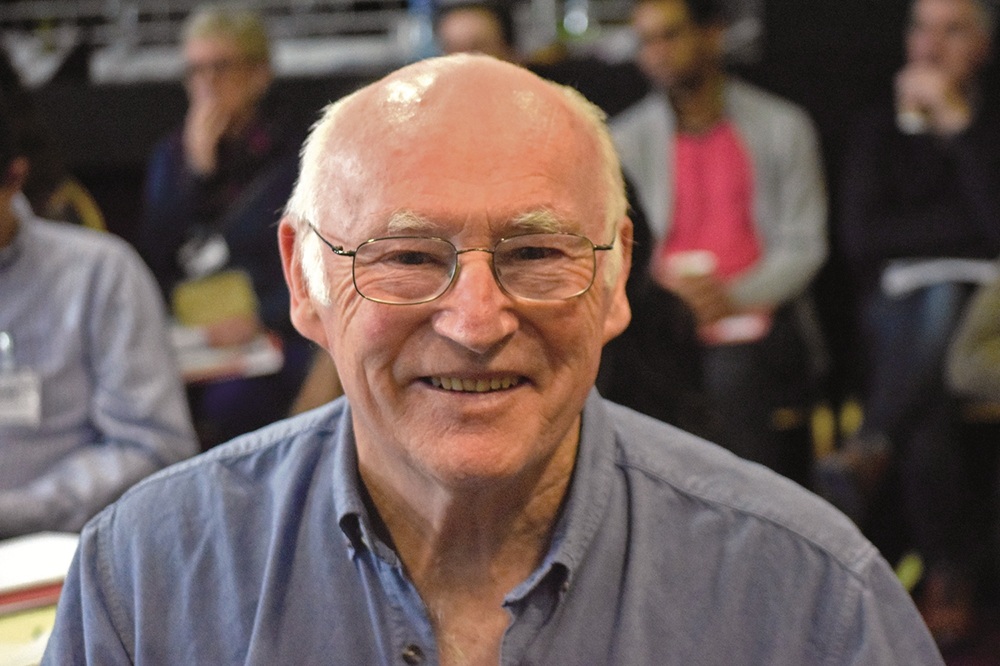
Peter Taaffe, who has died at 83 after a long illness, was a towering figure in the Marxist movement in Britain and internationally. His deep grasp of Marxist theory however had nothing in common with ‘armchair’ intellectuals. He was able to put socialist ideas into the day-to-day language of working-class people, and apply them in practice with flair, skill and flexibility.
Peter always emphasised that an organisation is built by a team, rather than one individual, but he nonetheless played a decisive role in the development of the Militant, now the Socialist Party. In 2018 we got a glimpse of how fearful the establishment was of Militant with the release of Margaret Thatcher’s Cabinet Papers. They included a letter signed by her discussing a list of union conference delegates who had backed a Militant-sponsored resolution!
Peter was born in Birkenhead to a poor working-class family in April 1942, one of five children. He did not go to university and worked for Liverpool council after leaving school. Having explored different options, he joined Socialist Fight, a small Trotskyist group largely comprised of workers. Peter quickly became central to transforming the organisation.
In 1964 the Militant newspaper was launched, and Peter as its editor moved to London. Herculean efforts were required. At one stage, as he would recount, he slept under the desk in the office. ‘Wages’ were paid intermittently – if enough money had been raised.
From these unpromising beginnings, Militant became the biggest Trotskyist organisation in Europe, with 8,000 supporters by the mid-1980s. From the start it saw the struggle for socialism as an international one, and Peter was central to finding co-thinkers in other countries, travelling widely to do so. The Committee for a Workers’ International was launched in 1974.
In Britain, through the support we had won in the Labour Party, three Militant supporters – Pat Wall in Bradford, Dave Nellist in Coventry, and Terry Fields in Liverpool – were elected as Labour MPs, all of whom only took a worker’s wage. A predominantly working-class organisation, we twice led struggles that defeated the Thatcher government.
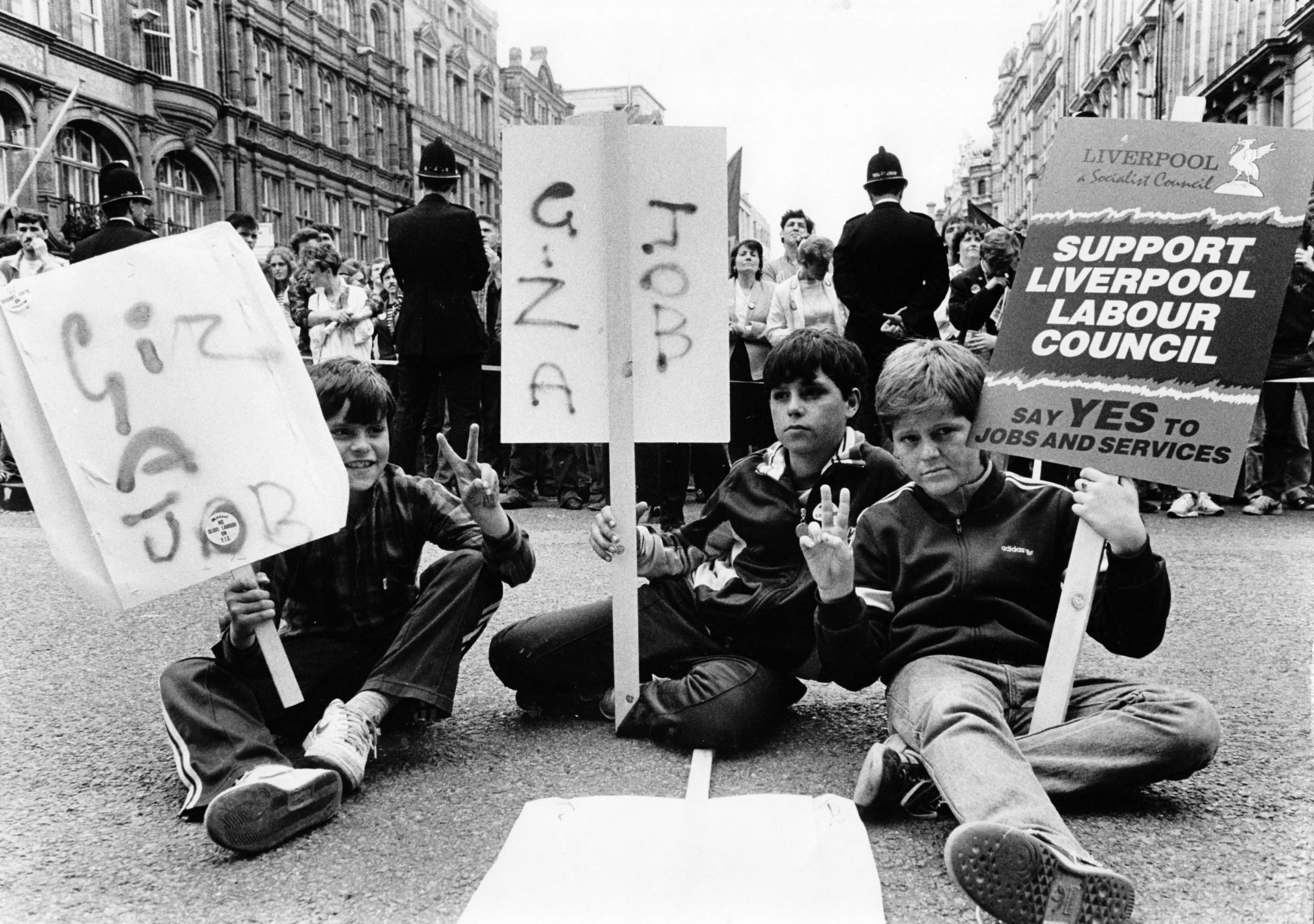
From 1983-1987 Militant supporters were at the forefront of the battle of Liverpool City Council. As Peter described in his 1988 book, ‘Liverpool: A City that Dared to Fight’, the council was opposed by Labour’s leadership as well as the Tories, but had widespread support in the population. City-wide strike action took place to back its stand, with 50,000 taking to the streets in support.
As a result Margaret Thatcher retreated and conceded £60 million more to the council, with The Times thundering that “municipal militancy is vindicated” (11 July 1984). During the Militant-era 5,000 award-winning council houses were built, all with gardens, plus new nurseries, colleges and leisure centres. And, contrary to Neil Kinnock’s infamous Labour conference speech, no-one was made redundant but the council workforce was expanded on trade union rates of pay. No wonder that in the 1987 general election Liverpool defied the national trend and swung to Labour.
Militant, under Peter’s leadership, scored a second victory against Thatcher, when we led the mass movement against the poll tax with, at its peak, eighteen million non-payers. The tax was scrapped and Thatcher resigned – ‘the iron lady was turned into iron filings’ – as Peter would put it.
Militant’s success, combined with the move to the right of the Labour leadership, led to an increased determination to drive us out of the party. In 1983 the paper’s editorial board, including Peter, were the first to be expelled. In 1993 we launched Militant Labour, now the Socialist Party, as an independent organisation of which Peter was general secretary until 2020.
Despite his huge role in the 1980s however, probably Peter’s most important contribution came later. Always ready to reappraise based on events, in the 1980s he recognised the possibility of capitalist restoration in Eastern Europe. When Stalinism collapsed he was one of the few to quickly foresee the consequences and to prepare our organisation for the deluge of capitalist triumphalism that followed, understanding that this would be temporary, that the fundamental strength of the working class remained intact, and that the inability of capitalism to take society forward would lead to a new generation beginning to draw socialist conclusions. And it is proving so.
With Labour’s changed character Peter was among the first to recognise that the question of the trade union movement beginning to build a new party was posed. However, when under Jeremy Corbyn’s leadership, a brief chance arose to transform Labour, Peter put forward a programme to do so and proposed the Socialist Party affiliate to the Labour Party to join the fight.
Always brimming with energy, with ideas bursting out of him, Peter nonetheless did not have a shred of personal arrogance. He knew how to listen and was skilled in helping working-class young people to develop their talents, including ourselves who both worked alongside him for decades.
Nor was his energy for politics alone. His passion for football and his beloved Everton was deep felt, despite his declarations that ‘it’s only a game’ when they lost. He is survived by his wife Linda. They married in 1966 and he was enormously proud of her achievements as a Socialist Party member and trade union leader. His daughters – Katie and Nancy – and his grandchildren were a joy to him, as was his first great grandchild, born the year before he died.
