


Mira Glavardanov
The situation in Serbia is still critical after another huge anti-government protest on 28 June. Around 300,000 people again gathered in Belgrade from all over the country to show solidarity with the student movement. The movement has now entered its ninth month and there is almost a feeling of a stalemate. Neither side is giving in, but also unable to come out victorious at the moment.
Aleksandar Vucic’s regime employs increased brutal and repressive powers but, crucially for its survival, still enjoys tacit support from the EU. The student movement has the support from majority of the population; it knows what is at stake and understands it has to go forward. Vucic has bragged many times that he will end the movement, but it remains his wishful thinking. Even though it seems that the movement is running out of ideas, it is not running out of determination.
Students have done everything they can, walked through towns and villages across the country, mobilising support. They have blockaded universities, schools, streets. All that is a great irritation and a worry for Vucic, but none of it can make his regime fall. Students have from the start called on the wider population to join them in protests and blockades, and that has happened en masse. They have called on workers to join them in strikes, but unfortunately this has not yet happened. This is the main reason Vucic is still standing.
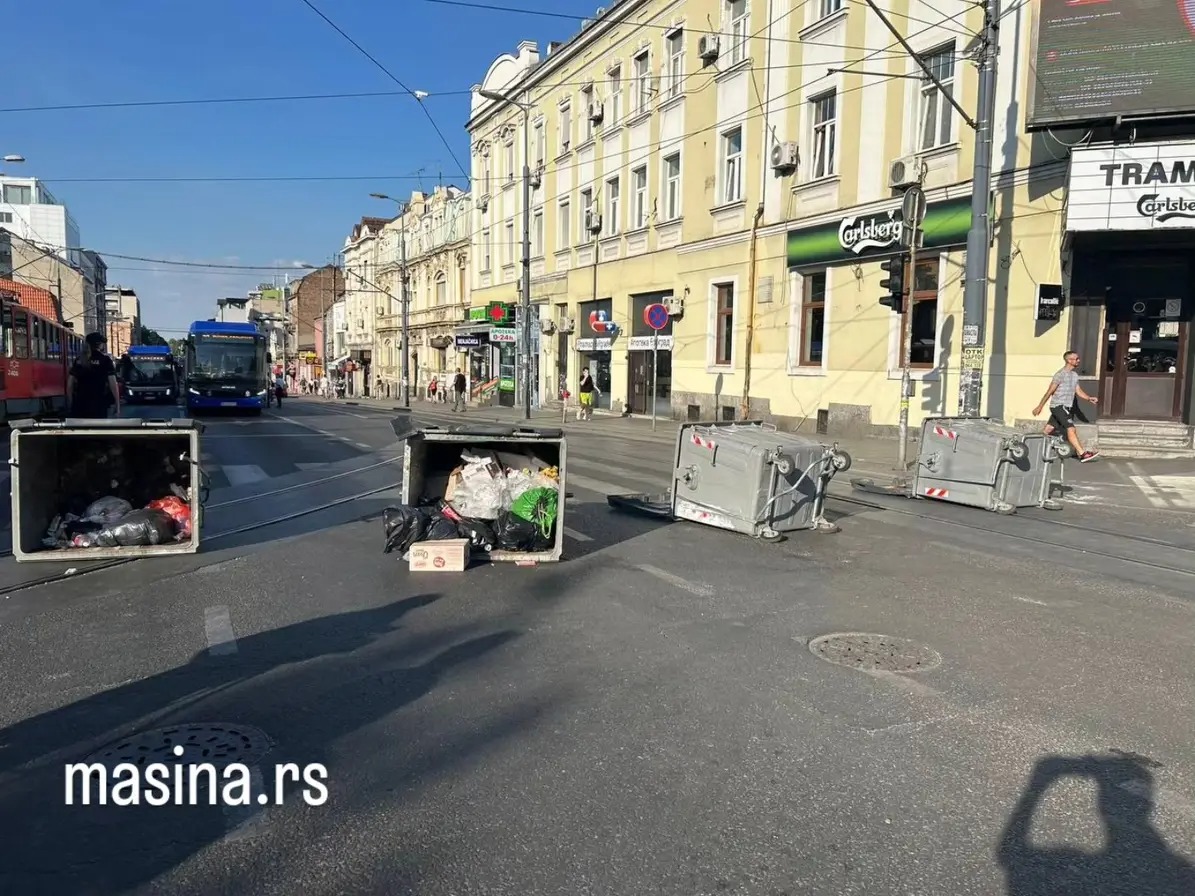
On the night of 28 June protest, the students gave a ‘green light’ to the mass of people there to take over the movement and transform it into civil disobedience. Blockades and workplace walkouts were called for the next few days. Blockades of roads became barricades, using rubbish bins to stop traffic, and sometimes emptying them at the doors of the ruling party offices. Again, crucially, workplace walkouts didn’t materialise. Union leaders understandably complained about a very short notice, which obviously was the case due to student inexperience. However, unions have had time in the last eight months to organise walkouts, but apart from education unions (which are affected directly by university blockades), they haven’t.
Trade unions
This is not just the fault of union leaders; many workers are very scared of losing their jobs, knowing this would be threatened immediately if they walked out. The teachers on strike haven’t received salaries for months; they have been surviving thanks to donations from ordinary people at home and diaspora. Vucic’s reprisals are ruthless as he holds all institutions firmly in his hands.
Socialists know that any capitalist state’s institutions aren’t genuinely independent, however, there are levels of independence that they can exercise, according to the level of democratic rights achieved by struggle. This level is generally lower in neocolonial countries. In Vucic’s regime, state institutions have no independence whatsoever. In over a decade of his autocratic rule he has managed to put jurisdiction, police, even the education and health systems under his thumb. The judges, tops of the police, school headmasters etc have in time all been replaced with his loyalists.
Police brutality against protesters has been increased, on and after 28 June. On that night and the day after, the police were literally chasing and arresting young people in the streets. The number of arrests has dramatically shot up; people are normally held for a few days (sometimes beaten up in prison) and then released. Protesters are begging the police to stop defending the regime, stop beating their own people and join them instead. Even a group of retired and ex-police officers have appealed to former colleagues to do so.
Elections and assemblies
The student assemblies have recently decided to add a demand for a general election. For a long time they had opposed this idea that was pushed by the official opposition, for the reason they, and most of the population, have little trust in the opposition. Nobody has any trust in the electoral system either, also controlled by Vucic. But the students have now sensed his vulnerability and made this step. The truth is also they have exhausted other avenues.
With their earlier call for people to organise in their own local assemblies, the students showed a great insight into a possibility for ordinary working people to make their own decisions about the society they live in. For many months now the local assemblies have been a big feature, that offer a view into different ways a society could be run, by working people for the benefit of working people, without giving away that power to capitalist parties and the capitalist parliament, that work for the interest of big capital.
This is why the demand for a general election almost feels like a step back. The capitalist opposition parties offer no way forward for the student movement and others struggling for change. Currently there would be no socialist or workers’ party on the ballot. The local peoples’ assemblies now demand a general election too, and also the re-establishment of neighbourhood community organisations, as a form of local democracy that existed when Serbia was part of Yugoslavia, and later suppressed, until Vucic completely suffocated them.
Students have suggested they would make a slate of opposition or unaligned candidates which they would endorse in elections, rather than stand themselves. But it is a mistake for the organisations of struggle to call for an election only to step aside. The student and peoples’ assemblies should discuss building their own political organisations, developing a political programme that can help mobilise broader sections of the working class into struggle.
Vucic would likely try to rig and ‘win’ an election, which he could use to try to give himself legitimacy. It is notable though that in the past Vucic has been extremely keen on elections, calling them every year, but this time he has rejected the demand. This is the sign that he knows he would struggle to win or rig the election, such is the level of opposition to his regime.
Undemocratic methods
The EU more recently made some shy noises about the “undemocratic methods” of Vucic but this is only in order to save some credibility. This is deceiving no one in Serbia, especially after the EU, at the beginning of June, included the proposed lithium mine in Serbia on their list of “projects of critical interest”. The opposition to the mine, in the most fertile and water-rich area of Serbia, is massive. The EU knows this but cares little. It sees Vucic as its vehicle to supress the opposition to the mine, and Vucic is more than ready to oblige, so they keep their eyes shut. The imperialist powers only oppose dictators that don’t act in their interests.
How long and how far can the student movement, the new civil disobedience and daily protests and blockades in many towns go, without the involvement of the organised working class, as the only force that has the power to solve this situation? It is certainly the case that protests are making Vucic very nervous, that they have seriously cracked his regime and made the lithium mine delayed indefinitely. But that’s not enough. Instead of the road blockades, should the attention be turned to places of strategic interest for the regime? The most important question is, will the organised workers eventually join in? They did 25 years ago to finally topple Slobodan Milosevic.