


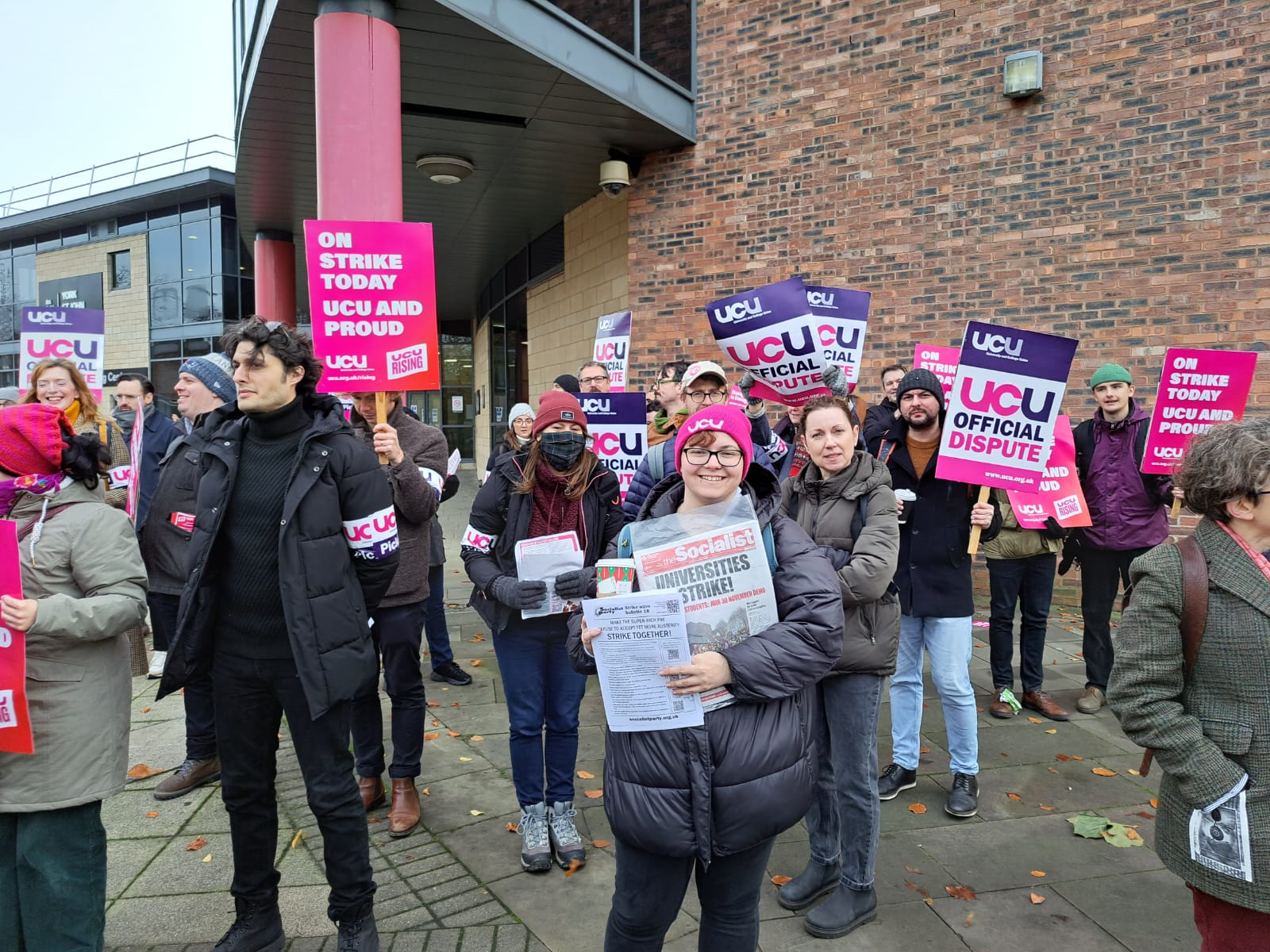
University and College Union (UCU) Further Education Committee (FEC) met on 4 July. This was an urgent sequel to UCU Congress in May, where the separate sector conferences of both higher education (HE) and further education (FE) overwhelmingly resolved to prepare for national coordinated strike action in the autumn in England.
Motivating this decision was Labour’s continued refusal to tackle the funding crisis that is devastating the whole of the post-16 education sector. The announcement of £160 million additional post-16 education funding the day before UCU congress, although inadequate and coming alongside cuts to the adult skills fund, showed that the government is aware of the anger among our members and is wary of facing industrial action.
The FE employers’ body, the Association of Colleges, has yet to make a recommendation on pay for this year, which continues to fall relative to school teachers. More and more good staff leave the profession. UCU’s main demands include a 10% pay rise to begin to close the pay gap, and a binding national bargaining framework to ensure any improvements in pay and working conditions are implemented in all colleges, not just some.
Members’ willingness to fight was demonstrated by the FE indicative ballot, which closed with 86% voting ‘yes’ to strike action in the autumn. So implementing FE sector conference decisions and the will of our members was the central task for the FEC.
Differences on the FEC
Comparisons with the ‘Respect FE’ campaign of 2023, the last time UCU held an indicative ballot in FE, are likely to be made. That ballot was launched in March 2023, at a time when doctors, nurses, teachers and UCU HE workers were all out on strike against the Tory government. This year’s indicative ballot has taken place in the first year of Starmer’s Labour government with workers increasingly becoming aware that this government is not going to deliver, but at this stage only at the beginnings of steps towards national action. It is therefore really significant that the indicative ballot achieved a similar percentage of members voting ‘yes’.
Whatever the turnout, members are not less bothered about low pay than they were two years ago. But the ‘Respect FE’ campaign was replaced with the ‘New deal for FE’ campaign in spring 2024. This campaign has so far lacked national coordination and leadership. It has involved a deliberate strategy of individual branches being left to pursue local claims, a step back from the national coordination of 2022-23. Temporary support was won for this strategy when members were hopeful that the imminent Labour government would deliver for members.
Consequently, 2024 saw the fewest pay disputes in FE for a number of years, and these were not coordinated. But there is widespread anger and a sense that local bargaining has not been successful.
It is clear that there are differences at the FEC between those who want to fight for members and provide maximum support to branches so they can participate in coordinated action, and some who, backed by unelected officials, want to delay and retreat on democratic decisions, until an arbitrary time when the union is deemed ‘ready’.
Yes, it is important to have a serious campaign to prepare members, give confidence and organise for as big a turnout as possible to get over the Tory turnout thresholds that are disgracefully still in place under this Labour government. But it is clear now that the New Deal for FE strategy so far has not given a strong lead and has not improved the organisational capacity of branches – it has done nothing to make the union ‘ballot ready’.
Build a campaign
But reps and members should be confident. Starmer and Reeves’s government is weak, buckling on so many fronts, and can be pushed to make concessions if the unions apply pressure.
Socialist activists need to fight to hold firm and keep the dispute as coordinated and national as much as possible, during a time when branches could be under pressure to settle their local pay negotiations during the summer and early autumn, or are excluded on other bases.
We are pushing for maximum support for branches to get them over the turnout threshold, including pushing for stronger branches to help support less-developed ones, and for NEC members to arrange to speak at branch meetings.
We are also campaigning for the congress motion for a national demonstration on the autumn around Budget Day to be implemented. That would bring together all branches, whether formally in dispute or not, to build support for our demands and maximise pressure on the government.
- In a move that will make preparations more difficult, members of the FEC have been told they can only report to UCU members that the ballot will open in the autumn, and no other detail will be shared before the new academic year. Socialist Party members on the FEC argue that members should be informed of the detail and a serious campaign begin as soon as possible.
