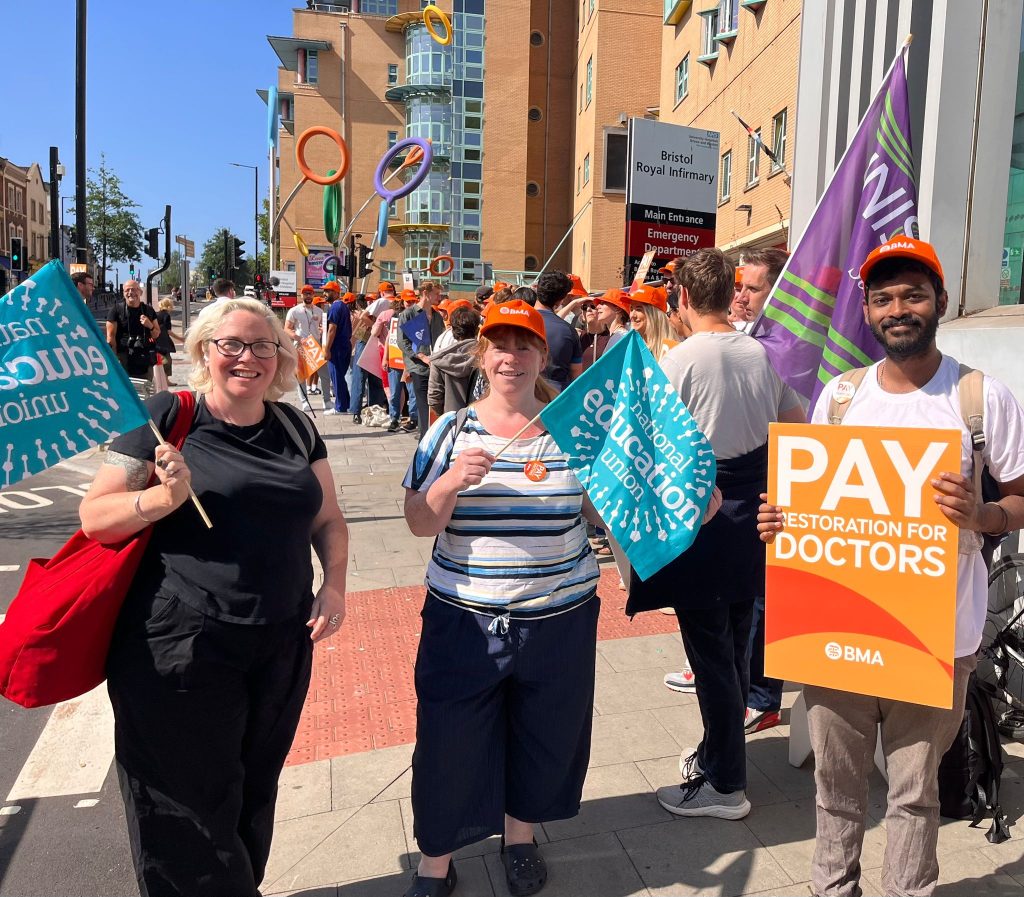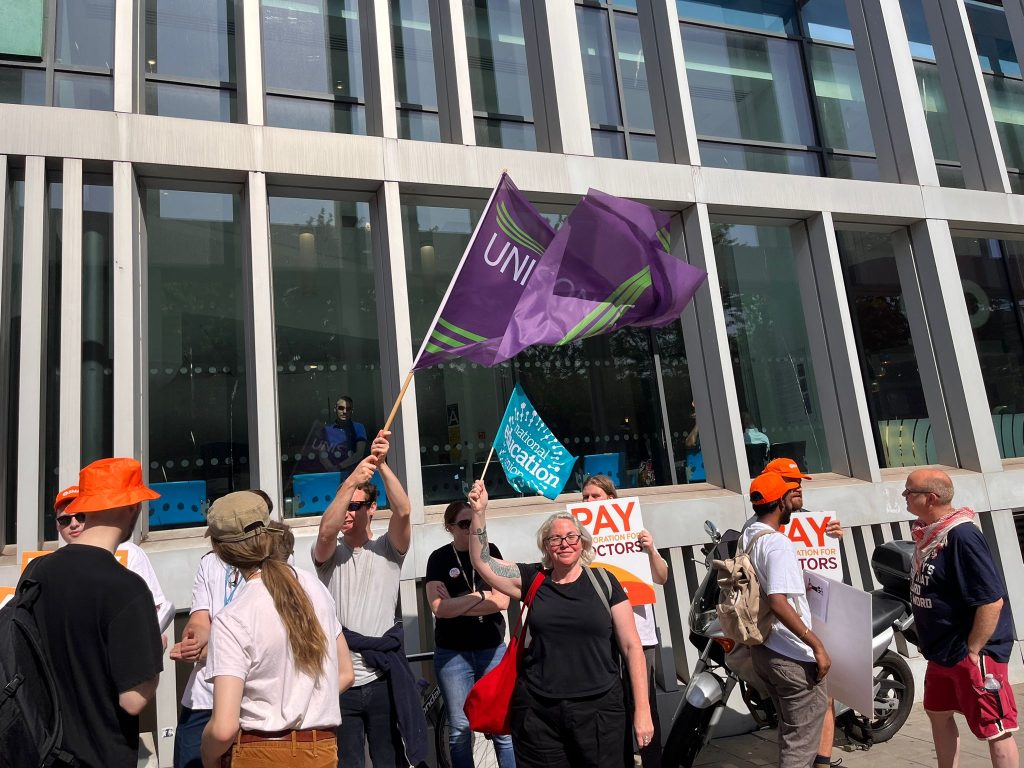



The five-day (25-29 July) walkout by 50,000 resident doctors in England has begun. Their union, the British Medical Association (BMA) says that, despite above-inflation pay rises given since their previous wave of strikes, pay is still down by a fifth since 2008, in real terms. Labour Health Secretary Wes Streeting has outrageously said doctors need to ‘feel pain’ to end the strike and his party has accused striking doctors of putting the NHS at risk, when it is their policies of cuts and privatisation that is doing so. Socialist Party members joined picket lines around the country with reports and photos below.
London
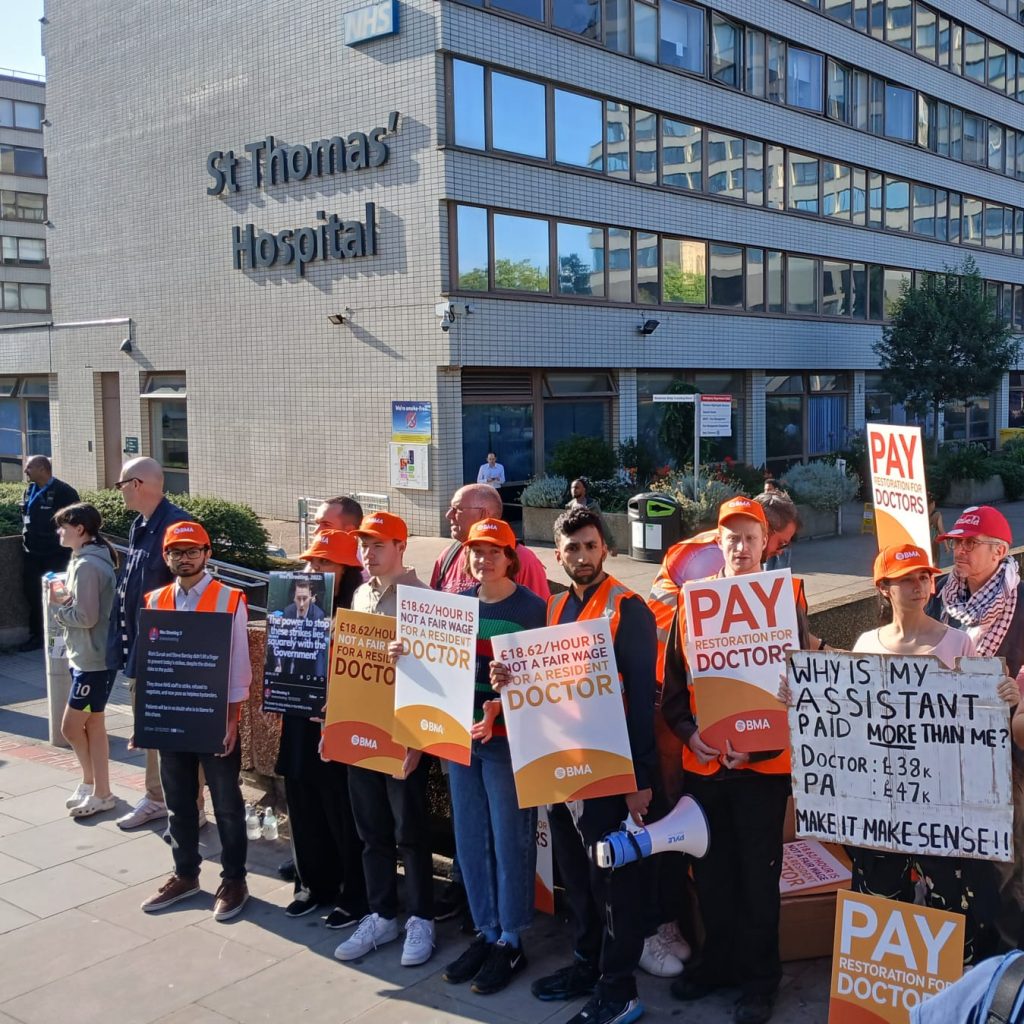
“What do we want? Fair pay! How do we win it? Strike!”, was one of the many chants roared by strikers on the picket line at St Thomas’ Hospital in London. Joining the striking resident doctors and supporters – which included Socialist Party members – was a swarm of journalists. But many of the pickets refused interviews, partly as a protest against the establishment media’s disgraceful coverage of their strike. One expressed his fury at the anti-BMA headlines covering many of the newspapers that morning, singling out a Guardian think piece in which Wes Streeting called the doctors’ strike “unnecessary”. Clearly the Labour government is doing all it can to stop the BMA from inspiring other sections of workers from fighting, and the capitalist media is backing them up. Our Socialist Party leaflet pointed to Labour’s recent partial U-turns on disability benefits and winter fuel payments, which show that this government can be beaten back by sustained trade union action.
Adam Powell-Davies
Brighton
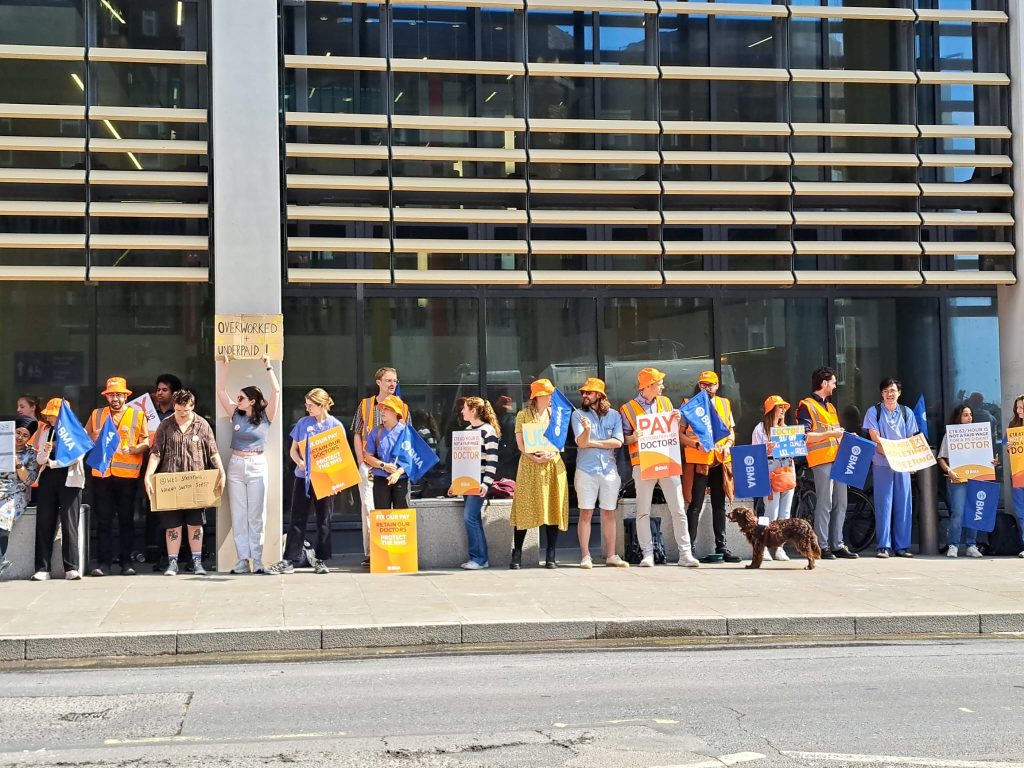
There was a lively picket line at Royal Sussex County Hospital in Brighton which was at least as big, if not bigger than the pickets during the previous round of strike action. Numerous passers-by honked their horns or called out to show their support for the strike – despite Wes Streeting’s claims in the press that public support for the strike has collapsed.
Strikers spoke about the issues not just of low pay, but also the high costs of student debt, expensive mandatory training qualifications which they have to pay for themselves, and a lack of training job vacancies which make it much harder to secure the kind of work they need to progress in their careers.
While the strike is nominally around the issue of low pay, they explained that it is part of the fight against broader issues of NHS funding and staff burnout. As one striker said: “We don’t have to accept things just getting worse all the time. We want to show that striking works”.
There was also interesting debate on the picket line about how the dispute can win what doctors need from the Labour government. Strikers were confident that Starmer and Streeting could be forced to give concessions if faced with enough pressure. The news that teachers and college lecturers are considering potential strike action later in the year was welcomed. Strikers also agreed that one lesson from the strike wave is that coordinated strike action across the public sector could have settled the previous disputes more quickly and would be a powerful next step to escalate these current strikes if concessions are not forthcoming.
Brighton Socialist Party members
Leeds
In Leeds registrar Cristina Costache spoke to the Socialist:
Our pay has gone down and regardless of the uplifts the government thinks they’ve given us.
You’re going to feel differently when you come to work if you feel valued, it just makes such a big difference. It makes that extra tiredness, that extra coming in and giving away the time that you could have spent with your parents that are ill, or with your family, or with your children. So they have to think about that rather than numbers.
The government’s decisions, whether the current government or previous government, have made have affected a lot of people that work in the public sector. We’re upset, that’s why we voted to strike.
We’re all in this together. I’d support anybody that wants to go on strike for their pay.
Oxford
A dense crowd of resident doctors holding BMA placards assembled a short distance from the John Radcliffe hospital. When Wes Streeting failed to make any reasonable pay offer, the BMA authorised a five-day strike, starting on 25 July. However, as one resident doctor on the picket line told me, this is far from the end. The BMA have a six-month mandate for future strike action, and the resident doctors are determined to fight for what they’re worth.
Another doctor informed me that he could never imagine voting for Labour again, and also expressed doubt that Labour would ever make any meaningful concessions unless serious pressure was exerted on them. “Talking is what got us here”, he argued, gesturing to the picket. “No movement ever succeeded just by appealing to the conscience of those in power.”
Fortunately, the doctors are not fighting alone. The number of cars that passed the picket, beeping their horns and cheering often made it difficult to talk to many of the doctors! But it reveals a level of support far greater than what much of our media admits. The doctors I met on Friday are organised and fighting for a fair deal. We should look to our workplaces and follow their example.
Oxford Socialist Party
Cambridge
There was a really determined and confident mood amongst the 40-50 pickets at Addenbrookes Hospital, Cambridge, on the first day of the BMA resident doctors’ strike.
A BMA regional rep, Dr Jinnie Shin, spoke to us. She was obviously pleased with the turnout and support from other trade unions. She emphasised that after six-plus years’ study and resulting debt of around £100,000, newly qualified doctors taking life and death decisions whilst still studying for further promotion (and paying professional insurance and exam fees), are paid as little as just over £18 per hour.
Doctors need a credible plan and pathway back to the real-terms take-home pay they could expect in 2008, before the austerity offensive began. Dr Shin was confident that the BMA action would result in a re-think by the government on the issue of pay.
Since 2008, the basic MP’s salary has gone up by around 55% to over £93,000, plus expenses and many take lucrative second jobs. Ministers have incomes a lot larger than this, of course.
Steve Cawley and Jon Lloyd