

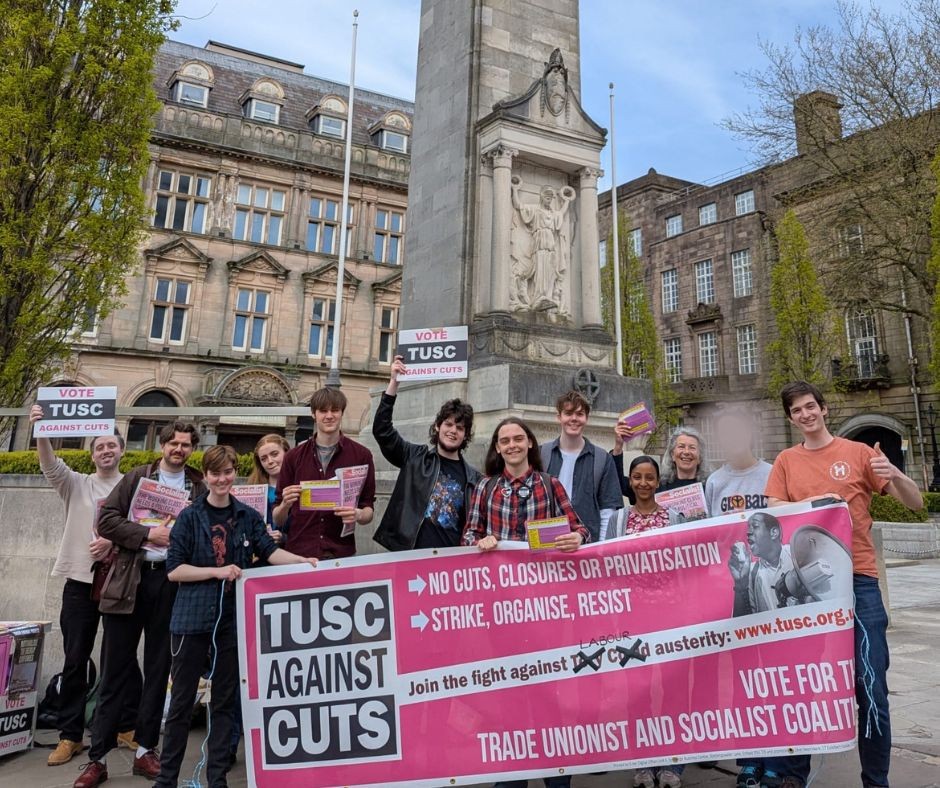
The latest meeting of the Trade Unionist and Socialist Coalition (TUSC) all-Britain steering committee was dominated by discussion on the next steps that could be taken to consolidate Jeremy Corbyn and Zarah Sultana’s call to establish “a new kind of political party”.
Another immediate task, the committee agreed, was to help to get the new party ready for the elections that will be held on 7 May 2026. This discussion centred around a briefing document prepared by the TUSC national election agent, Clive Heemskerk, ‘Ideas About The Next Local Elections’ (available at tusc.org.uk).
The main point emphasised was the enormous possibilities that are there. The new party could win seats in the Scottish parliament and Welsh Senedd, and councillors in almost every one of the 70-plus English local authorities with elections in 2026. In some councils it could expect to hold the balance of power after the 7 May polling day. And even, in some of the authorities that are up for election in this particular four-yearly cycle, win majorities and form administrations.
This, however, the meeting agreed, represents both an opportunity and a challenge. A substantial presence in local government for the new party could be a powerful bridgehead, a catalyst force, for a movement against the Austerity II agenda that the Starmer government is set on, compelled by the perilous position of British capitalism to further attack public spending including local council services. But only if the new party and its candidates are clear on what needs to be done.
As the TUSC discussion document explains, councils can make a difference, and have the powers to stand up to central government austerity. Imagine the impact of even a handful of councils, and a bloc of new party councillors across the country backing them up, using their powers on housing, education, social care, leisure, children’s centres, transport and so on to transform people’s lives – and to combine together to demand the proper funding that local services need.
But the converse is also true, of the damaging impact that could be made if councillors go along with austerity, however reluctantly they do so. It happened under Jeremy Corbyn’s leadership of the Labour Party, when council Labour groups remained as strongholds of the right-wing within the party. The resulting continued experience of cuts being made by these town hall Blairites in the name of Labour undermined Jeremy’s anti-austerity message, particularly amongst working-class voters in ‘left behind’ Labour constituencies. The new party cannot afford a repeat, of the promise of a new politics turning into more of the same.
That’s why a discussion amongst supporters of Jeremy and Zarah’s ‘Your Party’ call on how to approach the 2026 local elections is a vital task; just as the new party supporters in Scotland and Wales will be discussing their election platforms for May.