


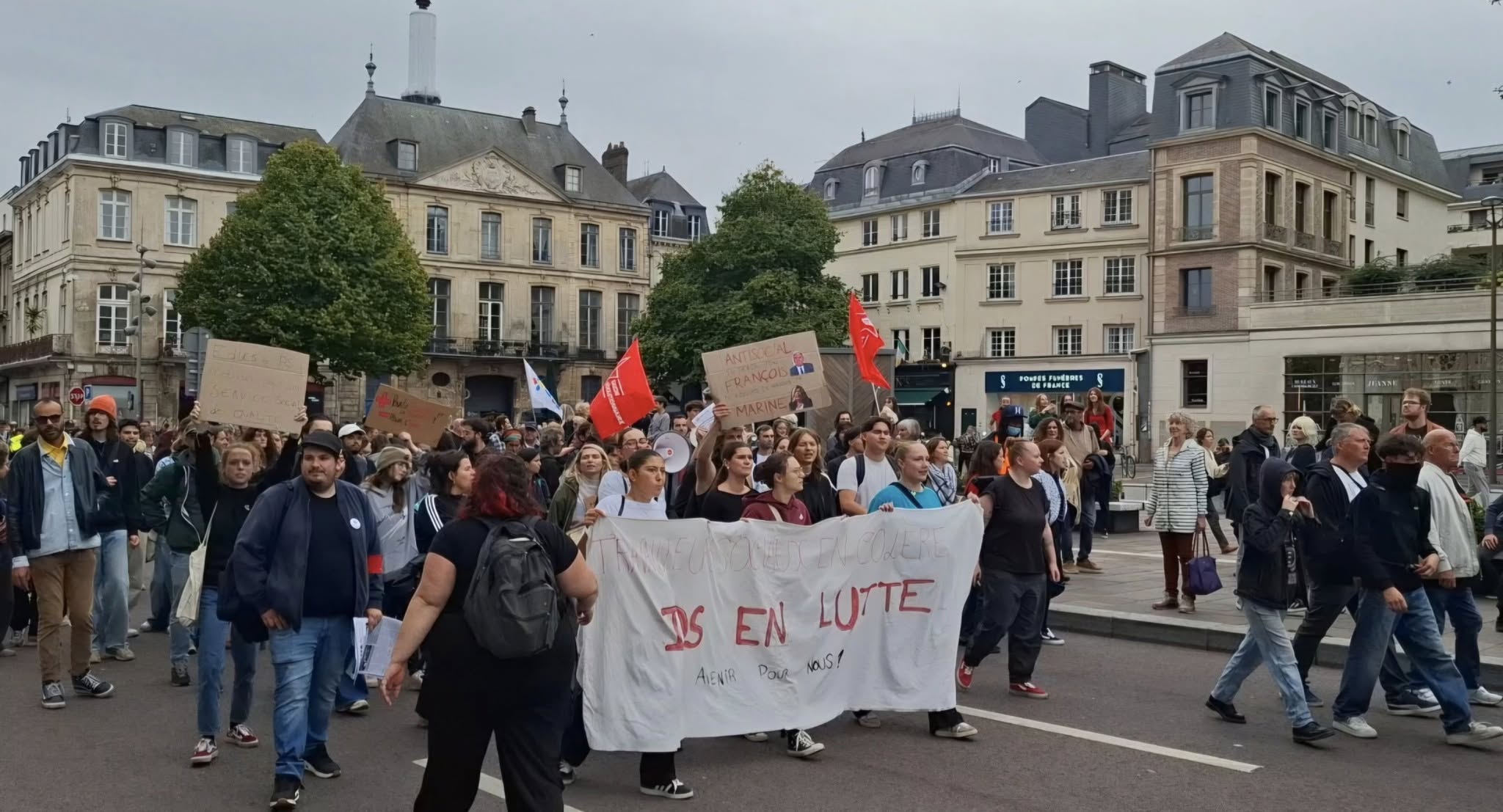
France has had five prime ministers in the three years since the 2022 presidential election won by Emmanual Macron. The latest was the most short-lived. Sebastian Lecornu lasted just 26 days. His appointment was preceded by mass protests and strikes erupting, and was punctuated by the latest 24-hour stoppage on 2 October.
“France is not only ungovernable, its public finances are in a mess, the economy is weak, social tensions are rising and the markets are jittery”, an editorial for the Financial Times in London puts it, branding Lecornu’s departure “a humiliation for the president”. The capitalist class faces deep political crisis.
Macron was first elected in 2017 claiming to be ‘neither left not right’ but has used increasingly authoritarian methods and ruthlessly carried out the policies of the capitalist class. Now, without his party having a majority in parliament, he has been unable to pass the latest austerity budget seeking to make the working class pay.
The latest phase of the political crisis has included a breakdown of relations with the traditional conservative party, on which he has relied for support.
Macron could try again to cobble together a government, dissolve parliament and trigger new elections, or otherwise allow a ‘zombie government’ to stagger on unable to pass a budget.
Workers in France have seen their strikes play a role in bringing down prime ministers. It is a weapon that can be used again to further show the power of the working class. The struggles could develop to bring an early end to Macron’s five-year term. Elections, whenever they come, will more sharply raise the need for the working class to have its own mass workers’ party with a socialist programme – a key demand of Gauche Révolutionnaire, the Socialist Party’s sister party in France.
