

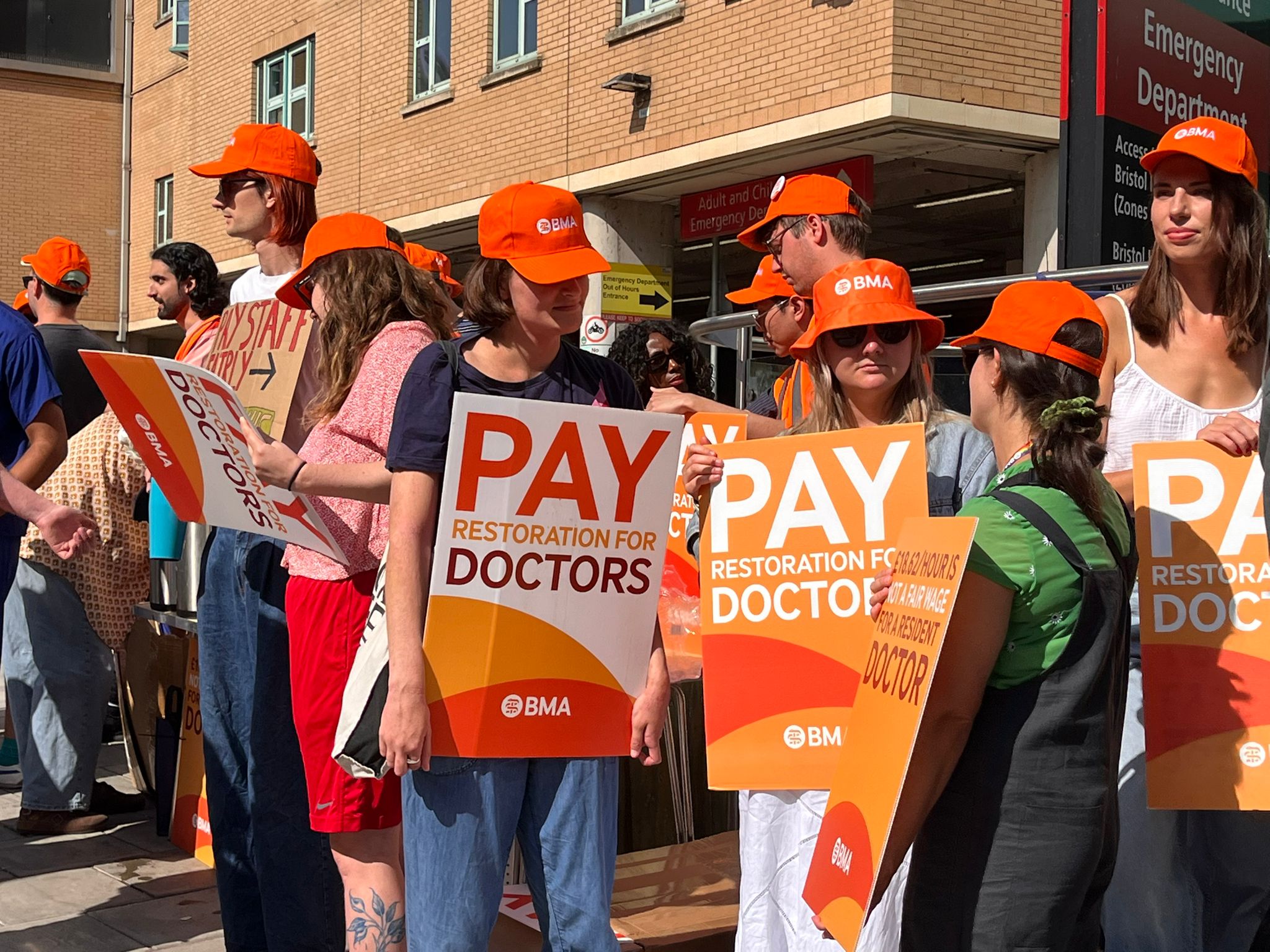
Resident doctors, formerly known as junior doctors, are preparing to strike again from 14 to 19 November over pay and a crisis in training posts.
The British Medical Association (BMA) says resident doctor pay is still down 21% since 2008.
At the same time, there is a huge shortage of training places, in which a third of doctors who responded to a BMA survey have no role secured after their current placement.
NHS bosses and the government are foaming at the mouth at the action – calling it a ‘size ten boot’ that could ‘wipe out a once-in-a-generation chance to make the NHS fit for the future’.
Labour’s health secretary Wes Streeting says there’s no money for pay rises and that strike action “hurts patients, sets back our progress, and costs the NHS £240 million that could’ve been spent on frontline improvements”.
Everyone knows the NHS is on its knees. But the real threat is revealed by the demands of NHS bosses for an ‘emergency injection’ of £3 billion to cover ‘unexpected costs’.
They say that without it, patients will wait longer for treatment and hospitals will start rationing care. They would have to cancel weekend and evening surgeries and stop doing procedures of ‘low clinical effectiveness’, such as removing painful bunions.
They blame the strikes – but also say money is needed for redundancies and for higher drug prices.
Far from being the cause of the problem, it is the action of NHS staff that really has the future of the NHS at heart, and the potential power to really fight for it.
The NHS should be fully funded. But the solution is the opposite of the extension of privatisation and the discredited Private Finance Initiative proposed by Streeting.
End and reverse privatisation! Stopping the haemorrhage of billions of pounds of public money from the NHS to private companies would go a long way to paying decent wages and stopping redundancies.
Nationalisation of the pharmaceutical companies would save even more from being leached out of the health service into fat-cat back pockets.
Paula Mitchell
