


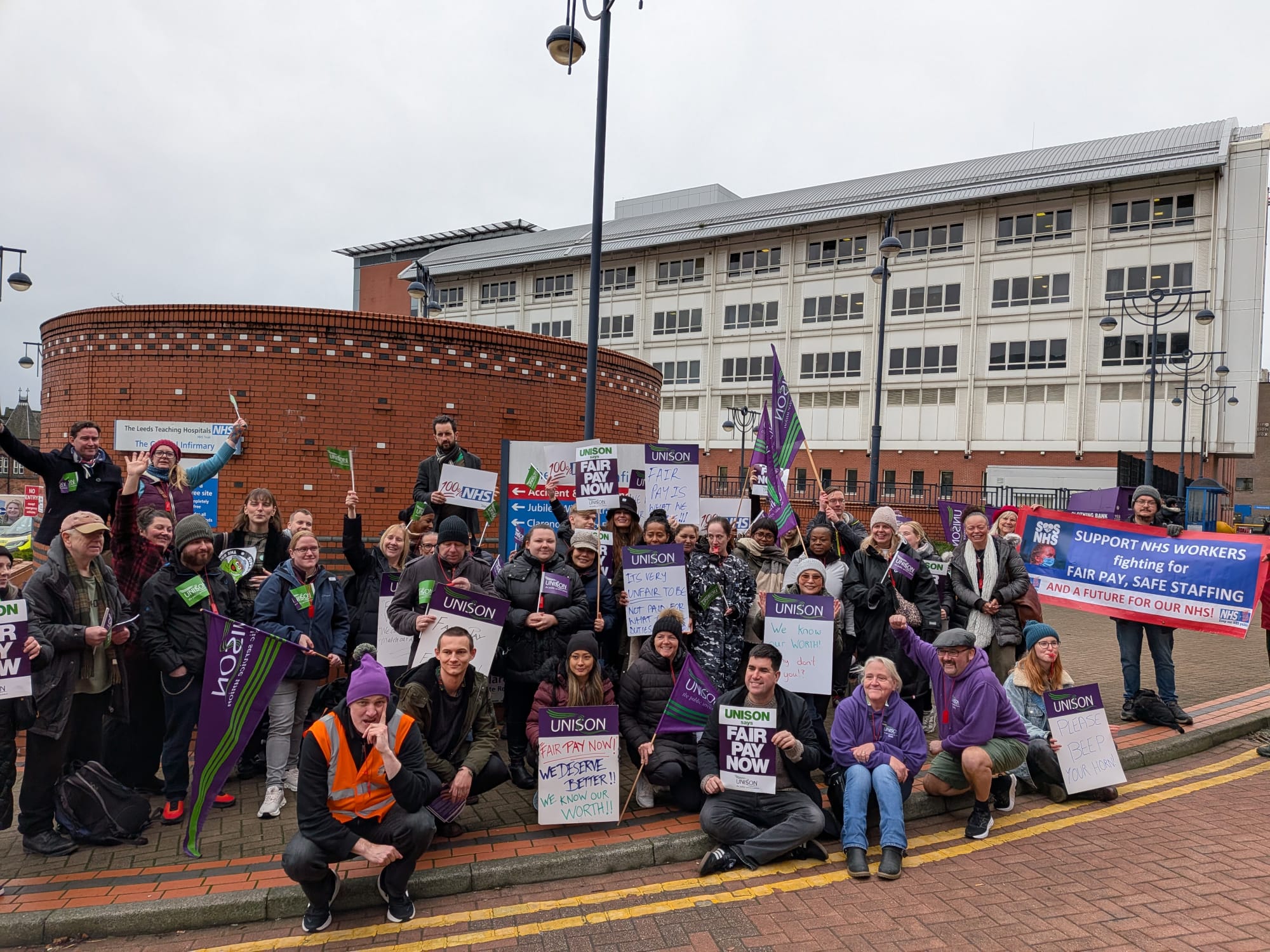
Perioperative Assistants working in surgical theatres across Leeds Teaching Hospitals NHS Trust (LTHNT) took an initial two days of strike action over rebanding to reflect their clinical duties. Well-attended pickets of 30 to 40 were outside Leeds General Infirmary in the city centre on Thursday 18 December and St James’ Hospital in Harehills on Friday 19 December.
Across the country in recent years, around 40,000 NHS workers have been rebanded from Band 2 to Band 3, and awarded back pay, to reflect the range of clinical duties they perform. Theatre assistants’ work includes inserting cannulas, sterilising equipment and other tasks. Workers at the trust doing similar work on the wards have been rebanded, but the trust is refusing to do the same for workers in surgical theatres.
New LTHNT chief executive Brendan Brown was previously in charge at Calderdale and Huddersfield Foundation Trust, where workers doing the same jobs were rebanded from Band 2 to 3 with five years back pay.
On both picket lines, workers were angry at Trust bosses that they feel take them for granted. Groups of workers leafletted passers-by to explain their situation, while speeches from local trade unionists and other supporters were interspersed throughout the mornings.
With resident doctors striking for five days, and microbiologists commencing strike action at Airedale hospital in West Yorkshire, the strike wasn’t isolated – highlighting how the service is reliant on underpaid and overworked staff whose goodwill is exploited.
Instead of health secretary Wes Streeting blaming NHS workers for the winter crisis, the real culprits are the private health companies – some that have generously donated to Streeting. They have been leaching resources out of the NHS through rip-off PFI and outsourcing. Putting an end to that, and making the super-rich pay to fully fund the NHS and other public services, would mean more resources available to both pay NHS workers properly as well as improve the service.
Iain Dalton, Leeds Socialist Party
