


Adaramoye Michael Lenin, Democratic Socialist Movement (CWI Nigeria)
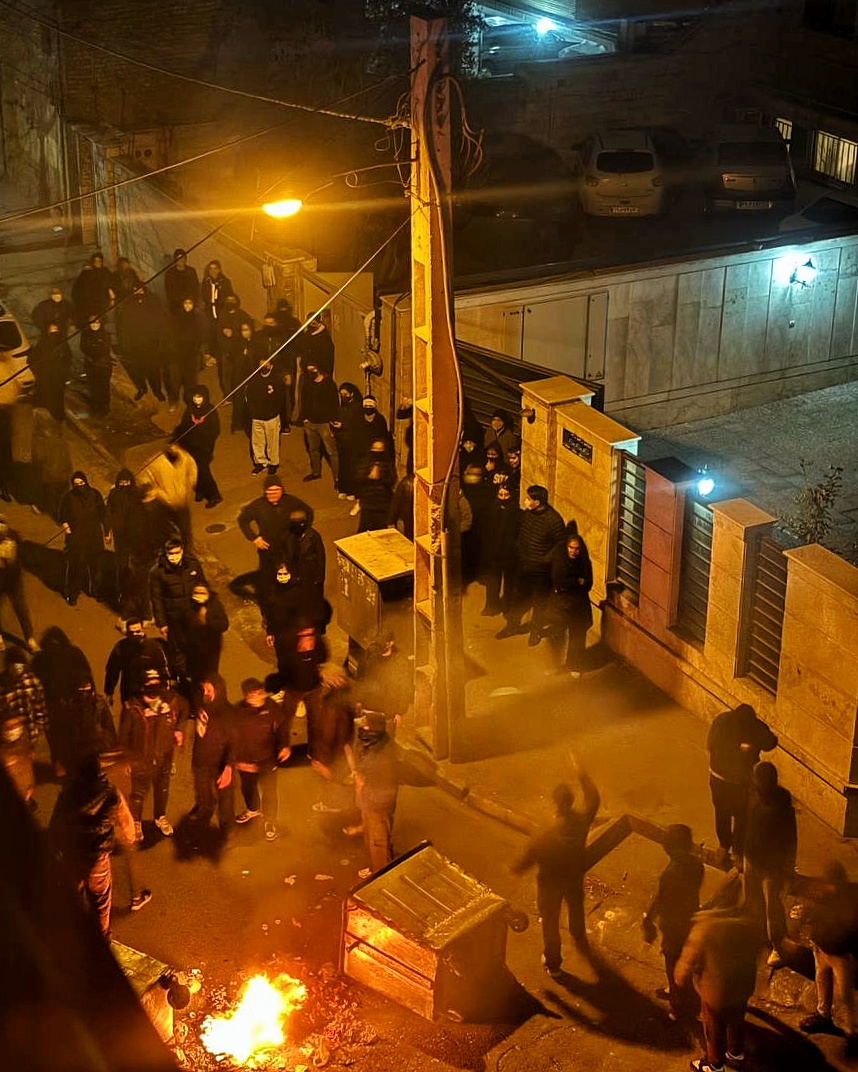
Mass protests are spreading across Iran in a show of widespread anger against the regime of Supreme Leader Ali Khamenei and President Pezeshkian. What began as a strike and demonstration by merchants in Tehran has now spread to nearly all the provinces of the country.
At present, these protests are decentralised and without official leadership; traders, workers, and students are actively involved, which shows no sign of decline. The emergence of protests in Qom must have been the biggest blow to the regime, which has always prided Qom, the base of the religious leadership, as its stronghold. Now in Qom, traders, students and workers are screaming “death to the dictator”.
In suppressing the protests, at the time of writing, hundreds of deaths have been reported so far, and rising.There have been clashes between protesters and the police with more violent repression possible as Khamenei, the ‘Supreme Leader’, vowed not to bow to pressure.
What is fuelling this fire of revolt?
The immediate detonator of this mass movement is the crashing of Iran’s currency, the rial, to historic lows – around 1.45 million rials to 1 USD on the open market by late 2025-early 2026. ‘Abject poverty’ is now the reality for many working-class families, with their purchasing power completely wiped out by inflation. According to the Central Bank of Iran, agriculture contracted by 2.9% and industry and mining by 3.4%, while construction had a sharp 12.9% slump. These sectors are among the biggest employers of labour, especially for young people.
Food inflation had a drastic rise, with prices of food, beverages and tobacco up 72% year-on-year, in relation with 43% for non-food goods and services. Monthly inflation climbed up to 4.2%, led by sharp increases in staples such as dairy and bread. Behind these statistics are gory tales of hunger, homelessness, joblessness and mass misery, amid a country with enormous resources to guarantee a better life for Iranians.
Importantly, the new austerity budget awaiting approval of the parliament has worsened the situation for the Iranian regime. This budget is to be mainly financed by tax revenue; it plans to increase VAT and other taxes; the regime is turning to workers and ordinary people to bear the burden of its failure. Also, the budget seeks to implement cuts to certain subsidies.
President Pezeshkian has openly declared that the state has no funds to implement any wage increase that could be commensurate with the rate of inflation.
Sanctions and actions
It has been argued, by defenders of the Iranian regime, that the economic misery obtainable in Iran is a direct consequence of years of sanctions imposed on Iran by the US and Western imperialism. It is, of course, true that the US has imposed sanctions on Iran; these sanctions are targeted mainly at Iran’s export of its oil. Sanctions have also been imposed on Iran’s economic partners, isolating it from global trade.
Ever since the Iranian revolution of 1979, which ousted Shah Mohammad Pahlavi, who was strongly backed by the US, and the coming to power of Khomeini, the US has sustained sanctions on Iran. Trump 2.0 has aggravated the situation, reinstating previous sanctions that the Biden administration did not seriously pursue, while also threatening new ones, including sanctions on companies doing deals with Iran. Without doubt, years of sanctions have had a drastic effect on the economy. Ironically, Donald Trump has given a thumbs-up to the protest triggered by the crisis that he and the US ruling class contributed to.
But it is the theocratic regime that is the major player in the economic hardship of Iranians. Since coming to power, it has used public resources to create a paradise for itself, while the working masses live in hell. Although the regime under the influence of the revolution, implemented some progressive policies at its inception, it also moved to concentrate power in its own hands, while beginning to limit women’s freedom. Even though the oil sector and others were nationalised, workers’ democracy was not only absent, but the regime rapidly developed into a dictatorship of Khomeini and the theocratic ruling class. Workers’ organisations were crushed, and democratic rights were buried.
So when Iranians on the street are screaming ‘Death to the dictator’, it is an expression of how their society has been turned into a big prison.
What next for the movement?
Socialists argue that a mass movement of the working masses can not only defeat Khamenei and the Iranian ruling class, but also challenge the Iranian capitalists, Trump and US imperialism. Without a revolutionary victory of the working people in the power struggle, imperialism cannot be defeated.
Therefore, every advance of the working masses towards seeking power from the ruling class must be supported; in these advances lie the seeds for the building of a working peoples’ republic. However, a clamour for the return of monarchy by a section of the protesters is not only testament to the utter failure of the theocratic rule but also the current absence of an internal opposition arguing for the next steps for the movement and, at the same, time, a genuine working peoples’ alternative.
The task for the revolutionary movement in Iran is not to commit the ‘mistake’ of the past. An end to Khamenei without ending capitalism in Iran and instituting a genuine socialist society based on workers’ ownership and democratic management of the commanding heights of the economy, would mean nothing significantly for the working masses.
The mass protests must begin to transform from a leaderless protest to democratically electing coordinating bodies, winning the support of more layers of the oppressed population, and urgently developing concrete steps to build the movement and take power.
Originally published at socialistworld.net on January 10 2026