


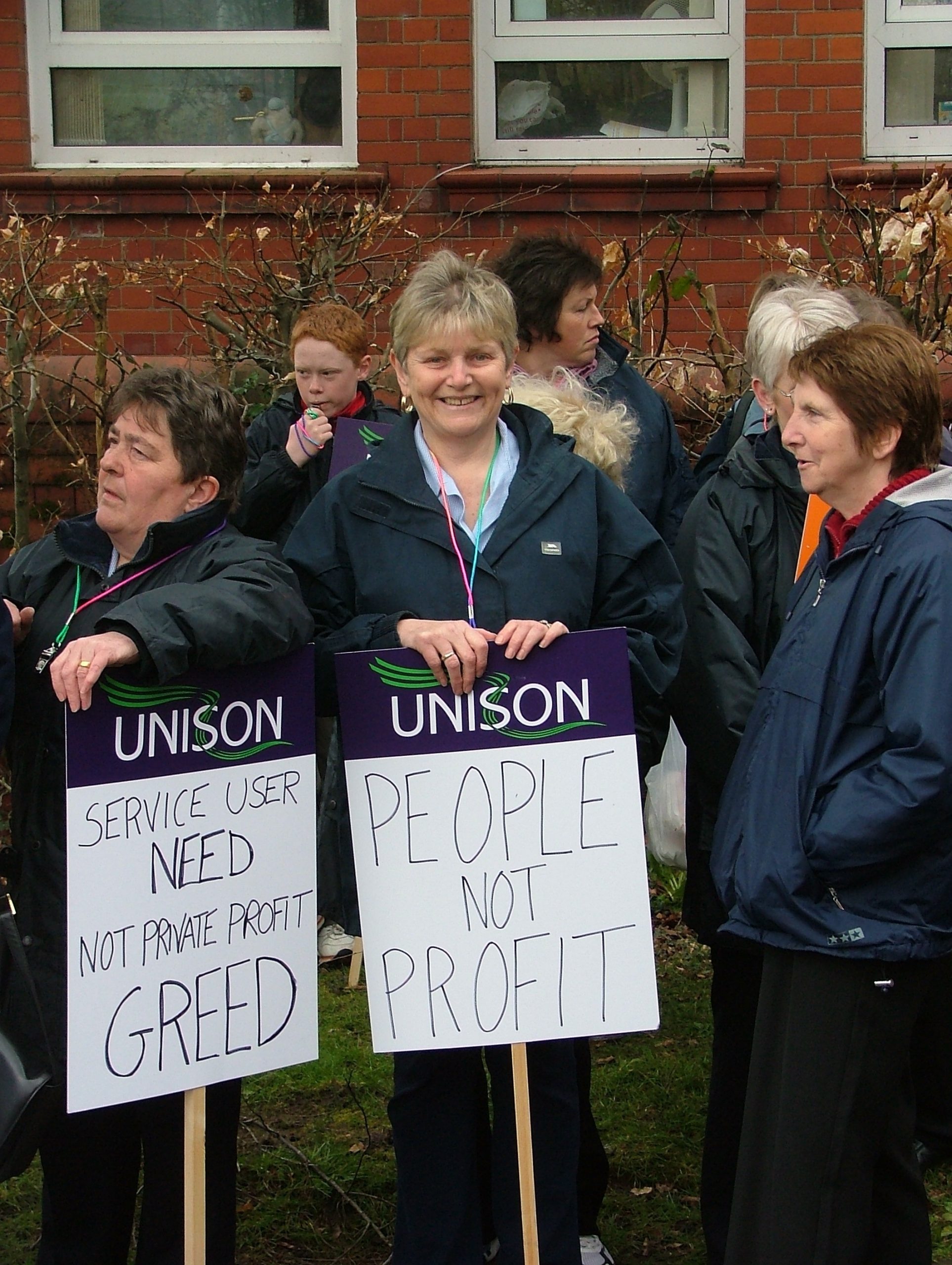
Dave Gorton, Chesterfield Socialist Party
In my lifetime, the delivery of residential care in the UK has shifted dramatically from the public and voluntary sector being responsible for over 89% in 1960 to a position where today, private provision stands at 83%. The public sector is now responsible for just 4% of provision.
Devolution means England’s figures are now counted separately and studies sometimes include other adult (and children’s) social care. But nothing alters the fact that there has been a deliberate policy pursued by the capitalist class over the last few decades of turning a lifeline for those in need to a huge accumulator for the already rich.
There is even a new word being used for this – ‘extraction’. It’s a friendlier word than ‘theft’ but amounts to the same thing – a massive transfer of wealth from the public sector to big business.
‘Extraction’
A November 2025 report “Ending extraction in the UK care system” published by Reclaiming Our Regional Economies declares:
“Instead of facilitating the care of children, older people, disabled and learning disabled people, our care system facilitates the extraction of value and wealth from places and local public service budgets. While executive pay booms, frontline workers receive little more than the minimum wage. While local government and central government struggle to pay the bills to meet increasing demand, private company profits continue to rise.”
But the report’s aim of reaching a fairer outcome relies on governmental intervention to limit capitalism’s rapacious reaches. Crucially, it has no answers for when governments refuse to intervene. In these times of potential development of new parties of the working class, it needs to be reasserted that only a socialist society will have the capability to remove private provision from social care.
Private equity and hedge funds
Of the 20 largest providers in the children’s homes and fostering sector, 50% have a private equity or sovereign wealth fund owner. Four of the five largest providers in adult home care are either owned by private equity firms, US hedge funds or by billionaires based abroad.
Private equity firms – investment companies looking to make a large profit in the shortest possible time – use borrowed money. They utilise debt to buy, grow and run companies. This means making interest payments on the debt. As interest payments are in part not taxed, this provides a means of removing money from a business while paying less tax than would be the case for dividends.
This use of debt improves profit margins for owners, while transferring risk to operating companies in the care sector.
The residential care sector in the UK is borrowing £7 billion and a small group of private equity funded businesses in the sector is responsible for the vast majority of this. The total debt of the UK’s 26 largest care home providers is £35,000 per bed, so 16% of weekly fees paid for residential care goes to service debt interest payments.
Complex arrangements separating property and operations into different companies mean care providers can rent their properties from related companies within the same organisation. As a result, property rents have become another major factor in robbing the social care sector.
The largest for-profit care homes in the UK are spending 11.1% of their income on rent, compared to only 2.3% for the largest non-profit providers.
Money ‘leaking out’
Nearly £50 billion is spent annually by local authorities in England on care services. This amounts to 70% of all local authority spending. This is in addition to the costs paid for by individuals and their families, estimated to be 50% of social care costs, and the huge levels of care done unpaid.
The report states “the truth is that money exists in the care system but too much of it is ‘leaking out’” – another euphemism, better translated as ‘stolen’!
The Socialist Party argues for ‘needs budgets’ – for councillors to implement budgets that provide the services local communities want and need, instead of what’s ‘affordable’. The finances for these services can be fought for with the active joint participation of local councillors, trade unions and community groups. It is not sufficient to simply declare there isn’t enough money while the billionaires rob ordinary people of their health and quality of life. If you’re not going to struggle, then stand aside for those that will!