


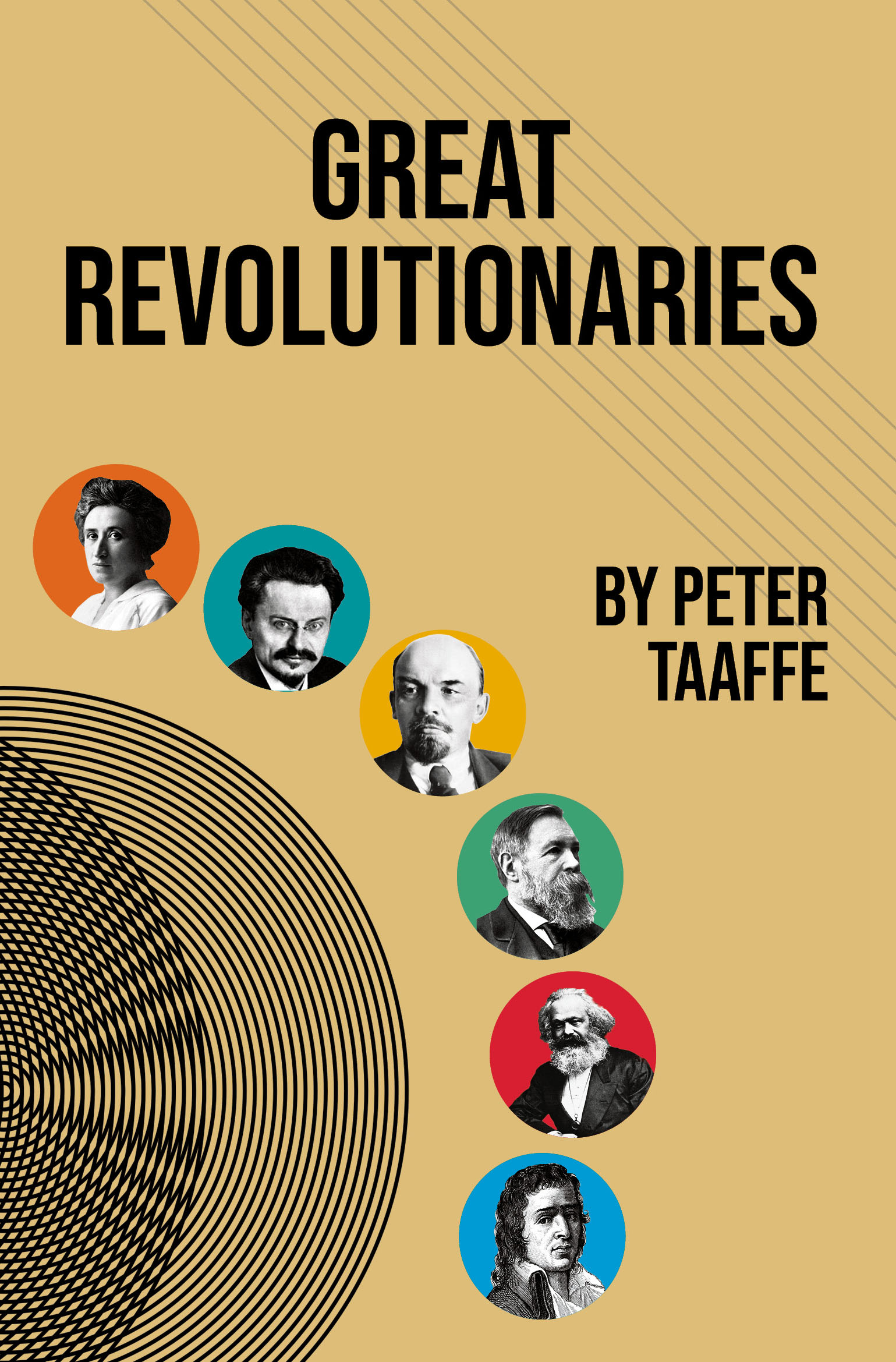
‘Marxist ideas brought to life, grounded in real historical struggles and debates’
Joe Woolfall, Liverpool South Socialist Party
Great Revolutionaries is a recently published book, written by Peter Taaffe, the former General Secretary of the Socialist Party. It includes a series of articles examining the lives and ideas of key figures in the history of socialism and working-class struggle. Peter passed away on 23 April 2025 after a lifetime dedicated to the fight for socialism.
Peter was central to the political leadership of Militant, the Socialist Party’s predecessor, and its role in leading the successful struggles against Thatcher – the Liverpool city council struggle in the mid-1980s and the anti-Poll Tax struggle at the end of that decade and into the 1990s. Throughout periods of defeat and confusion for the workers’ movement – particularly following the collapse of Stalinism – he consistently defended the ideas of genuine Marxism and the working class as the primary agent of social change.
The book introduces readers to the ideas of Gracchus Babeuf, Karl Marx, Friedrich Engels, Vladimir Lenin, Leon Trotsky, and Rosa Luxemburg. It explains clearly what these revolutionaries believed and how their ideas were applied in practice. For young workers and students who are new to Marxism in particular, the book is accessible and concise. It distils the main lessons of the revolutionary socialist movement since its inception. It equips readers with theoretical tools relevant to the current period of capitalist crisis, in which Marxist ideas are once again essential.
I found the book highly engaging; I read it faster than any other book of comparable length I have previously picked up. Peter brings Marxist ideas to life by grounding them in real historical struggles and debates. He critically engages with existing biographies of Marx, Engels, Lenin, and Trotsky; through this, he explains not just what such books got right, but also where clarification or correction is necessary. The book makes clear that Karl Marx was not merely a brilliant theorist or writer, but a revolutionary organiser. Engels is quoted as describing Marx’s “crowning achievement” as the founding of the International Working Men’s Association (the First International). As Marx himself famously argued, it is not enough to interpret the world; the task is to change it.
Lenin is subjected to more distortion and slander than most figures, even within the Marxist tradition, and Peter successfully challenges these misrepresentations. Capitalist academics routinely depict Lenin as authoritarian and undemocratic, extending the same treatment to the October Revolution itself. Peter explains how Lenin and the Bolshevik Party, with majority support won in the soviets (workers’ councils), led the first successful nationwide socialist revolution. Although there were earlier opportunities to seize power, the overthrow of the provisional government occurred only once the Bolsheviks had won the conscious support of the working class. Through experience, workers came to understand that no other party would end Russia’s involvement in the World War One, distribute land to the peasants, or provide bread for the starving population.
Despite its relatively short length, this book offers a clear Marxist explanation of Stalinism, the theory of Permanent Revolution, and the respective roles of Trotsky and Lenin in October 1917.
Overall, this is a brilliant text, rich with lessons for socialists today. One chapter that stood out to me in particular was the discussion on trade unions and how Marx and Engels orientated to them. This is especially relevant given current debates on the British left surrounding the formation of ‘Your Party’, co-founded by Jeremy Corbyn and Zarah Sultana. When I first joined the Socialist Party, I noticed that our call for a new mass workers’ party was distinctive: other forces either clung to the Labour Party or embraced the ‘anti-party’ mood – an outlook Peter critiques repeatedly in the book. When a new left party was eventually formed, the Socialist Party again stood out in arguing that the organised working class, through its day-to-day organisations such as the trade unions, must be central to any such project.
Engels once criticised the draft programme of the United Workers’ Party of Germany for ignoring the role trade unions could play in building a workers’ party, warning that this risked cutting the party off from the organised working class. A quotation by Engels included in the endnotes of Great Revolutionaries in a similar vein is as relevant today as when it was written: “The first great step of importance for every country newly entering into the movement is always the organisation of workers into an independent political party, no matter how, so long as it is a distinct workers’ party.” This summarises one of the book’s main lessons and is very important for our coming activity as socialists in the new year and beyond.
